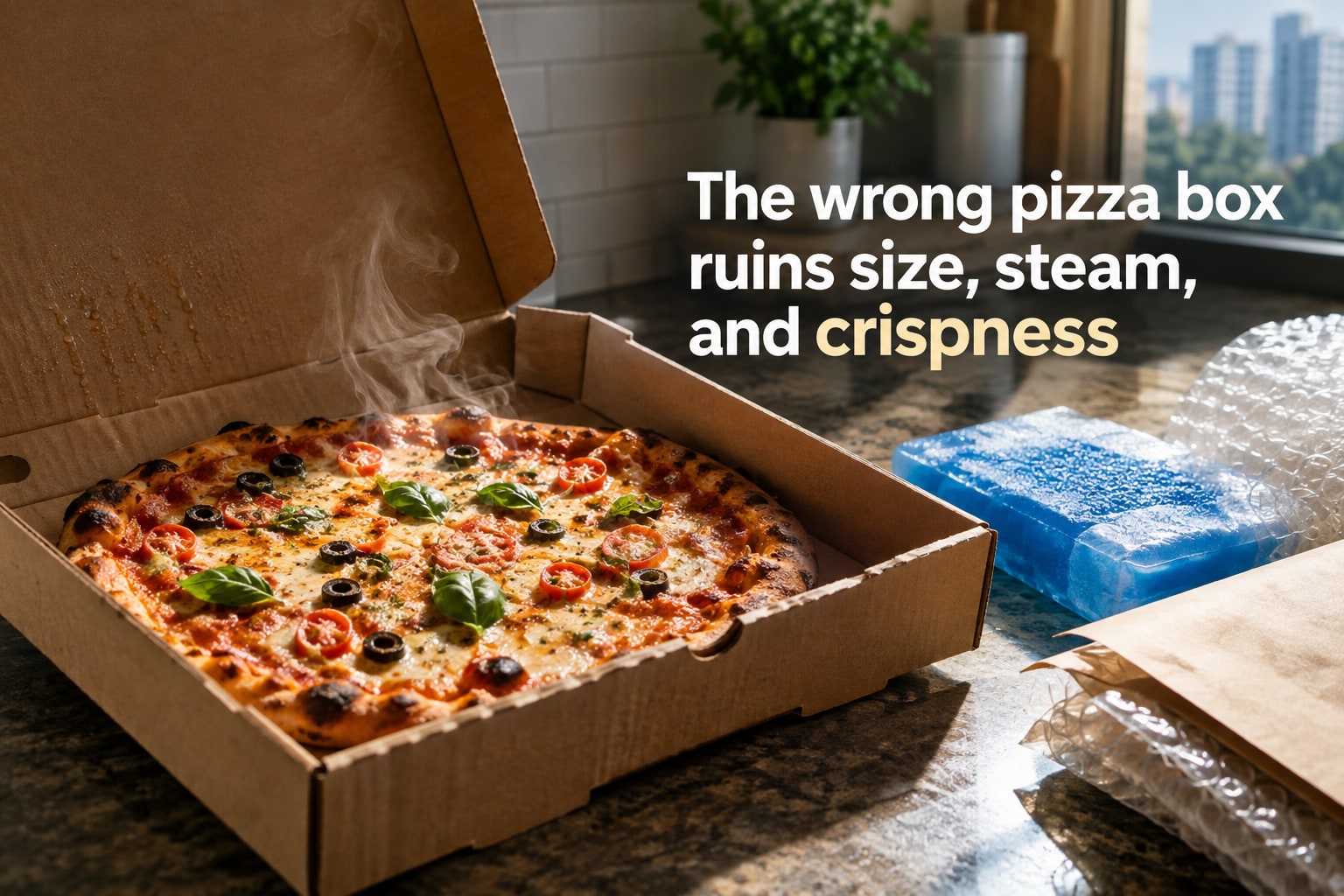
The right pizza box is determined by more than its printed size or brown kraft appearance. You need to match the internal footprint and height to your pizza, verify that every food-contact surface is suitable, and test how the pack behaves with steam, traffic, humidity and freezing.
Key takeaways
- Measure the baked pizza, then leave 10–20 mm clearance at each wall.
- Ask for food-contact compliance evidence before packing pizza.
- Vent hot pizza briefly to reduce sogginess and sliding.
- Use insulated packaging and a separate freezer pack for frozen pizza.
Match the box’s internal size to your baked pizza
Measure the baked pizza across its widest point, including the outer crust, then choose an internal footprint that leaves 10–20 mm between the pizza and each wall. Do not size pizza boxes for homemade pizza from the uncooked dough ball or pizza stone alone: both can differ from the finished diameter.
| Box footprint | Suitable baked pizza diameter | Practical fit |
|---|---|---|
| 7 x 7 in | About 5.5–6 in | Small personal pizza |
| 8 x 8 in | About 6.5–7 in | Small homemade pizza |
| 9 x 9 in | About 7.5–8 in | Medium personal pizza |
| 10 x 10 in | About 8.5–9 in | Standard homemade pizza |
| 12 x 12 in | About 10.5–11 in | Large homemade pizza |
Confirm that these dimensions are internal, not external. Folding scores, corner construction and board thickness consume space when the flat blank becomes a box, leaving less usable room than the catalogue figure suggests. Measure a folded sample.
A 1.5-inch height gives about 38 mm, but crust thickness, melted cheese and tall toppings determine whether it works. Put the pizza in an empty sample box and close the lid; reject it if the lid touches the cheese.
A snug fit limits sliding and retains heat better, while an oversized box leaves air around the pizza, increases movement and cools it faster.
Verify what “food-grade” means before the pizza touches the box
Brown kraft colour proves nothing about virgin fibre, recyclability, grease resistance or food safety. Before using kraft pizza boxes with lids for direct contact with hot pizza, verify the complete food-contact construction, not just the appearance of the board.
- Request the paperboard specification, the supplier’s food-contact conformity statement or test documentation, and the intended temperature range. Ask whether the fibre is recycled, and identify every coating, wax, laminate, fluorochemical grease treatment and adhesive.
- Check both surfaces separately. Printed artwork must stay on the outside; the inside food-contact surface must comply with FSSAI’s Packaging Regulations. Confirm that printing inks meet IS 15495 and cannot transfer to the pizza.
- Reject newspaper or unsuitable printed paper as a liner. Any paper, foil or plastic liner becomes part of the food-contact system, so verify its heat performance and safety with the box and pizza together.
- Inspect an unused sample before packing: reject it for a chemical or musty odour, loose fibres, exposed adhesive, ink transfer onto a clean finger or white tissue, or grease soaking through during a hot-food trial.
A compliant document does not excuse a damaged box. Keep the supplier evidence with the batch record, and do not use a box whose food-contact surface is wet, torn or contaminated.
Pack hot pizza to control steam, sliding and heat loss
A hot pizza needs a short release of steam before the lid closes; trap too much and the crust turns soggy, release too much and the pizza arrives cold. Use this sequence for how to pack pizza for delivery:
- Use a clean, dry corrugated box with no loose fibres, damp spots or odour.
- Let the pizza vent briefly after baking, then place it in the centre of the box. Do not slide it against a wall.
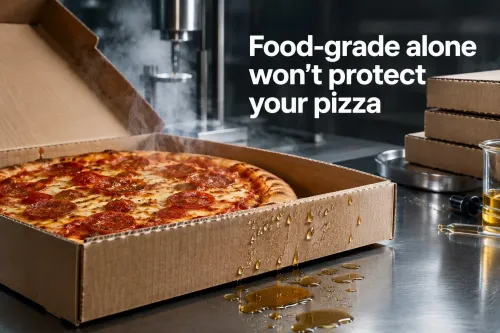
- Use the box’s designed steam vents. If it has none, add a small vent only when moist toppings or condensation are making the base wet.
- Check the clearance above the pizza. Cheese and toppings must not touch the lid.
- Close the lid fully, never seal the hot pizza inside an airtight plastic bag, and keep the box level.
A solid lid holds heat better during a short, direct trip. Controlled venting works better for wet toppings, longer journeys and condensation, but Bangalore traffic and motorcycle movement increase sliding, jolting and cooling. More topping moisture, less lid clearance and a longer delivery interval all increase the risk of a soft crust.
For how to pack pizza for delivery in Bangalore, test the complete pack at the longest expected delivery interval. At handover, check crust texture, lid condensation and pizza temperature instead of promising one holding time.
Store unused flat blanks off the floor, away from water and cooking steam, inside their closed shipping bundle until needed.
Use a separate freezer pack for frozen pizza
A standard corrugated pizza box is a transport and presentation layer, not a moisture-proof freezer package. Pizza boxes for frozen pizza in Bangalore need a freezer-suitable primary wrap or sealed bag first; use the box outside it for protection, identification and labelling.
A hot-delivery box can fail after freezing. Moisture migration causes freezer burn and odour transfer, while condensation during thawing softens the board. Freezer temperatures can make board brittle and weaken adhesive joints. Do not approve a dry box sample alone.
Test the complete package through each stage:
- Freeze the wrapped pizza for the intended storage period.
- Stack packed units at the planned load and observe bowing, crushing and adhesion.
- Transport the frozen pack over the longest route, including handling and movement.
- Thaw it in the intended way and check condensation, seal integrity, board strength and food contact.
Do not add an unverified paper, foil or plastic liner. It can trap steam, shift onto the food, or expose the pizza to unsuitable ink or adhesive; assess the liner, box and pizza together.
For a pizza boxes for home business operation, retain the supplier’s food-contact declaration, box specification, batch information and test observations as food-safety records. Small food businesses in India must consider FSSAI licensing or registration requirements. Never reuse a returned pizza box, even if it looks clean.
Compare board strength and supplier evidence for Bangalore conditions
Compare the flute, reinforcement and test evidence, not just the word “kraft,” when buying kraft pizza boxes with lids in Bangalore. E-flute gives a smoother, more compact surface; B-flute or heavier construction improves stacking and compression resistance.
| Option | Strength and surface trade-off | Best fit |
|---|---|---|
| E-flute | Smooth, compact, easier to print; less reinforcement | One local delivery with limited stacking |
| B-flute | Deeper corrugation and better compression resistance | Larger pizzas, stacked orders or motorcycle transport |
| Heavier board or corner reinforcement | Highest resistance to bowing and crushing | Multiple boxes, long rides and rough handling |
Ask for compression or stacking results after conditioning at high relative humidity, not only dry-board GSM. Wet kitchens, monsoon storage and condensation absorb into paper fibres, reducing edge-crush strength and causing boxes to bow or collapse.
Confirm these details before approving a sample:
- Are the quoted length and width internal measurements?
- Does the 1.5-inch height remain usable after folding, with clearance above toppings?
- Are vents built into the lid?
- Can the supplier provide food-contact conformity documents and evidence for freezer use?
Packbox.In can provide specifications to compare, but request a sample and approve the exact board, flute and construction. Run a hot-delivery trial with the largest pizza, longest route and motorcycle movement; do not approve a catalogue photograph or dry box alone.
Related products
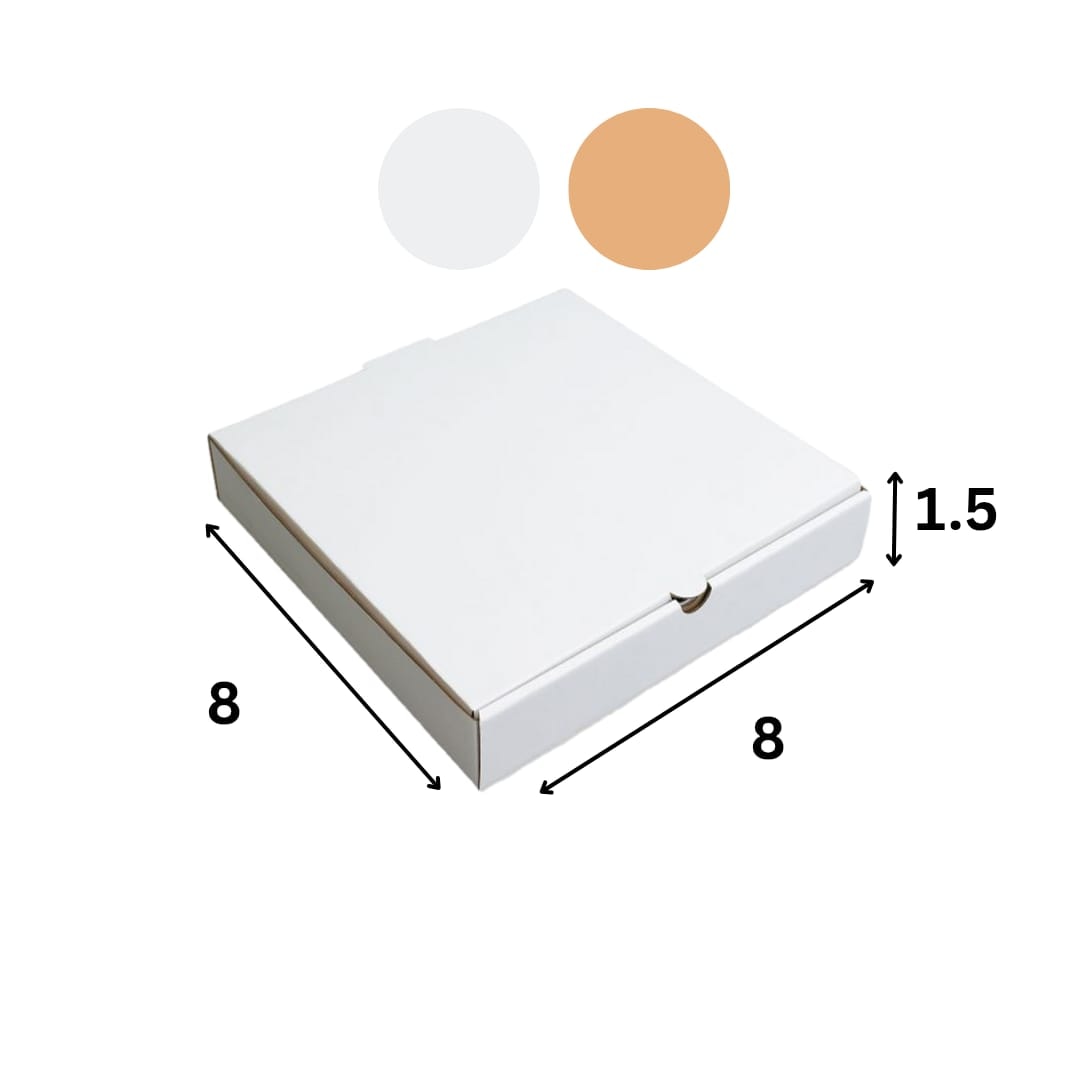 | PIZZA BOX PIZZA BOX 8X8X1.5 ₹14 Our Pizza Boxes are designed to keep your pizzas fresh, hot, and intact during delivery or takeaway. |
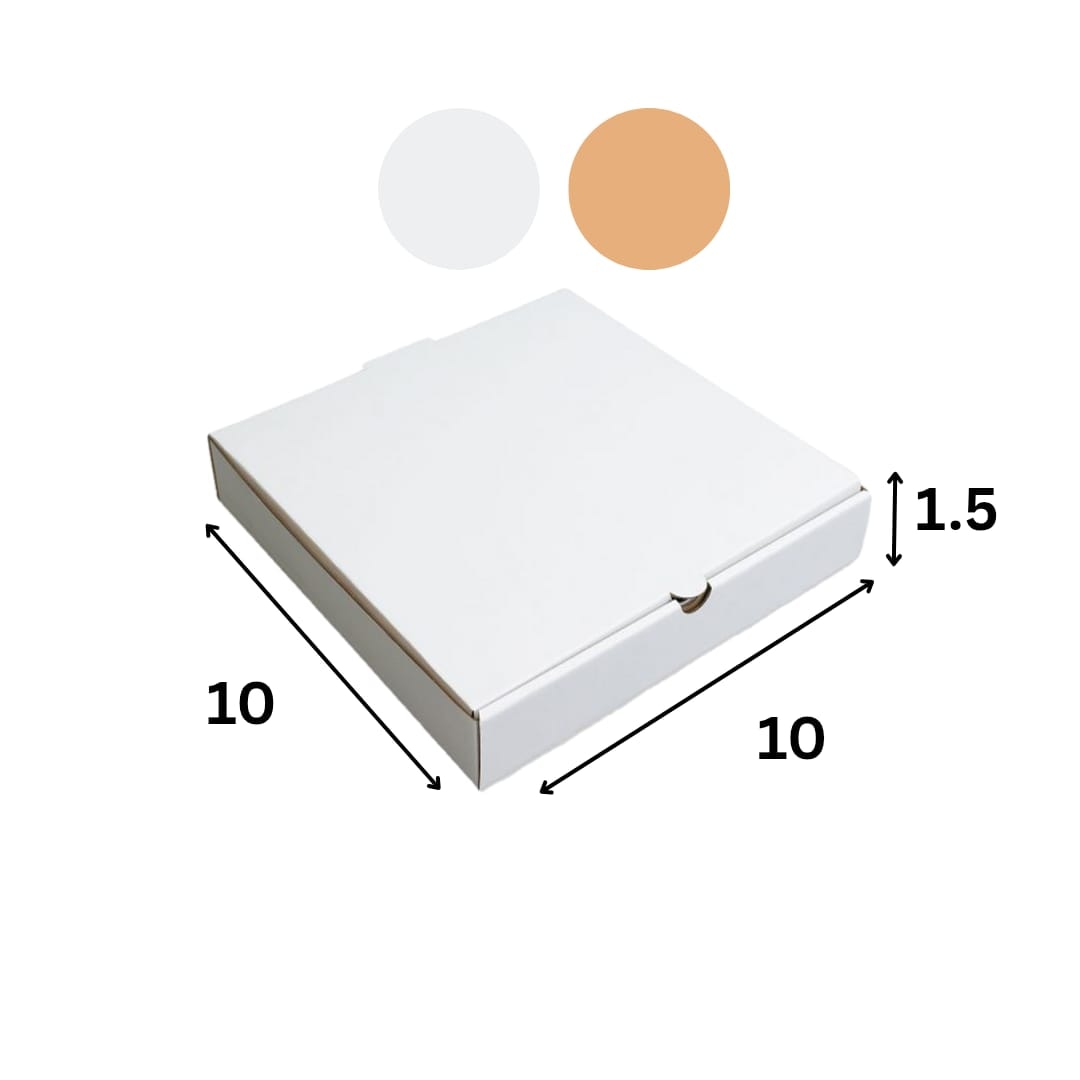 | PIZZA BOX PIZZA BOX 10X10X1.5 ₹20 Our Pizza Boxes are designed to keep your pizzas fresh, hot, and intact during delivery or takeaway. |
Frequently asked questions
How much clearance should a pizza box have?
Measure the baked pizza across its widest point, including the crust, and leave 10–20 mm between the pizza and each wall.
What does food-grade mean for a pizza box?
Ask the supplier for evidence that the board, inks, coatings and adhesives are suitable for direct food contact, along with the material or compliance documentation.
How should you pack hot pizza for delivery in Bangalore?
Place the pizza in a correctly sized box, vent or briefly rest it to control steam, and keep the box level to limit sliding and heat loss.
Can you use a regular pizza box for frozen pizza?
Use a box designed for frozen handling and pair it with a separate freezer pack; keep the pack from direct contact with the pizza or food-contact surface.
Related products
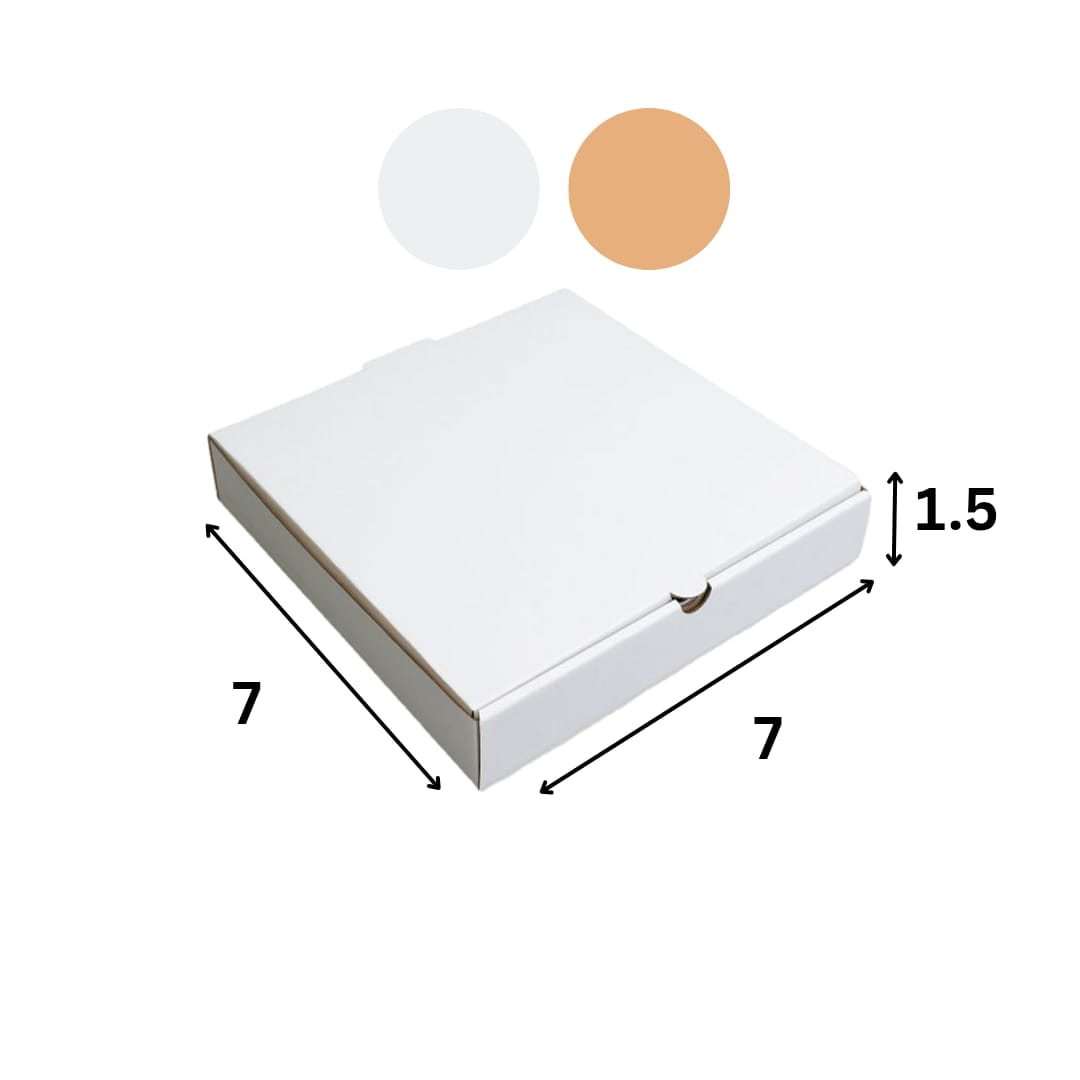 | PIZZA BOX PIZZA BOX 7X7X1.5 ₹12 Our Pizza Boxes are designed to keep your pizzas fresh, hot, and intact during delivery or takeaway. |
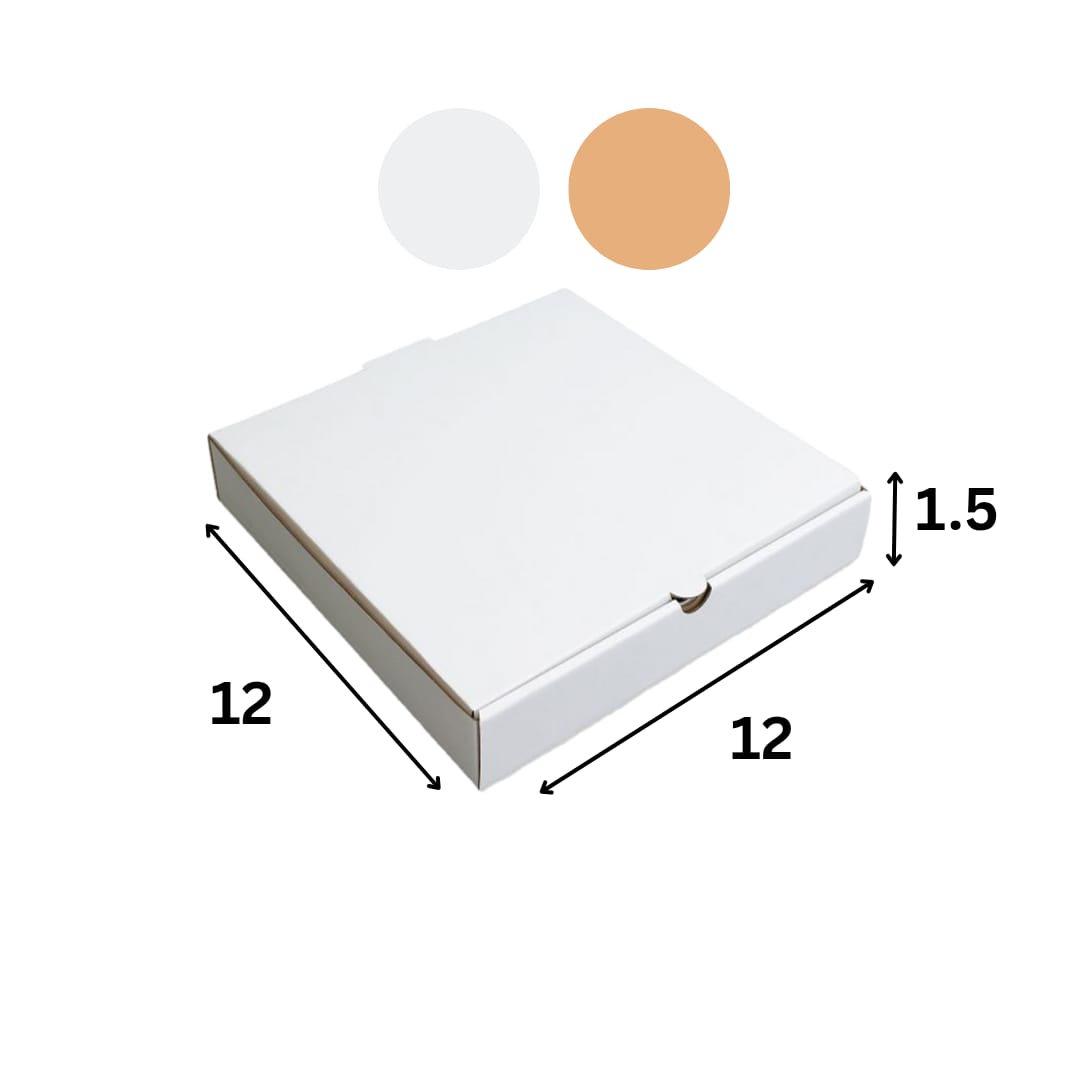 | PIZZA BOX PIZZA BOX 12X12X1.5 ₹30 Our Pizza Boxes are designed to keep your pizzas fresh, hot, and intact during delivery or takeaway. |
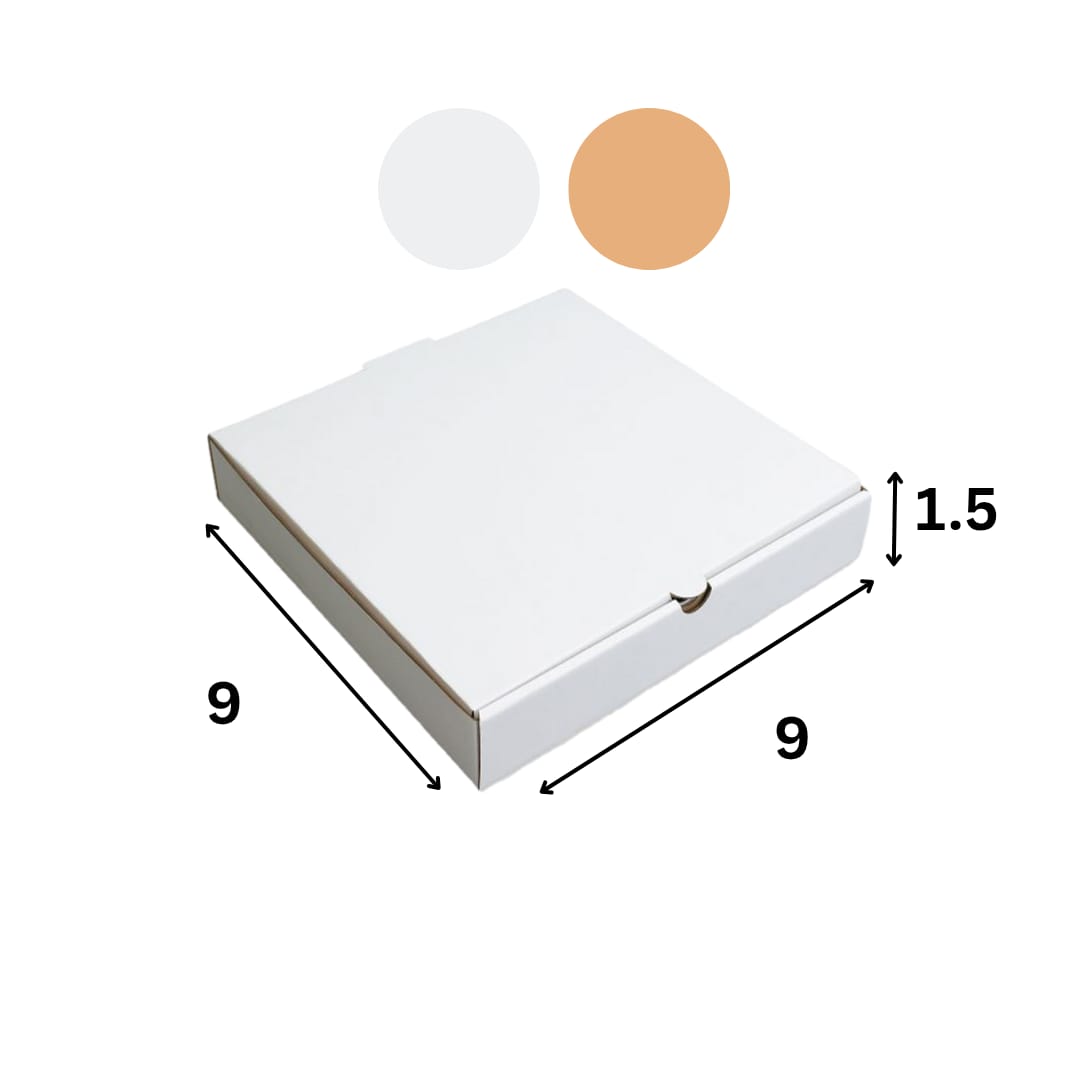 | PIZZA BOX PIZZA BOX 9X9X1.5 ₹14 Our Pizza Boxes are designed to keep your pizzas fresh, hot, and intact during delivery or takeaway. |
Keywords