
A tube protects a rolled document only when its internal dimensions, wall construction, cap retention and packing method match the journey. By the end, you will know what to ask a supplier, how to size the tube, how to pack it, and when another mailer is safer.
Key takeaways
- Confirm dimensions, units and whether diameter means inside or outside measurement.
- Choose tight-fitting end caps that resist pull-out during sorting and delivery.
- Leave packing clearance without forcing the document into the tube.
- Use rigid flat packaging when rolled documents cannot tolerate curl memory.
What do the tube dimensions actually measure?
A code such as 26X3, 40X3, 13X3 or 4X3 is meaningless until the supplier confirms whether it means length by outside diameter, and whether the units are inches, centimetres or millimetres. Do not treat the quoted diameter as usable space: wall thickness reduces the internal diameter available for the roll.
| Listing | Confirm in writing | Why it matters |
|---|---|---|
| 26X3, 40X3, 13X3 or 4X3 | Length order, measurement units and whether diameter is internal or outside | Prevents an inch-based order being compared with a millimetre-based one |
| Tube length | Internal clear length, and whether cap seats are excluded or included in the stated length | The document must fit after both end caps are installed |
| Tube diameter | Internal diameter, outside diameter and wall thickness | Determines roll clearance and crush resistance |
| Construction | Spiral-wound multi-ply board or thin single-layer board | Thin board can flatten despite correct nominal dimensions |
Request these four figures: internal length, internal diameter, outside diameter and wall thickness. A document’s usable width must fit inside the clear length after both cap seats are installed. If the roll touches either cap, its edges can crease; excessive spare length lets it slide and strike the ends.
For long cardboard mailing tubes, ask how the tube resists bending across an unsupported span. Compare ply construction, wall thickness and span performance rather than choosing by length alone. A longer tube bends more under its own weight and faces greater mid-span crushing risk.
Which end cap actually keeps the contents inside?
A cap that merely covers the opening is not enough for posting: resolve how it engages with the tube before calling the package ready.
Ask whether all four listed sizes are supplied with caps at all. Record the closure type and retention method, because “with caps” does not identify whether they are removable, glued, threaded, snap-fit or tamper-evident.
| Closure | Retention behaviour | Best use |
|---|---|---|
| Removable friction-fit | Fast to open and reuse; can loosen when the tube lands on an end | Short handling cycles or secondary-taped shipments |
| Glued | Permanent joint; difficult to inspect or reuse | One-way dispatches |
| Threaded or snap-fit | Positive engagement when fully locked | Courier handling and repeated use |
| Tamper-evident | Shows opening or interference | Sensitive documents and controlled handover |
For courier shipments, specify positive engagement where available, then apply pressure-sensitive tape across both cap-to-tube joints. Press each cap fully home and check that it does not crush or split the tube wall.
Cardboard mailing tubes with caps protect open ends from dust, abrasion and direct edge impacts, but the joint is not watertight. Moisture can enter around the cap or through paperboard, so use a sealed polyethylene inner bag for monsoon transport, wet floors or outdoor storage.
Mailing tubes with end caps still collapse under a pallet load or conveyor pinch if the wall is thin. For archival documents, request neutral or alkaline, low-lignin paperboard and non-migrating closures; a plastic cap cannot correct acidic board.
How should you size and pack the rolled document?
Measure the finished roll, not the document’s flat width. Wrap the sheet around a clean, rigid core large enough to avoid a permanent curl, then measure the roll’s outside diameter.
Choose a tube with enough clearance for insertion and removal, but not enough space for the roll to telescope or travel substantially from end to end.
| Roll fit | What goes wrong | Better choice |
|---|---|---|
| Tight | The sheet develops a permanent curl and may be difficult to remove. | Increase the core diameter and allow modest internal clearance. |
| Loose | The roll rubs against the wall, telescopes and suffers edge damage. | Reduce the clearance or add a rigid inner wrap. |
| Compressed | The ends press into the caps and corners can crease. | Increase the clear internal length or remove excess packing. |
For fragile sheets, add an interleaf or rigid inner wrap. Secure the roll with paper bands or low-tack ties that leave no marks; never fold corners or apply adhesive directly to the document. Put the label or printed face inward when abrasion is a concern, unless handling instructions require it outward.
The clear internal length of postal tubes with end caps must accommodate the document width plus both cap-seat clearances. Insert the roll without forcing it, fill only the necessary end clearance, and fit both caps completely. Tape each cap-to-tube joint.
A cardboard tubes with end caps shipment is ready only after a gentle shake confirms that the contents do not slide, rattle or press against either cap.
When is a tube the wrong protective format?
A tube is the wrong format when rolling creates more damage than bending would. Cardboard tubes with end caps suit flexible sheets that tolerate controlled rolling; their circular shape resists bending better than a flat envelope.
- Reject an ordinary open-ended tube unless you add separate closures. Without them, dust enters and the roll can escape during handling.
- Choose plastic when moisture resistance and repeated use justify the higher cost. Plastic transmits impact differently from paperboard and still needs secure caps; it is not automatically waterproof.
- Use a triangular book-wrap mailer for flat or folded items that must not be rolled. Its shape also fits some postal handling systems better.
- Choose a flat rigid mailer for photographs, certificates, engineering drawings, artwork, or prints that must remain flat. Do not trade that protection for a long tube simply because the tube is easier to obtain.
- Send framed material in a crate or purpose-built protective carton, not a standard document tube. Heavy artwork needs stronger board, protected ends, and a defined compression rating.
- Keep the item flat if it has brittle media, thick mounted layers, surface decoration, a tight allowable curl radius, or instructions requiring flat storage. A rigid flat pack is the correct choice when the document must not be rolled tightly at all.
How do you verify a tube for Bangalore distribution?
Verify the complete package under the conditions it will face in Bangalore distribution, not with a hand-squeeze test. Paperboard absorbs moisture and loses stiffness during humidity cycling, so request conditioning based on ASTM D4332 before comparing results.
Ask the supplier to document:
- ASTM D642 compression: load, tube orientation and test duration.
- ASTM D5276 free-fall drops: cap ejection, end crushing and document telescoping.
- ASTM D999 vibration: cap loosening, roll abrasion and test sequence.
- ASTM D4169 details: distribution cycle, assurance level, payload, orientation and test sequence. “Tested to D4169” alone is incomplete.
| Test | What it exposes | What to specify |
|---|---|---|
| ASTM D4332 conditioning | Moisture-related loss of stiffness | Temperature, relative humidity and conditioning duration |
| ASTM D642 compression | Flattening under stacking or conveyor loads | Load, orientation and duration |
| ASTM D5276 drops | Cap ejection, crushed ends and telescoping | Drop height, orientations and number of drops |
| ASTM D999 vibration | Loosened caps and roll abrasion | Vibration profile, duration and package orientation |
For postal tubes with end caps in Bangalore, request internal dimensions, wall thickness, ply construction, cap type, cap-retention method, moisture controls and test conditions. The same checks apply to cardboard tubes with end caps in Bangalore.
Packbox.In can help compare tube specifications with the document format and route, but request performance data rather than relying on catalogue size. For valuable or irreplaceable documents, send a packed sample through the intended courier route.
Related products
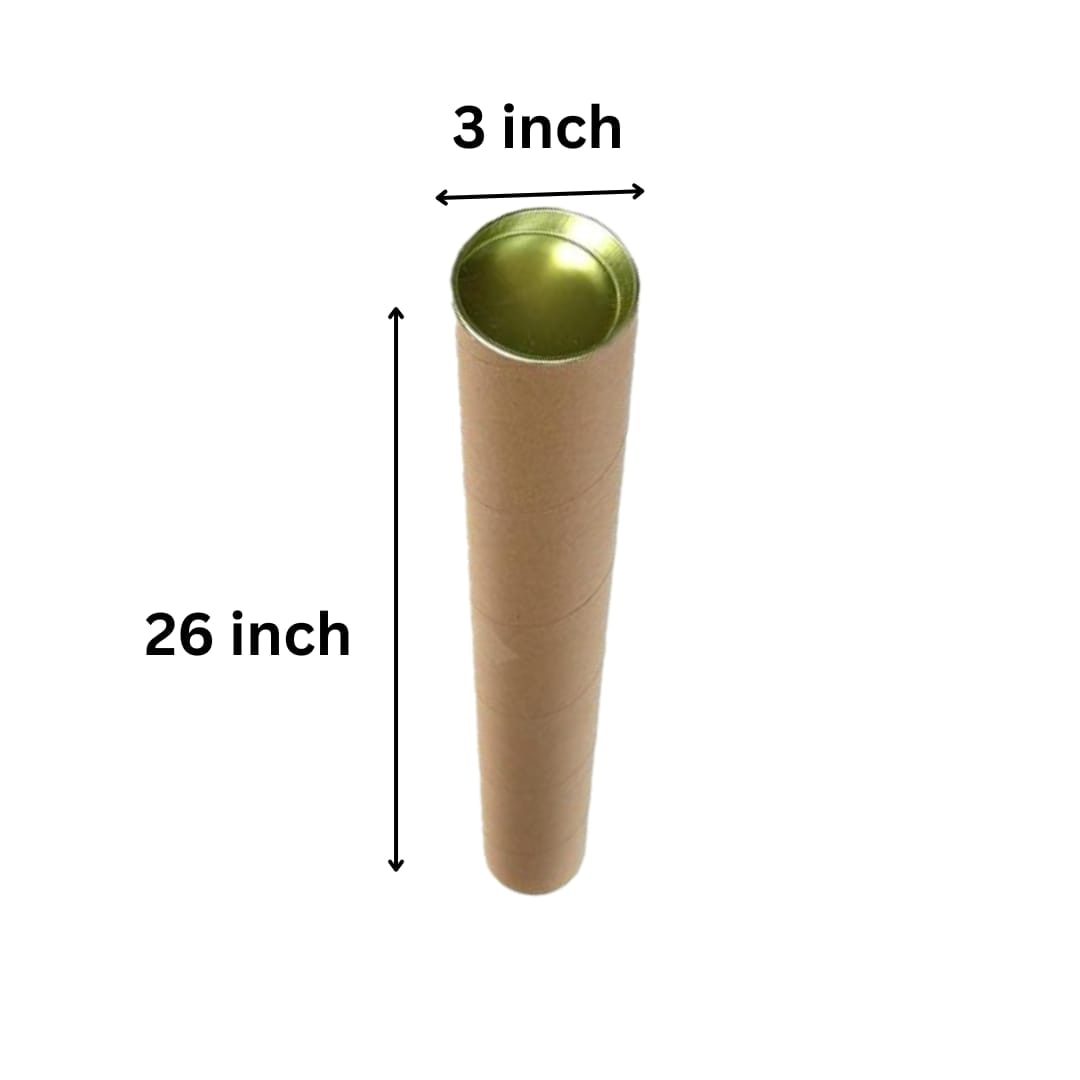 | Tubes Cardboard Postal Tubes 26X3 ₹100 Our Postal Tubes are the perfect solution for safely packaging and transporting documents, posters, blueprints, artwork, charts, and other rolled... |
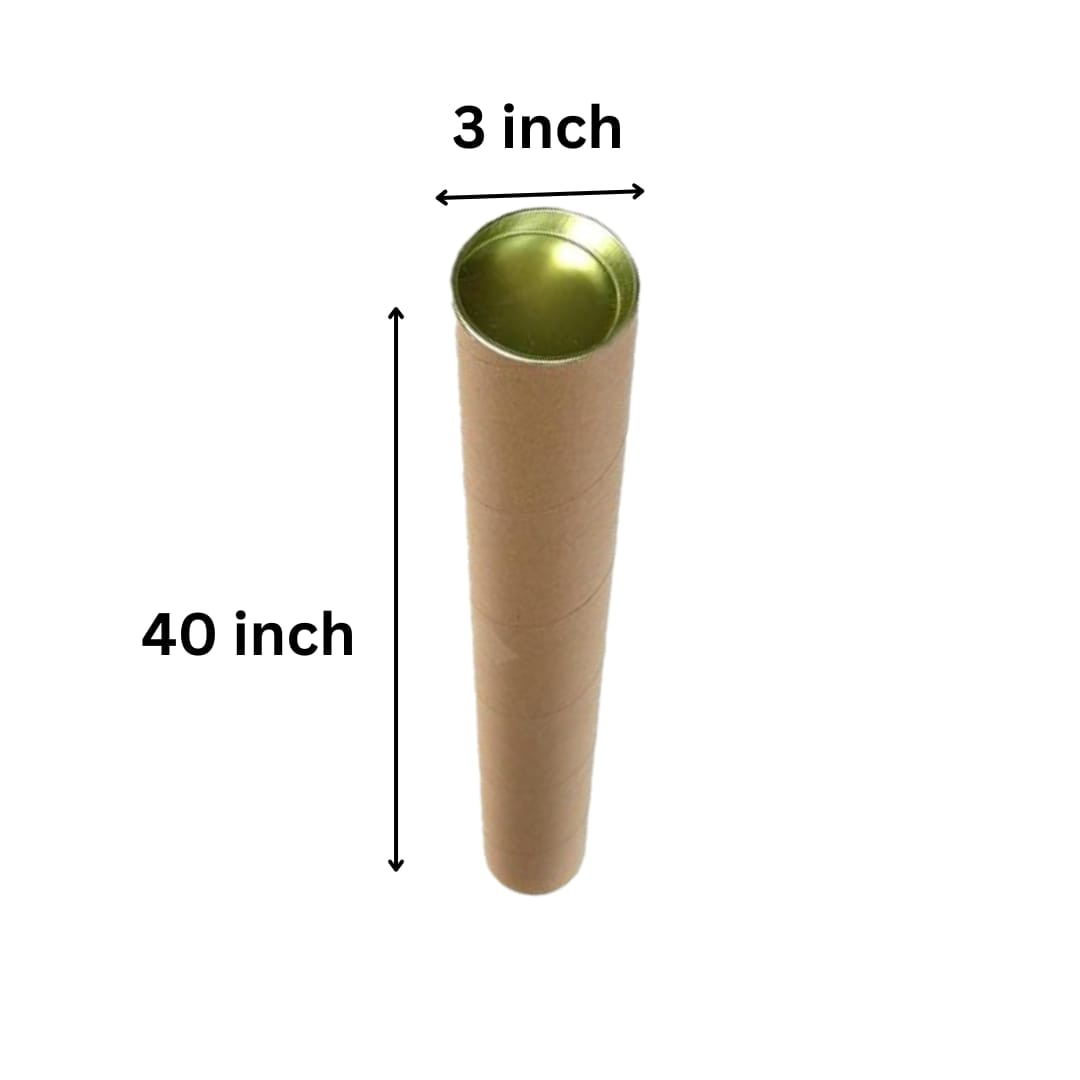 | Tubes Cardboard Postal Tubes 40X3 ₹100 Our Postal Tubes are the perfect solution for safely packaging and transporting documents, posters, blueprints, artwork, charts, and other rolled... |
Frequently asked questions
What do mailing tube dimensions such as 26X3 measure?
Ask the supplier whether the first number is tube length and the second is outside diameter. Confirm the units and internal diameter because wall thickness reduces usable space.
Which end cap keeps contents inside a postal tube?
Use a cap that fits tightly over or into the tube and resists pull-out. Test the assembled tube by turning it upside down and applying a firm hand pull to the cap.
How should you size and pack a rolled document?
Choose a tube longer than the document, calculate usable internal diameter after wall thickness, roll the document without crushing it, and prevent movement with suitable packing material.
When is a cardboard mailing tube the wrong format?
Choose flat rigid packaging when the document must arrive completely flat, has fold-sensitive coatings, or develops damaging curl memory after rolling.
How do you verify a mailing tube for Bangalore distribution?
Confirm the tube dimensions, cap fit, wall construction, load test, moisture exposure, address-label area and resistance to crushing during courier handling.
Related products
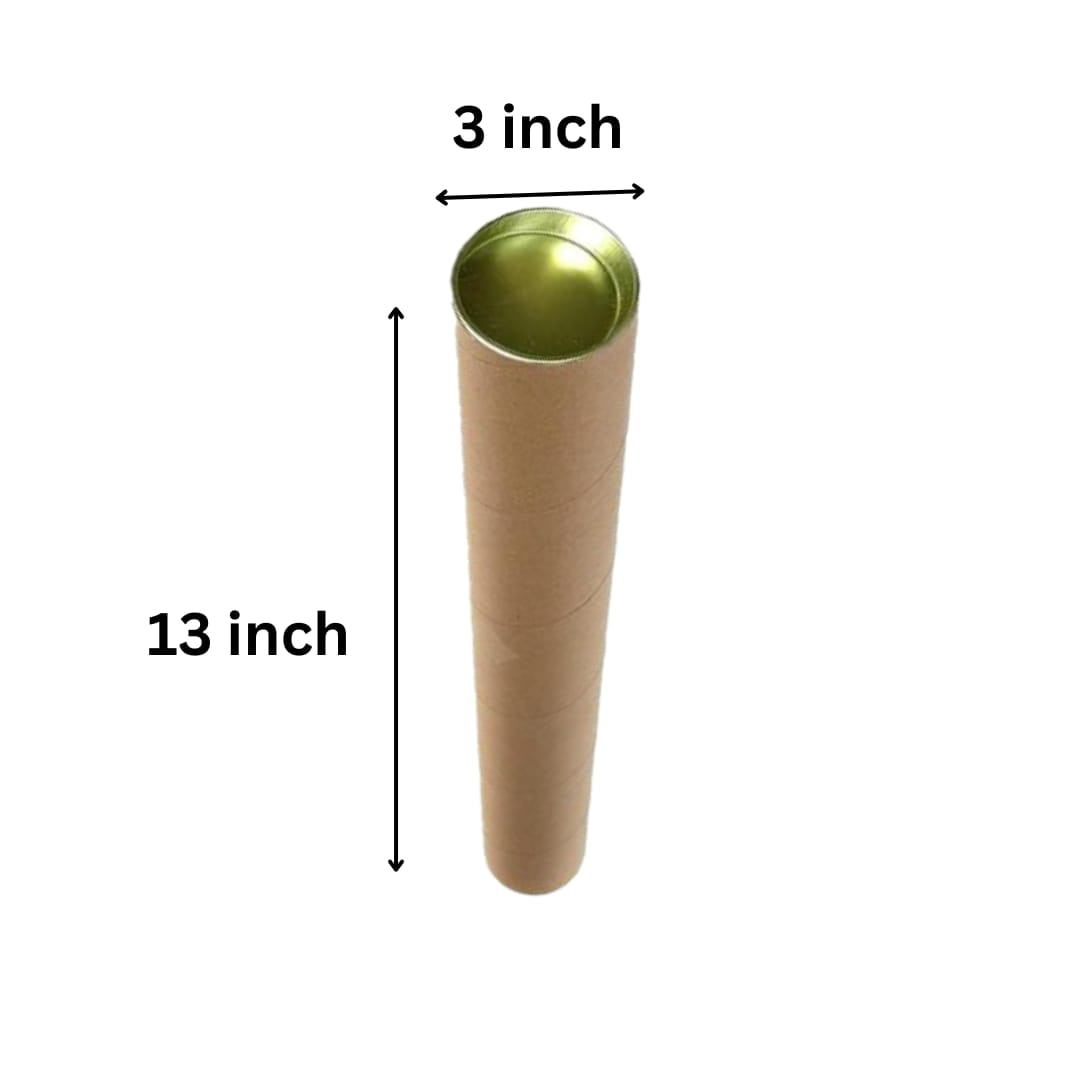 | Tubes Cardboard Postal Tubes 13X3 ₹100 Our Postal Tubes are the perfect solution for safely packaging and transporting documents, posters, blueprints, artwork, charts, and other rolled... |
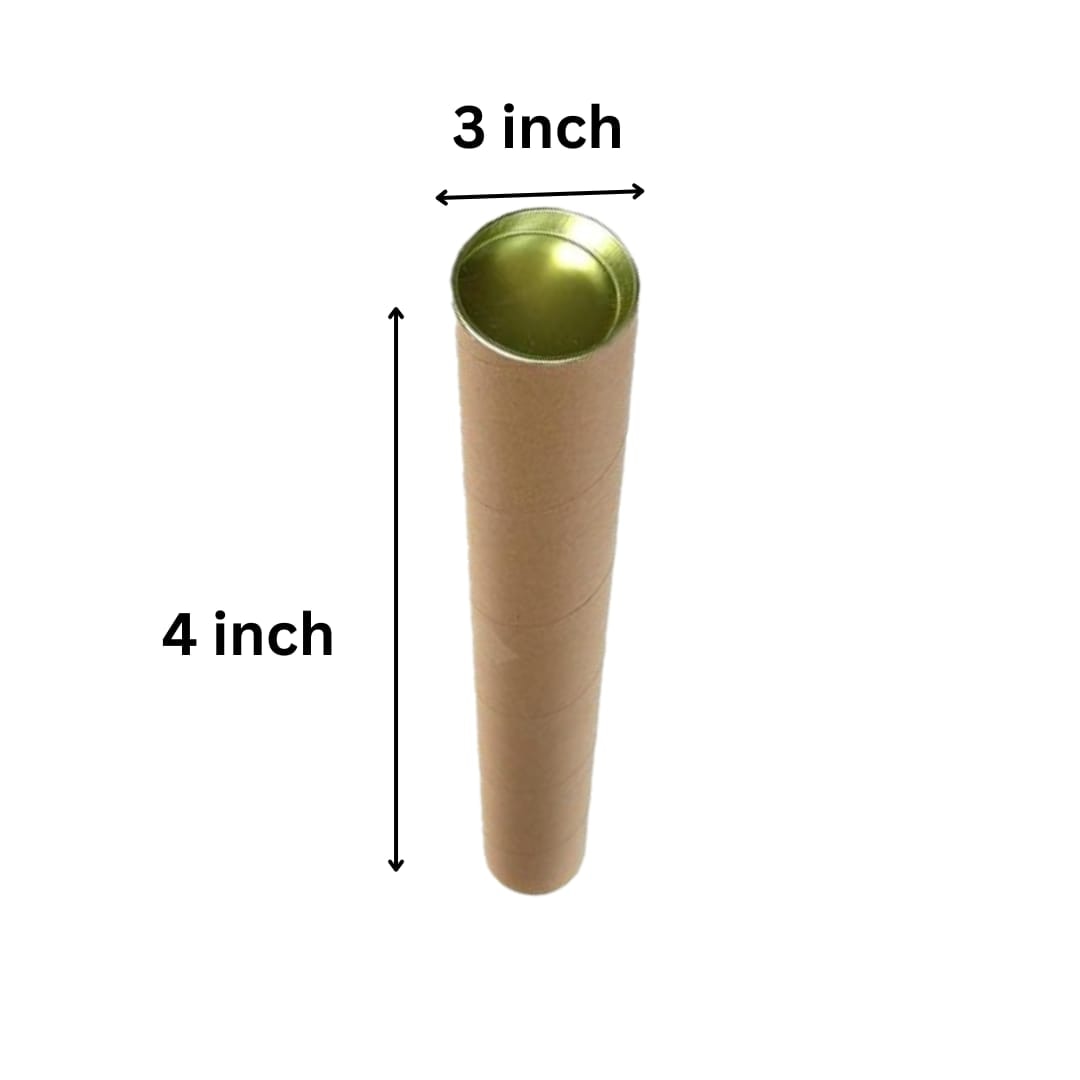 | Tubes Cardboard Postal Tubes 4X3 ₹100 Our Postal Tubes are the perfect solution for safely packaging and transporting documents, posters, blueprints, artwork, charts, and other rolled... |
Keywords