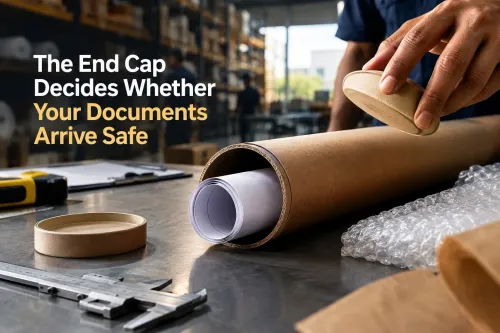
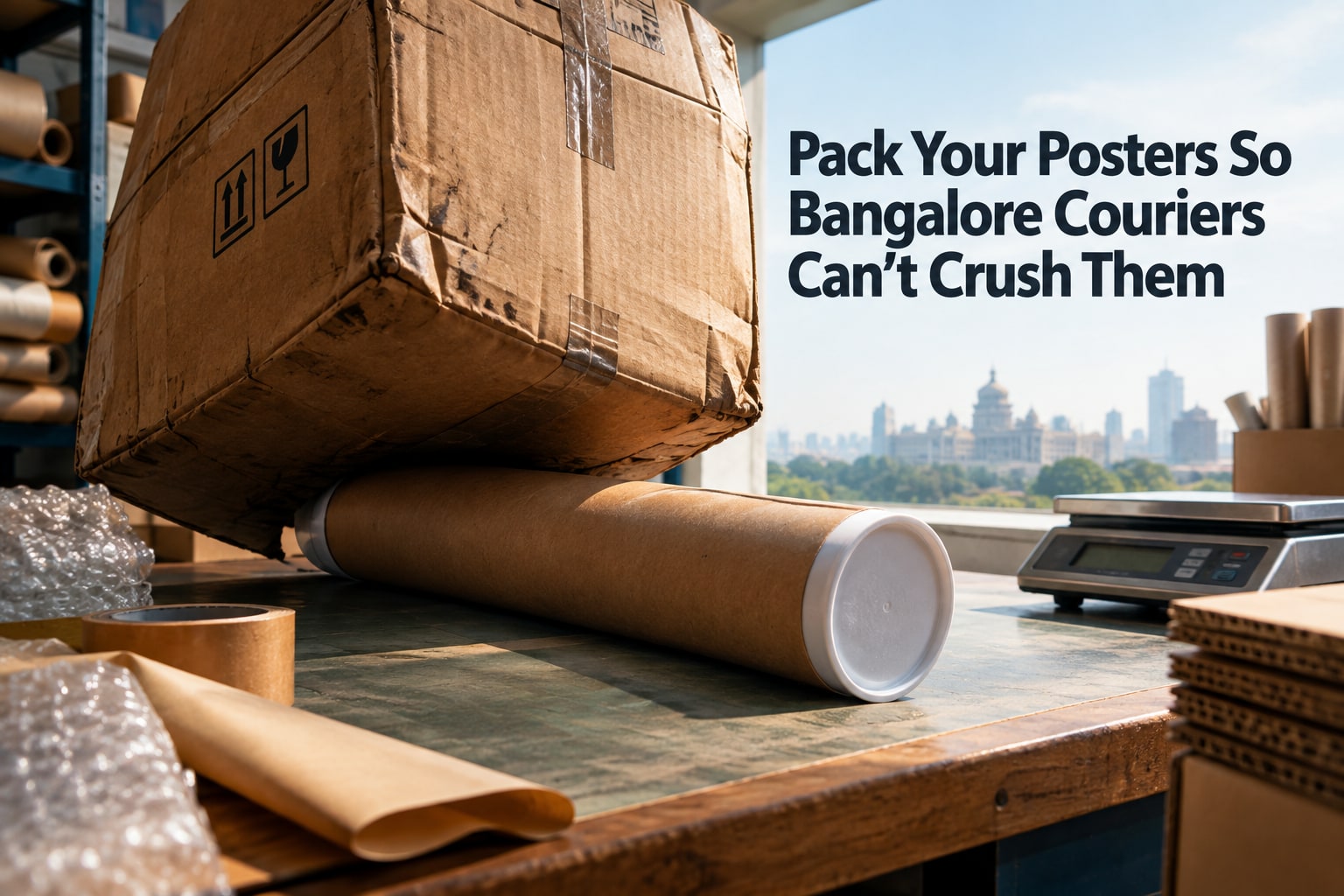
A poster can arrive with a permanent curl, cracked ink, crushed edges or moisture damage even when the tube looks intact. You will learn how to choose the dimensions, roll and cushion the print, secure both ends, and calculate the packed size before handing it to a courier in Bangalore.
Key takeaways
- Choose a tube 25–50 mm longer than the poster roll at each end.
- Wrap the print with acid-free paper before rolling it image-side inward.
- Fill empty tube space so the poster cannot slide during handling.
- Measure the sealed tube before selecting a Bangalore courier service.
Choose the tube from the poster’s rolled dimensions
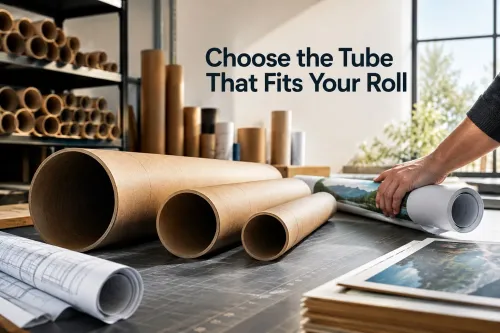
Measure the poster’s roll width before choosing a tube. The tube’s usable length must exceed that width, with about 25–50 mm of clearance between each rolled end and its cap. Never force a poster wider than the tube into a diagonal fold. Excessive empty length lets the roll slide and increases bending leverage during handling.
Roll around a smooth, inert 75–100 mm core, not a narrow 25–40 mm core; the larger diameter reduces edge lift and permanent curl.
| Option | Construction | Best use |
|---|---|---|
| Thin retail poster tube | Light wall, weak rims and basic caps | Short, light posters with gentle handling |
| Rigid spiral-wound or convolute-wound paperboard tube | Stronger wall and end structure | Commercial shipping and long cardboard mailing tubes |
| Triangular or rectangular rigid mailer | Flat sides resist rolling and stack better | Conveyor networks where round tubes can roll |
For the best tubes for shipping posters, prioritise wall thickness and end strength over diameter alone. A larger tube with a thin wall can ovalise under stacking and crush the print. For rolls longer than roughly 750–1,000 mm, choose heavier-wall construction, reinforced ends or a telescoping tube with a close-fitting outer section.
That core choice is central to how to pack posters in tubes without creating a tight curl. A triangular or rectangular mailer is the better choice when conveyor rolling is a concern.
Roll and wrap the print without marking the image
For how to pack posters tubes without marking the image, roll most unmounted posters with the printed face inward. The outer layers then shield the artwork. Before rolling, inspect and photograph the print, confirm that fresh ink or varnish has cured, and lay it completely flat.
- Place clean glassine, acid-free tissue, or archival paper against the image when ink, varnish, or a coating could offset, abrade, or block against itself.
- Roll the protected poster around a smooth, inert 75–100 mm core. Keep tension even, guide the edges by hand, and leave the final turn relaxed; a tight last turn creates pressure marks, edge lift, and a permanent curl.
- Secure the outer wrap with a removable paper band or another acid-free paper wrap. Keep adhesive tape off the artwork.
- Keep the finished roll narrow enough to enter the tube freely, without squeezing or forcing it.
The right surface protection depends on the finish:
| Option | Use | Main risk |
|---|---|---|
| Glassine or archival paper | Direct interleaf against vulnerable ink or varnish | Replace it if creased or dirty |
| Plastic sleeve | Moisture and surface barrier | Do not use it if it clings to, blocks against, or traps condensation on the finish |
| Bubble wrap | Outer cushioning layer | Place bubbles away from the poster, outside the paper protection |
Do not let ordinary newsprint or recycled paper touch the artwork; fibres, printing ink, and acidity can transfer. This is the core rule for how to pack posters in tubes and how to pack posters tubes without turning a clean print into a marked one.
Stop movement and make both tube ends withstand handling
A loose roll can telescope, slide end to end, and strike the caps repeatedly during courier handling. Restrain it before insertion, but never put adhesive tape on the artwork: glue can transfer, tear the sheet, or lift vulnerable ink.
1. Secure the wrapped roll with a removable paper band or an outer acid-free paper wrap. Keep the finished roll narrow enough to enter freely, and insert it without forcing or compressing the poster.
2. Fit a plug or cap at each end so neither closure can be pushed into the tube by hand. If the roll travels when you shake the capped tube lightly, add inert end filler or improve the core-and-plug fit; do not crush the poster to remove the gap.
3. Close both ends fully, then seal each cap-to-tube seam around its entire circumference with reinforced paper tape or pressure-sensitive packing tape. Tape across the opening alone can let an impact eject the plug.
Reinforce a weak cardboard rim with an additional full-width band around the edge, and leave a continuous tape line across the cap and tube as tamper evidence.
4. Put the sealed tube inside a polyethylene outer bag or film wrap before labelling it. This barrier helps against Bangalore’s rain and humidity; keep any desiccant in a separate pouch, never against the paper. Place the address label on the tube body, away from the taped seams.
Measure the finished package before booking a Bangalore courier
Measure the shipment you will hand to the courier, not the flat poster. Use the capped, sealed and externally protected package: record its outside length, outside diameter for a round tube, or outside width and height for a non-round mailer, then weigh it.
A courier’s dimensional weight often uses length × width × height divided by a carrier-specified divisor, so a light, long parcel can cost more than its scale weight. Oversize and additional-handling fees can apply too.
| Mailer | Freight and handling implication | When it fits |
|---|---|---|
| Round tube | Its circular profile can roll on conveyor belts or inside delivery vehicles, increasing movement and impact risk. | Use it when the carrier and packaging provide reliable restraint. |
| Triangular rigid mailer | Its flat faces stack better and prevent rolling while retaining rigid protection. | Choose it when conveyor rolling is a concern. |
| Rectangular rigid mailer | It stacks efficiently, but exposed corners can receive crushing loads. | Use it when corner reinforcement and carrier limits are confirmed. |
Before quoting freight, obtain the courier’s current India service rules. Check maximum length, girth limits, dimensional divisor and oversize or surcharge schedules because each carrier sets them differently.
For how to ship posters in tubes without freight surprises, ask Packbox.In or another Bangalore supplier for actual outside dimensions, wall construction, cap fit and a packed test sample; do not order by a nominal 4-inch or 3-inch label alone. This matters most with long cardboard mailing tubes.
Related products
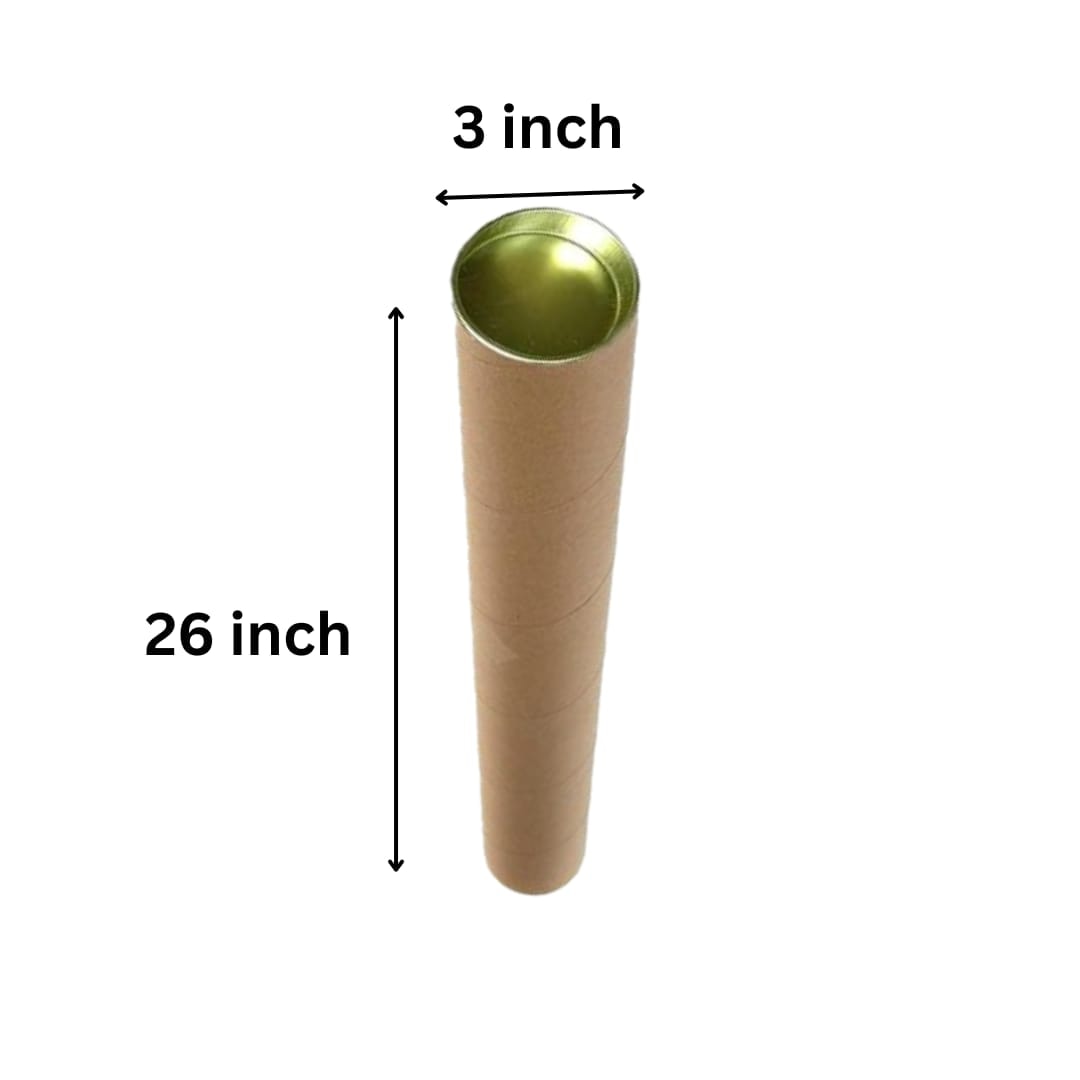 | Tubes Cardboard Postal Tubes 26X3 ₹100 Our Postal Tubes are the perfect solution for safely packaging and transporting documents, posters, blueprints, artwork, charts, and other rolled... |
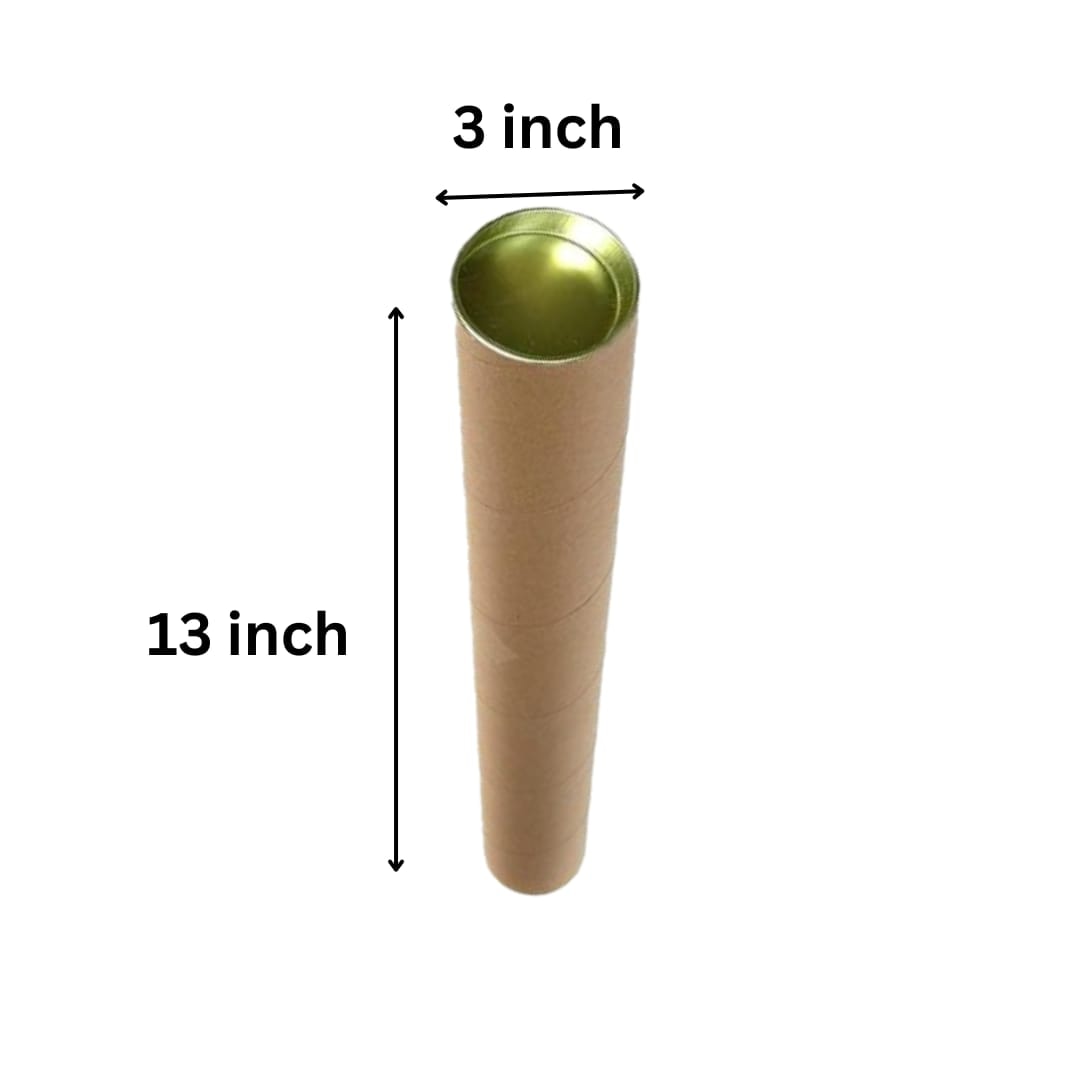 | Tubes Cardboard Postal Tubes 13X3 ₹100 Our Postal Tubes are the perfect solution for safely packaging and transporting documents, posters, blueprints, artwork, charts, and other rolled... |
Use a repeatable final packing check before dispatch
Use this dispatch sequence to check how to pack posters in tubes before the parcel leaves your hands:
- Inspect the print for scuffs, creases and loose ink, then photograph both faces and each corner.
- Confirm that all ink or varnish is fully cured. Fresh surfaces can offset against interleaving paper or themselves.
- Interleave with glassine, acid-free tissue or archival paper, then wrap the print without trapping folds.
- Roll it around a smooth 75–100 mm core with even tension and no tight final turn.
- Secure the outer wrap with a removable paper band, keeping adhesive away from the image.
- Insert the roll without force, leaving end clearance. Bubble wrap that makes insertion tight can crush edges and prevent proper cap fitting.
- Check the tube for crushing, ovaling and exposed cardboard edges. Replace it if the roll rubs against a damaged rim.
- Fit and reinforce both caps. Reject any loose cap that moves when pushed by hand, then seal each cap-to-tube seam around its circumference.
- Shake the capped tube lightly. If the roll slides end to end, add inert end filler or improve the core-and-plug fit.
- Check for trapped condensation before adding a sealed polyethylene moisture barrier. Place the address label on the tube body, never across a cap seam.
Mark “Handle with care” or similar instructions only when the carrier accepts them; no label repairs weak packaging. For high-value artwork, retain photographs, packed dimensions and weight, and confirm the recipient can open the taped seam without cutting the tube or poster.
This final record supports both how to ship posters in tubes and any damage claim.
Frequently asked questions
How much longer should a poster tube be than the rolled poster?
Leave about 25–50 mm of clearance between each rolled end and its cap. Avoid excessive empty length because the roll can slide and bend during handling.
How should you roll and wrap a poster without marking the image?
Use a clean, smooth protective sheet around the print, then roll it evenly without creasing or pressing dirt into the image surface.
How do you stop a poster from moving inside a mailing tube?
Fill excess space with suitable cushioning so the roll stays centred without compressing the poster or forcing it against the caps.
What should you measure before booking a Bangalore courier?
Measure the finished tube’s length, outside diameter and packed weight after securing both ends. Give those measurements to the courier when booking.
Related products
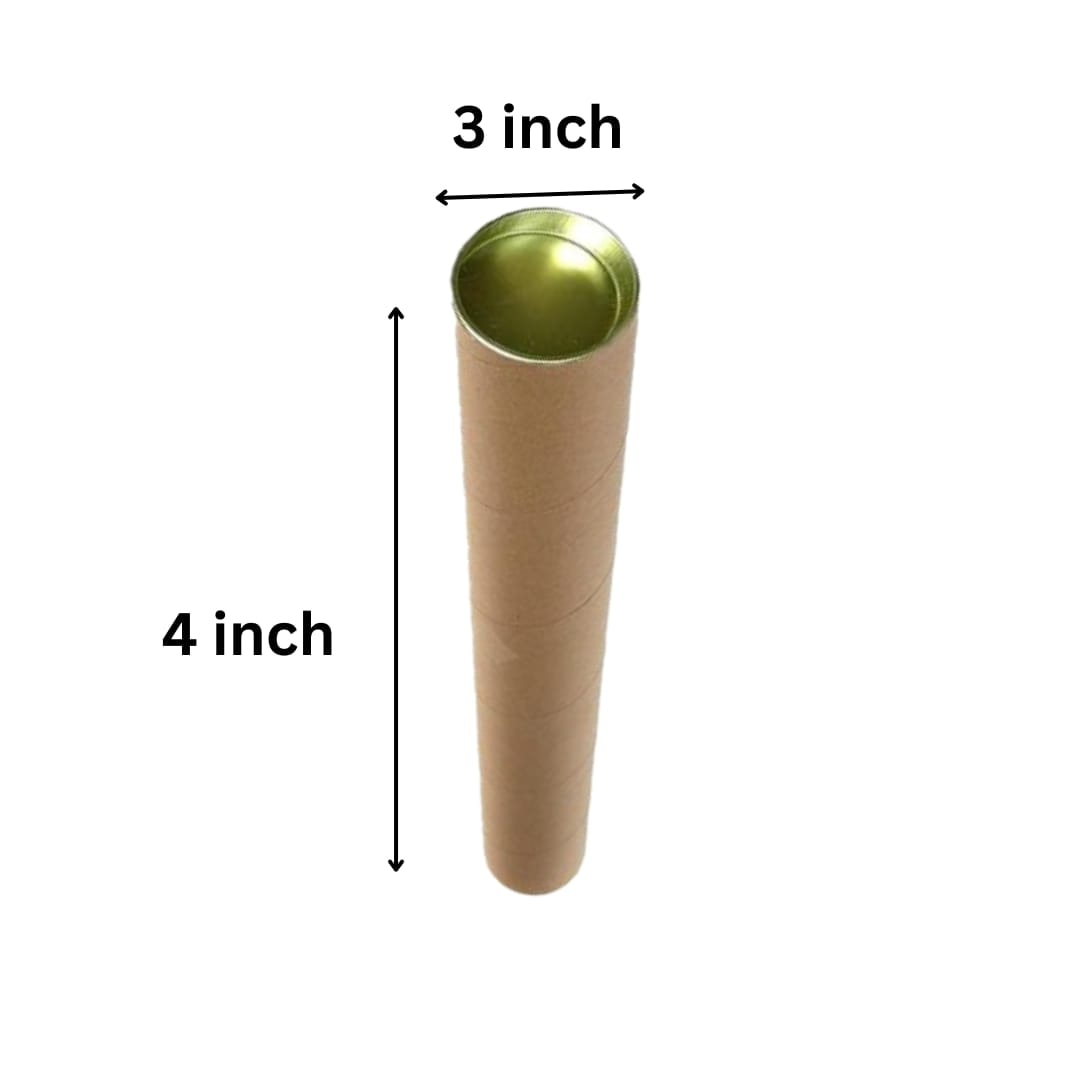 | Tubes Cardboard Postal Tubes 4X3 ₹100 Our Postal Tubes are the perfect solution for safely packaging and transporting documents, posters, blueprints, artwork, charts, and other rolled... |
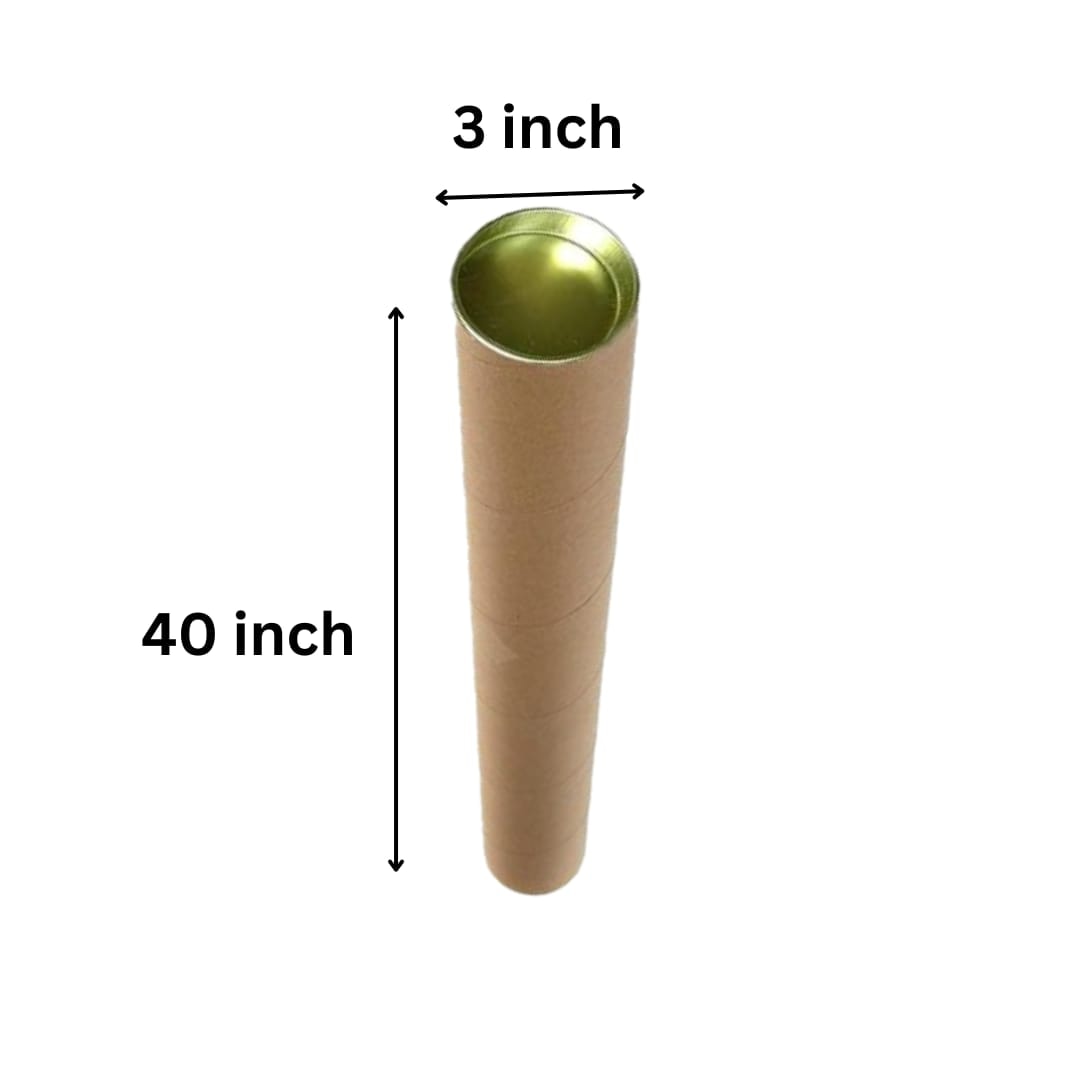 | Tubes Cardboard Postal Tubes 40X3 ₹100 Our Postal Tubes are the perfect solution for safely packaging and transporting documents, posters, blueprints, artwork, charts, and other rolled... |
 | Packaging Material Air Bubble Roll - 100 Meter x Width 5 Feet ₹1200 Bubble Wrap Available in Various Length as Per Requirement, Such As 10, 15, 20, 50, and 100 Meters (choose the one that best fits your... |
Keywords