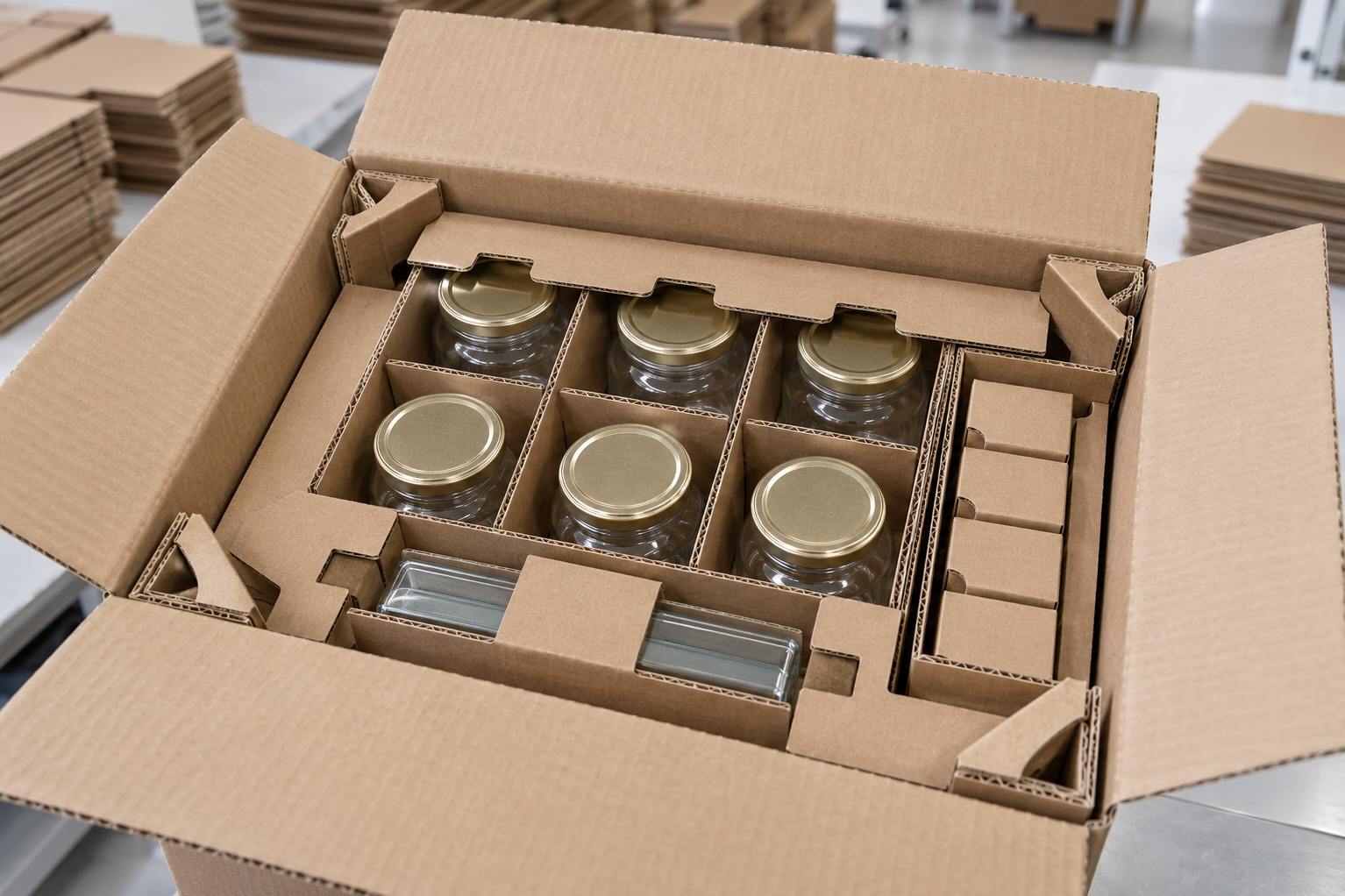
A strong outer carton does not automatically prevent transit damage. Products may still slide, collide, rotate or press against one another inside the box. Corrugated Fittings Manufacturers in Bangalore address this problem by creating partitions, pads, sleeves and locking supports that control how products sit within the package.
Corrugated fittings are internal packaging components manufactured to match a product or carton. They can separate multiple items, reinforce vulnerable areas and reduce excessive movement. For many applications, they also provide a recyclable paper-based alternative to certain plastic packaging components.
Common Types of Corrugated Fittings
Internal fittings can take several forms depending on the product and the way it is packed.
Partitions
Partitions divide a carton into separate cells. They are often used for bottles, jars, components, cosmetics and small retail products. The cell dimensions should closely match each item without making packing unnecessarily difficult.
Layer Pads
Flat corrugated sheets placed between product layers help distribute weight and prevent direct surface contact. They are useful when several items are stacked within one carton.
Collars and Sleeves
A corrugated collar can reinforce the box perimeter or hold a product away from the outer walls. Sleeves may protect long surfaces and create an additional layer around individual items.
Die-Cut Inserts
Die-cut fittings are shaped around a specific product. Slots, folds and locking tabs can hold components in position without excessive loose filling material.
Corner Supports
Corrugated corners can protect edges and help improve vertical stacking performance. They are commonly considered for appliances, furniture and rectangular products.
What Information Is Needed for an Effective Design?
The fitting must be designed around the product rather than only around the outer box. Suppliers usually need accurate product dimensions, weight and information about vulnerable areas.
It is also helpful to explain:
- Whether the product has sharp edges
- Which surfaces must remain scratch-free
- How many units will be packed together
- Whether accessories are included
- Which direction the product should face
- Whether packaging is completed manually or automatically
- How the carton will be transported
- Whether the fitting should be reusable
A product sample can reveal details that may not be visible in drawings. Protrusions, cables, knobs and uneven weight distribution can influence the insert design.
Corrugated Fittings Compared with Loose Void Fill
Loose materials can occupy empty space, but they do not always prevent a heavy product from changing position. A properly designed corrugated insert creates defined support points and can make the unboxing experience more organised.
Fittings may offer several practical advantages:
- Faster and more consistent packing
- Better product separation
- Reduced internal movement
- Improved presentation
- Easier material segregation after delivery
- Less dependence on loose fillers
- Better use of carton space
However, corrugated material is not suitable for every cushioning requirement. Highly fragile products may still need EPE foam or another shock-absorbing material. Hybrid packaging can combine a corrugated structure with foam at critical contact points.
Test the Complete Pack
A fitting that looks correct on a design screen may behave differently after repeated handling. The complete package should therefore be evaluated with the actual product.
Useful checks include:
- Shake the packed carton gently to detect movement.
- Inspect whether the insert bends under product weight.
- Confirm that delicate surfaces do not rub against the board.
- Check whether employees can load the product without forcing it.
- Stack packed cartons under realistic warehouse conditions.
- Inspect the package after a representative transport trial.
Testing should reflect the real distribution route wherever possible.
Improve Packing Efficiency Through Simple Design
An insert should protect the product without making assembly unnecessarily complicated. Too many folds and loose pieces can slow packing and create opportunities for error. Clear folding logic, locking tabs and repeatable placement can improve line efficiency.
For businesses operating from Bangalore’s manufacturing, wholesale and e-commerce areas, packaging speed may be as important as material cost. A fitting that saves a few seconds per carton can make a noticeable difference at higher dispatch volumes.
Packbox.In can develop corrugated fittings alongside compatible outer boxes, allowing both components to be assessed as one packaging system. The most effective design balances product protection, material use, packing time and transport requirements instead of focusing on any one factor alone.
Keywords