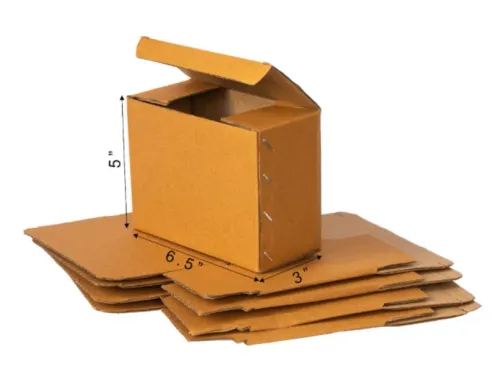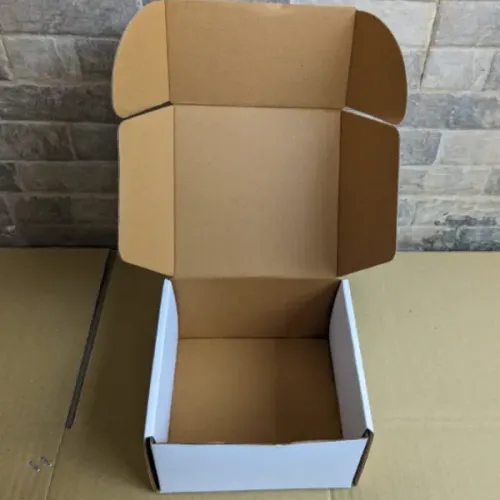
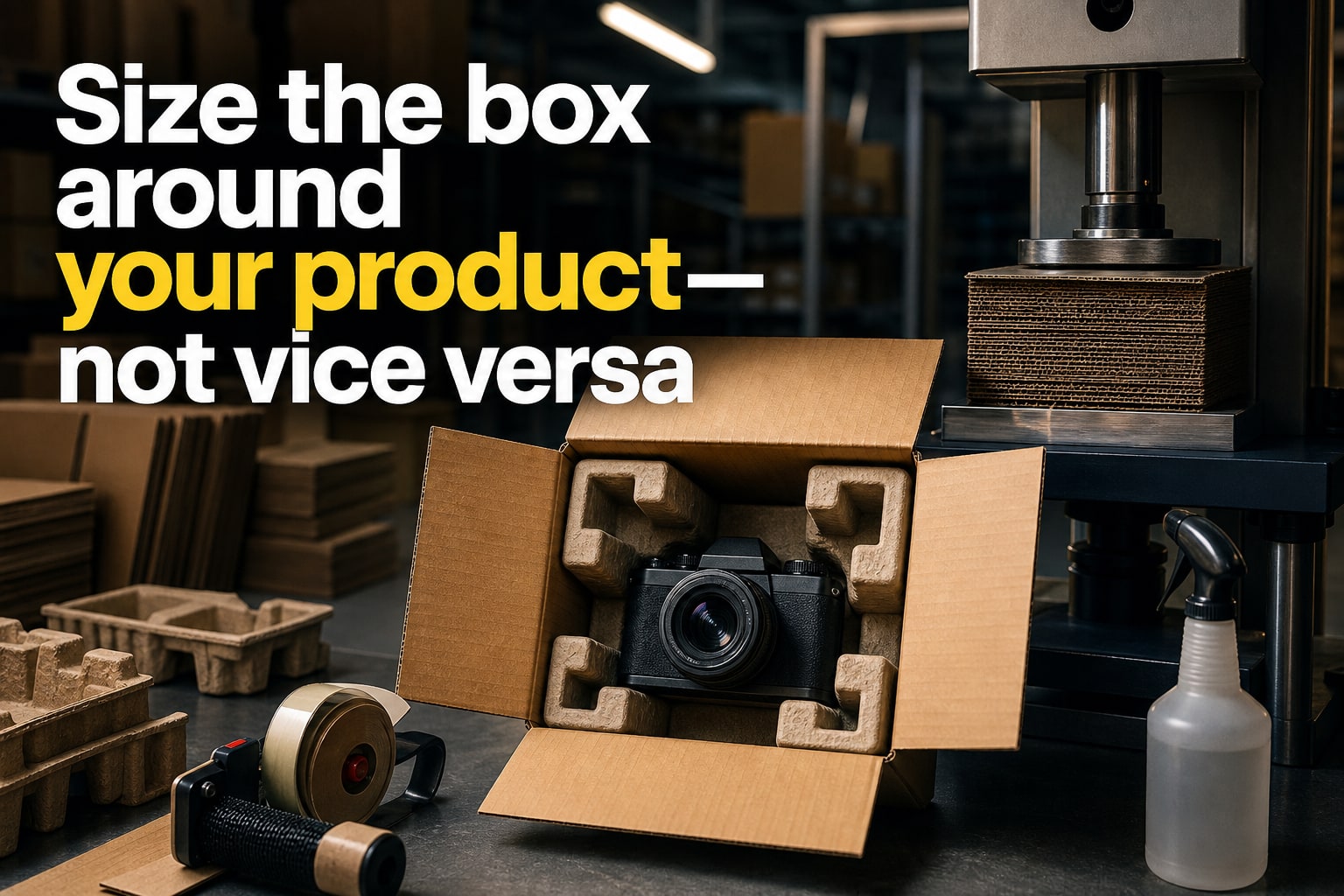
Choose the carton from the product’s outside dimensions, packed weight, fragility, and route—not from the product label or a familiar box size. By the end, you will be able to specify the right format, board strength, cushioning, closure, and supplier checks for each parcel.
Key takeaways
- Add cushioning clearance to every product dimension before choosing internal box size.
- Match carton format to the item’s shape, weight, route and handling risks.
- Specify board strength using product weight, stacking needs and moisture exposure.
- Use cushioning, strong tape and a drop test before sending the parcel.
How do you calculate the correct box size?
Measure your product’s length, width, and height at its widest and highest points. Add the cushioning gap to every side, including above and below. For example, a 300 × 200 × 100 mm product needing 25 mm clearance requires at least 350 × 250 × 150 mm of internal space.
A box that is too tight prevents proper flap closure and transfers impact directly to the product. Excess space increases void fill, product movement, and dimensional-weight charges. Internal measurements determine fit; external measurements affect courier billing and handling. Reserve a clear, flat panel for the shipping label and enough uninterrupted surface for H-pattern tape.
Before buying boxes suitable for courier shipping, check the current rules for:
- Dimensional-weight formula, divisor, rounding method, and billable minimum
- Maximum length and maximum length-plus-girth
- Minimum package dimensions and irregular-package or non-conveyable surcharges
A practical corrugated box size guide should state whether its dimensions are internal or external:
| Use case | Internal box target | Packing decision |
|---|---|---|
| Single rigid item | Product dimensions plus the required gap on all six sides | Prevent wall contact without excessive void |
| Fragile item | Product dimensions plus cushioning space for pads or inserts | Restrain movement, not just visible gaps |
| Mixed or dense load | Largest item plus dividers, pads, or fitted structures | Keep heavy items below and stop product-to-product impact |
Check the assembled carton’s outside dimensions after packing. A box that fits internally can still cross a courier’s dimensional-weight or length-plus-girth threshold.
Which parcel format fits the item and delivery route?
Match the parcel format to the product’s rigidity, shape, weight, fragility, and route. A flexible item on a short route needs less protection than a heavy, breakable product moving through a long-distance courier network.
| Option | Best fit | Choose when | Avoid when |
|---|---|---|---|
| Courier cover | Flexible, flat, non-fragile goods | Clothing, documents, or other contents that cannot puncture the cover | Rigid or sharp-edged products, breakables, liquids, bulky items, or anything that can be crushed |
| Corrugated carton | Products needing shape and impact separation | Most goods, with cushioning or internal dividers where needed | Using a weak, damaged carton for heavy or fragile contents |
| Postal box | Standard-shaped parcels | Its internal dimensions, closure, and board performance match the shipment | Choosing it only because “postal” sounds suitable |
| E-commerce box | Retail orders with reliable closure | A product fits securely and the board handles its weight and route | Assuming the name guarantees courier performance |
Choose a single-wall corrugated carton for ordinary lightweight parcels. Use a stronger or double-wall carton for heavier contents, long-distance networks, high stacking exposure, sharp edges, or fragile goods that need more separation from the outer wall. Double wall is wasteful when it creates excess size or makes closing difficult.
The best boxes for courier shipping are the smallest cartons that protect the item and cushioning without restricting closure. Check the courier’s limits for outside dimensions, length-plus-girth, dimensional weight, and irregular-parcel fees; oversized or awkward cartons can face extra charges or rejection. Discard cartons that are crushed, wet, punctured, or heavily creased.
What corrugated board strength should you specify?
Specify corrugated construction before choosing a strength rating. A 3-ply, or single-wall, board has one fluted inner layer between two liner sheets. A 5-ply, or double-wall, board has three liner sheets and two fluted layers.
Use single-wall 3-ply cartons for ordinary lightweight parcels with moderate handling risk. Choose double-wall 5-ply cartons for heavier contents, long routes, high stacking loads, sharp-edged products, or fragile items that need more separation from the outer wall.
Ask the supplier for named specifications, not “heavy duty”:
- Flute profile, such as B, C, E, or a combined flute
- Board grade and paper weights
- Edge Crush Test (ECT) rating
- Burst-strength rating
- Box compression strength, including the test load and duration
ECT indicates resistance to box compression and stacking. Burst strength relates more closely to the force required to rupture the combined board. Neither rating measures puncture, abrasion, vibration, or moisture performance; humid routes may require coated board, an inner polybag, or separate waterproofing.
Choose the board by checking:
- Parcel weight and product density: dense, heavy contents need stronger compression resistance.
- Void space: fragile products need cushioning gaps above, below, and on every side.
- Stacking duration: longer warehouse or vehicle stacking increases compression demand.
- Drop risk: add cushioning and separation when impacts matter; the highest ECT will not solve an impact problem.
- Product edges and route length: use double-wall construction when sharp edges or repeated handling threaten the outer wall.
An oversized, high-ECT carton adds material, cost, and closure difficulty without improving protection. Validate the finished pack with ISTA 3A or ASTM D4169 when courier handling is severe.
How should you protect, close, and test the packed carton?
Protect fragile contents with a cushioning gap on all six sides. The product must not touch any wall, corner, or flap, because direct contact transfers impact straight into the item. Use fitted corrugated inserts, pads, dividers, or molded structures when products could strike one another.
Loose fill must restrain movement, not merely cover visible gaps. Lightweight fill lets an item migrate through the package during handling. Place heavy items below lighter ones, then block every item so the load cannot shift into fragile contents.
Cover moisture-sensitive goods with an inner polybag or another suitable barrier. Ordinary corrugated fiberboard loses stiffness when wet, while an outer carton does not stop condensation or leaks from reaching the product. Select coated or moisture-resistant board when the delivery environment demands it.
Close a regular slotted carton with pressure-sensitive carton-sealing tape in an H-pattern: one strip across the centre seam and one across each edge seam. This prevents flap separation on conveyors.
Reject cartons or closures with these faults:
- String or household tape instead of carton-sealing tape
- Crushed, punctured, water-damaged, or heavily creased cartons
- A single short tape strip that does not secure the H-pattern
For repeat shipments, validate the packed design with ISTA 3A or an appropriate ASTM D4169 distribution cycle. Match the test profile to the shipment’s weight, size, fragility, and delivery environment; hand-squeezing the box or performing one drop cannot show how it will survive parcel handling.
How do you evaluate a carton supplier and control shipping costs?
Evaluate a shipping box supplier for online sellers by delivered cost and operational fit, not quoted unit price. Compare usable internal size with external dimensions: the first determines fit, while the second affects dimensional weight, label space, and courier limits.
Ask for board grade, flute, ECT or burst specification, case quantity, minimum order, lead time, storage footprint, and replenishment consistency.
| Supplier factor | Check before ordering | Cost or risk controlled |
|---|---|---|
| Usable size | Internal dimensions and cushioning clearance | Poor fit and excess void fill |
| Outer size | Length, width, height, and flat label area | Dimensional-weight charges |
| Construction | Board grade, flute, ECT or burst specification | Crushing and damage claims |
| Supply terms | Case quantity, minimum order, lead time, replenishment consistency | Overstocking and stockouts |
| Total price | Freight, storage, packing labour, and delivered cost | False unit-price savings |
Request samples and run them through actual packing, taping, labelling, and courier handoff. A cheap carton can lose money through oversized dimensions, inefficient case packs, extra packing labour, inconsistent supply, or damage claims.
Standardise small business shipping supplies into a limited group of carton footprints and height ranges. Track packing time, dimensional-weight penalties, and claims by carton type; before adopting a large carton, check the courier’s maximum length, length-plus-girth limit, and irregular-package surcharge.
Packbox.In can be considered alongside other suppliers when its available cartons, samples, specifications, order quantities, and replenishment terms match your tested packing system.
Related products
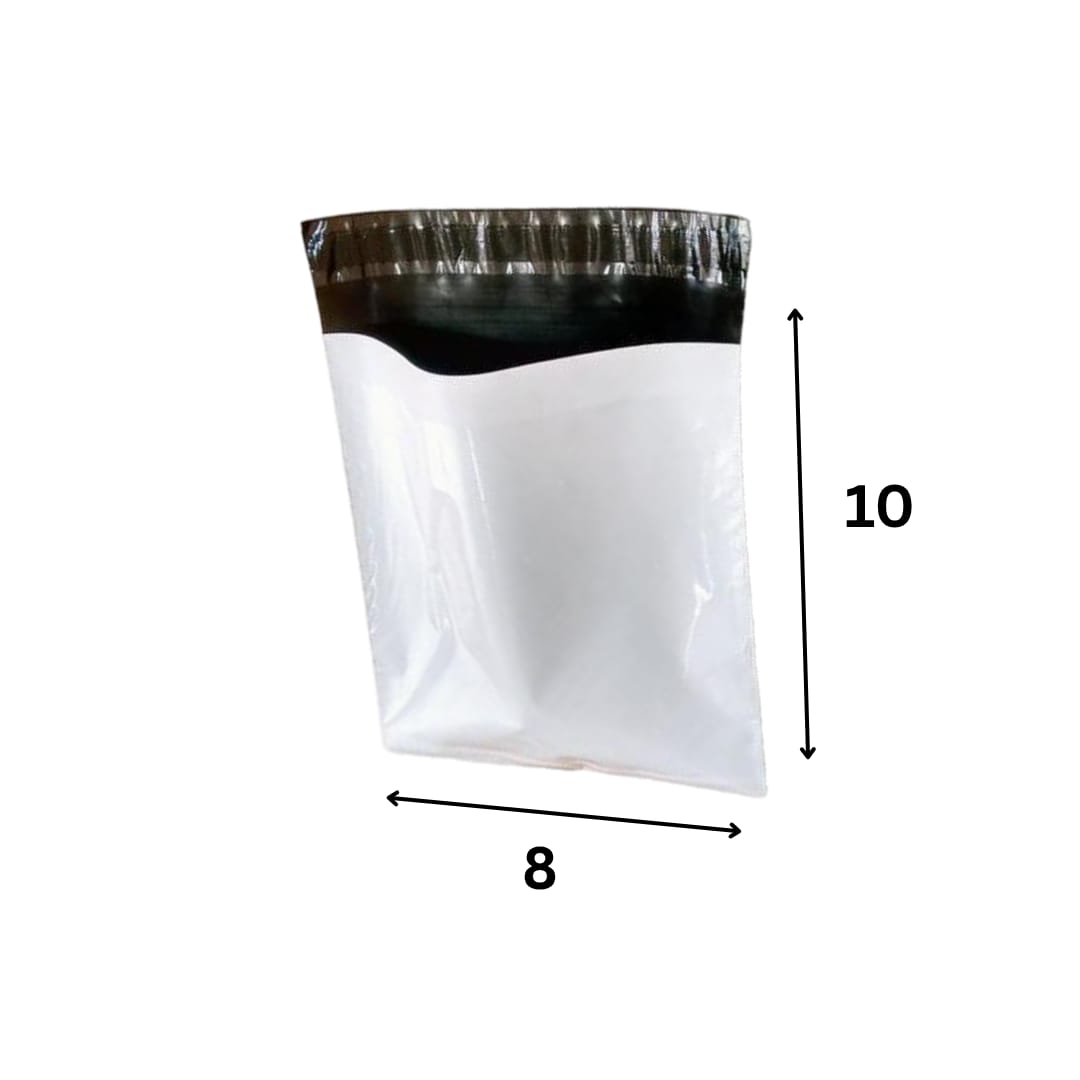 | COURIER COVERS COURIER COVERS 8X10 ₹10 Our Courier Covers are the ideal solution for securely packaging and delivering important documents, parcels, and lightweight items. |
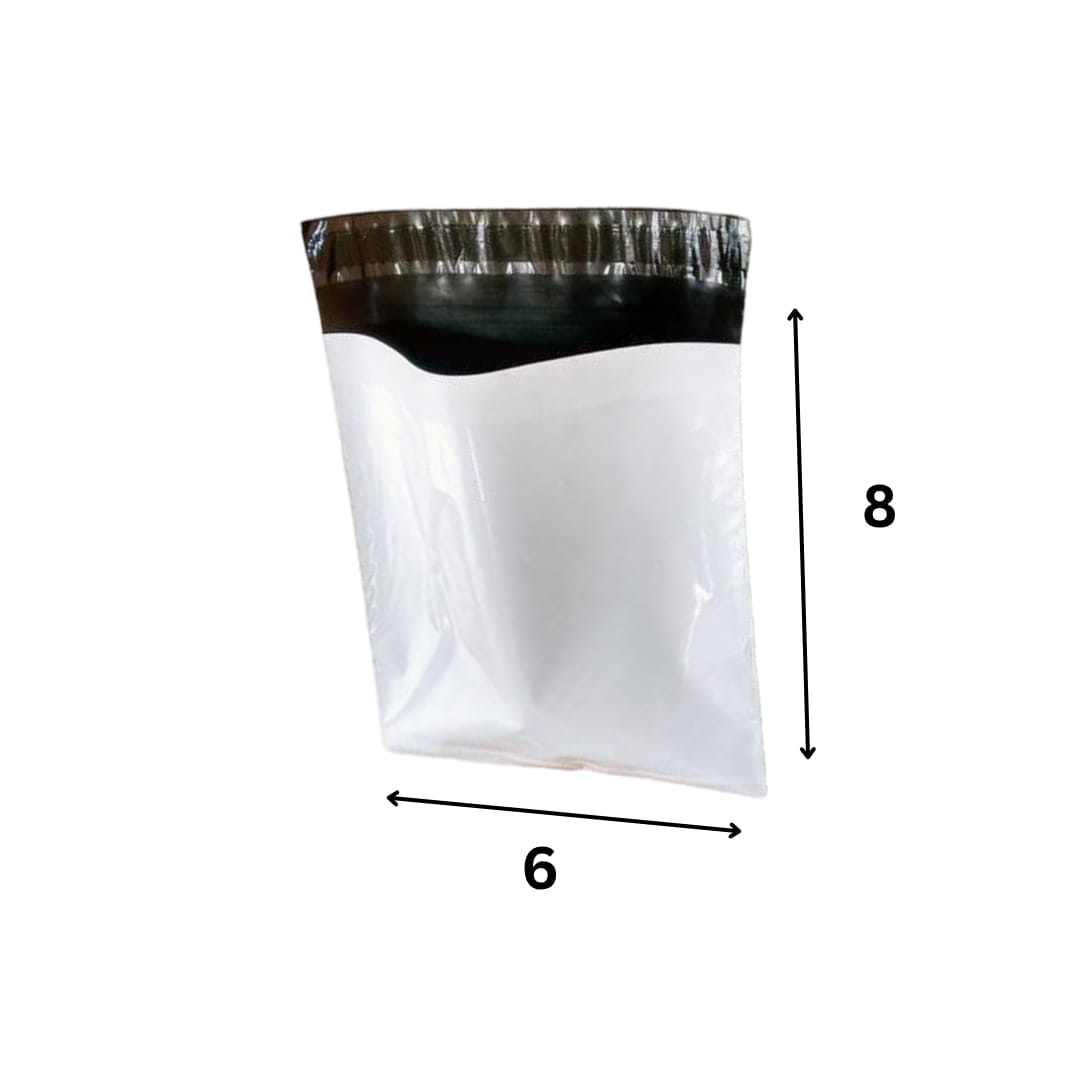 | COURIER COVERS COURIER COVERS 6X8 ₹10 Our Courier Covers are the ideal solution for securely packaging and delivering important documents, parcels, and lightweight items. |
Frequently asked questions
How do you calculate the correct box size?
Measure the product at its widest and highest points, then add the required cushioning gap to length, width and height. A 300 × 200 × 100 mm product with 25 mm clearance needs at least 350 × 250 × 150 mm of internal space.
Which parcel format fits the item and delivery route?
Choose a regular slotted carton for standard products, a long box for narrow items, a flat carton for documents or panels, and a strong double-wall carton for heavy or fragile goods. Check carrier size limits before selecting the format.
What corrugated board strength should you specify?
Specify board grade according to packed weight, stacking duration, box dimensions, moisture exposure and handling conditions. Use stronger or double-wall board for heavy contents, long routes and warehouse stacking.
How should you protect, close, and test the packed carton?
Centre the item, fill empty space so it cannot move, protect corners and fragile surfaces, then seal every opening with pressure-sensitive or reinforced tape. Perform a controlled drop test and inspect the carton for crushing, shifting or open seams.
How do you evaluate a carton supplier and control shipping costs?
Compare internal dimensions, board grade, compression performance, minimum order quantity, lead time, print quality and replacement policy. Reduce dimensional weight by removing unused space without compromising cushioning or crush protection.
Related products
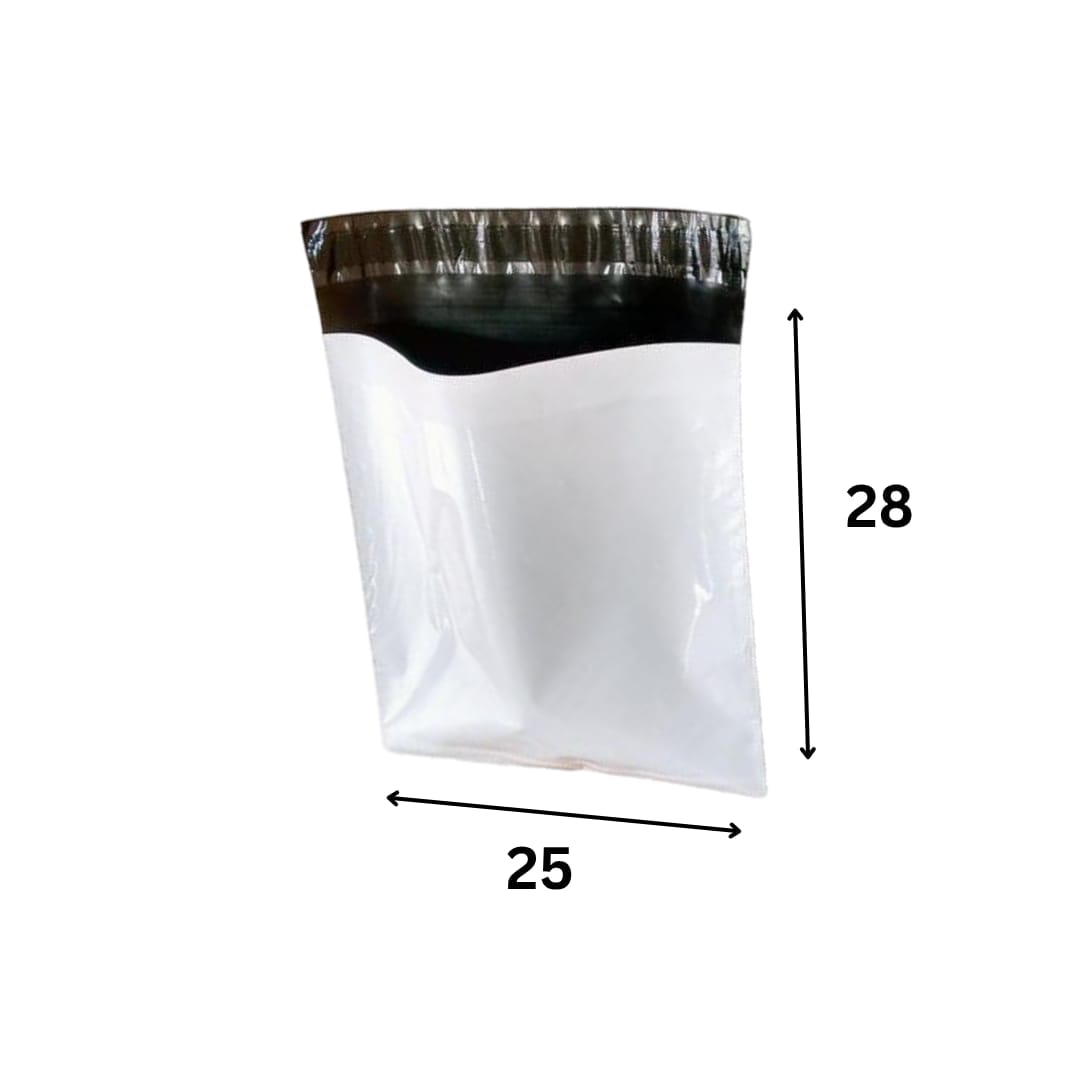 | COURIER COVERS COURIER COVERS 25X28 ₹30 Our Courier Covers are the ideal solution for securely packaging and delivering important documents, parcels, and lightweight items. |
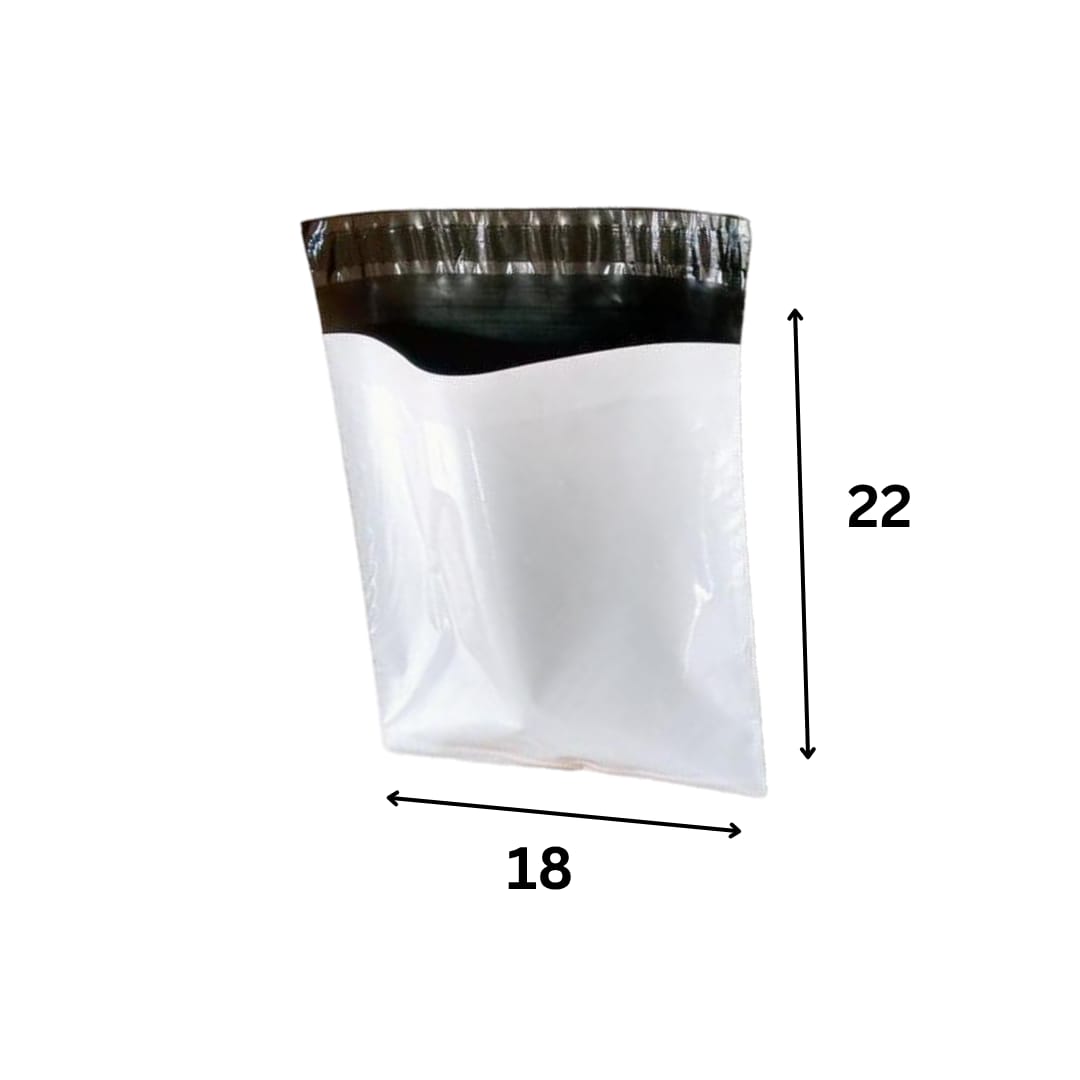 | COURIER COVERS COURIER COVERS 18X22 ₹10 Our Courier Covers are the ideal solution for securely packaging and delivering important documents, parcels, and lightweight items. |
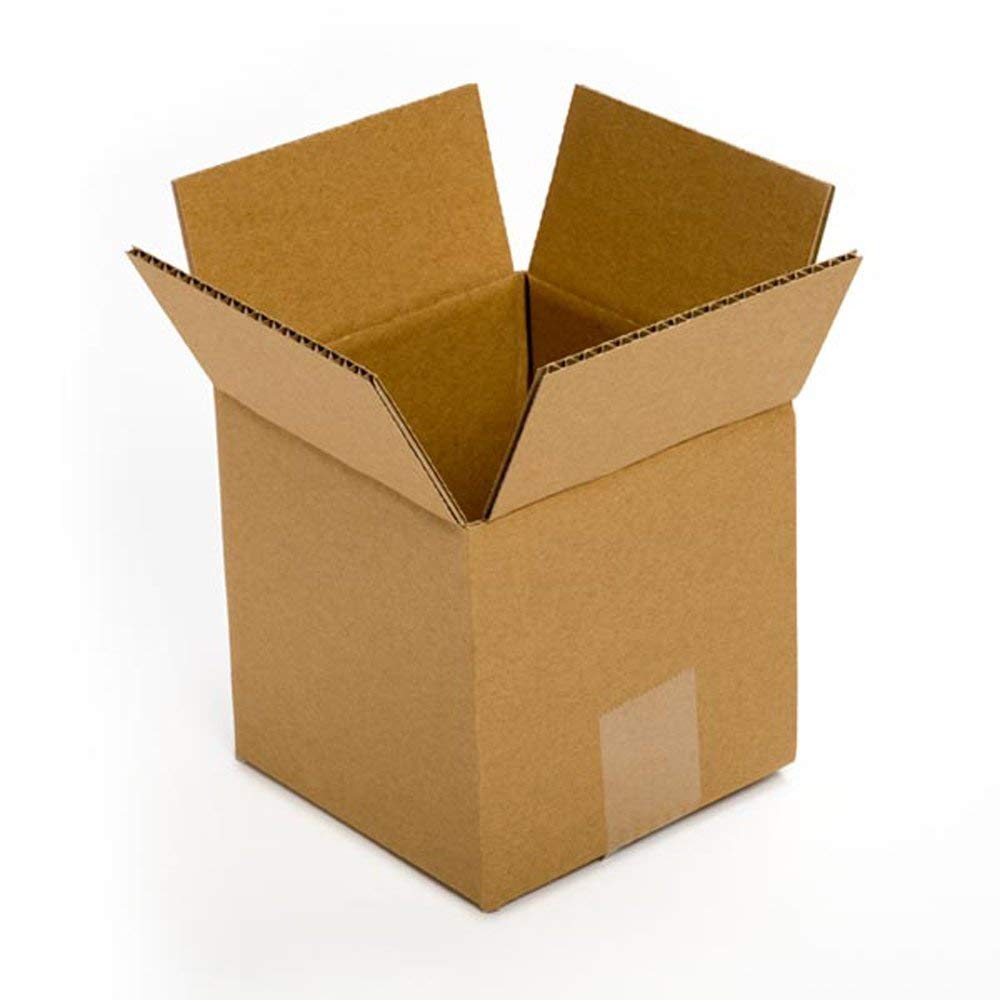 | SHIPPING BOXES 3 PLY CARDBOARD BOX 4X4X4 ₹13 “3 Ply cardboard boxes – built tough for heavy-duty packing and shipping. |
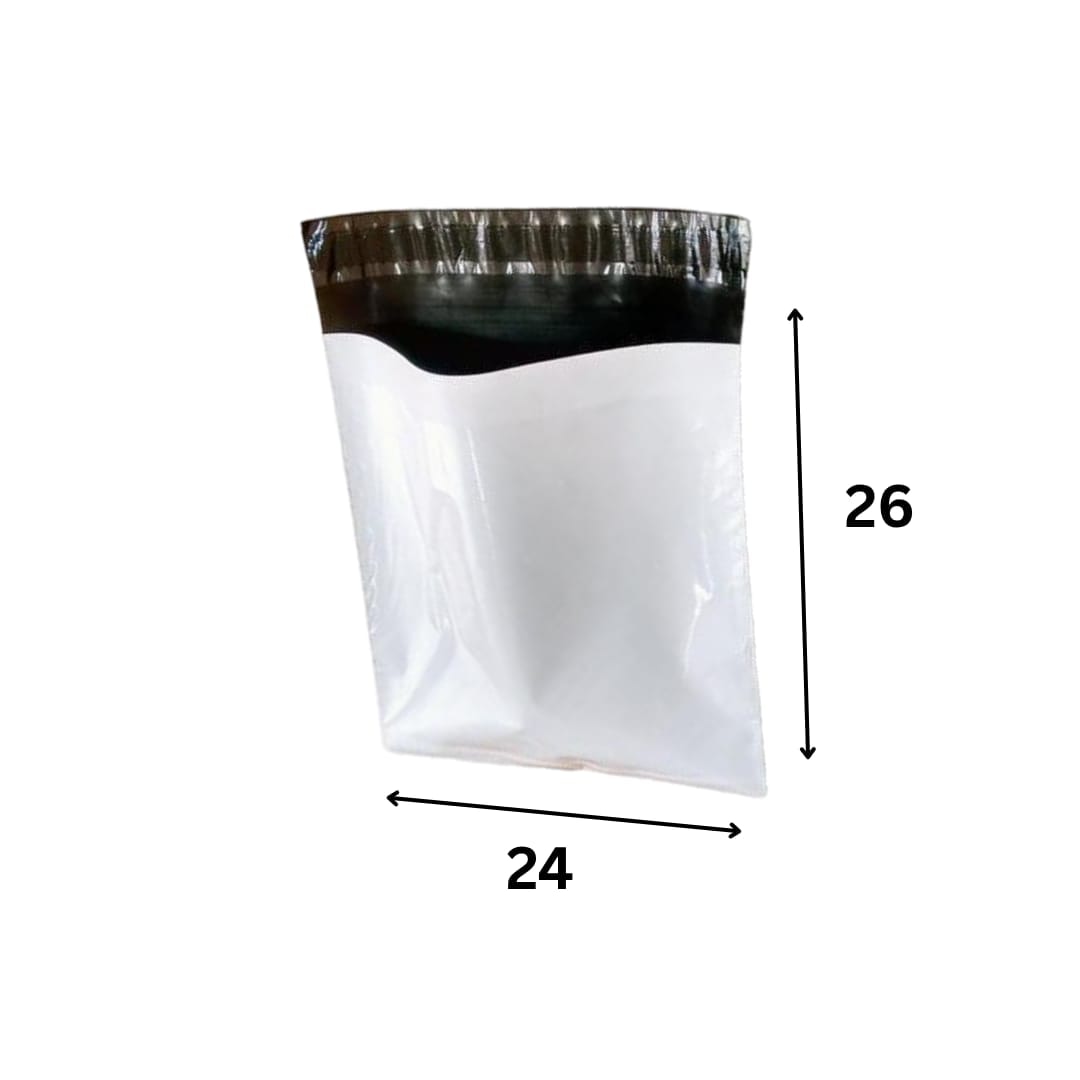 | COURIER COVERS COURIER COVERS 24X26 ₹30 Our Courier Covers are the ideal solution for securely packaging and delivering important documents, parcels, and lightweight items. |
Keywords