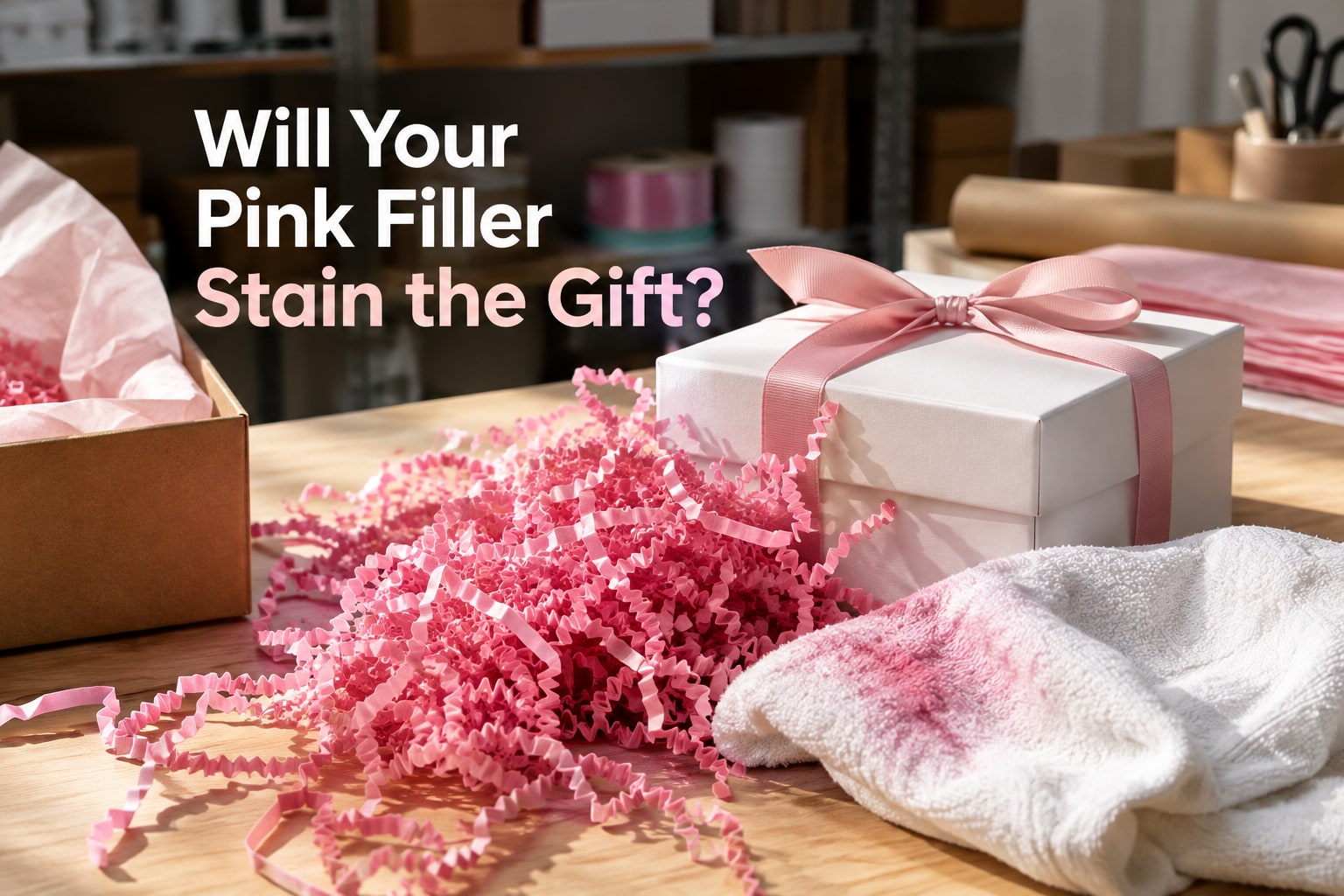
Pink filler can mark pale boxes, tissue, labels, fabric and porous products even when it looks dry, especially when rubbing, pressure or moisture is involved. You will learn how to test a batch before packing, identify risky gift contents, add a suitable barrier and set a practical purchasing specification.
Key takeaways
- Run a dry-rub and damp-cloth test before packing gifts.
- Keep pink filler dry and prevent direct rubbing against porous surfaces.
- Use a barrier for food, cosmetics, clothing and uncoated gifts.
- Separate tested filler from finished orders during Bangalore corporate packing.
When pink shredded paper marks a gift or its packaging
A dry filler can still mark a gift. Pink shredded paper colour transfer on gifts usually comes from loose pigment or fine particles rubbing from the shred surfaces and cut edges onto a neighbouring surface, not from the gift changing colour.
Dry rubbing is most visible on:
- White or pale paperboard boxes, especially uncoated or matte cartons
- Tissue paper, hang tags and adhesive labels
- Satin, cotton or other light-coloured ribbons
- Fabric, unfinished wood, leather and porous plastic
- Matte-painted, unglazed or absorbent gift surfaces
Packing pressure increases contact. A box that looks clean during assembly can show pink streaks after the filler is compressed against it in storage, transit or repeated handling. The risk is higher when the gift or packaging has a pale, absorbent surface; glossy, sealed coatings usually resist marking better.
Colour transfer is different from fading. Fading means the filler loses colour after light or washing exposure; transfer means colour lands on the box, tissue or product. A filler can resist fading and still fail a rub check.
For a high-value or pale gift, do not rely on appearance alone. Rub a handful firmly against the actual box, tissue, label, ribbon and product surfaces you will use, then inspect under bright light.
If any pink streak, dusting or smudge appears, reject the batch for direct contact or add a tested inner barrier such as unprinted tissue, glassine or a sealed insert.
How moisture, rubbing and storage increase colour bleed
A damp filler is the highest-risk condition: humidity, condensation, chilled items, recently washed fabric and water-based coatings can mobilise colourants in the shreds. Pressure and rubbing then push the colour onto uncoated paper, fabric, wood, leather, porous plastic, matte coatings, pale boxes, tissue and labels.
| Condition | How transfer increases | Where it causes trouble |
|---|---|---|
| High humidity or condensation | Moisture dissolves or loosens colour at shred edges | Assembly and unpacking |
| Wet, chilled or oily contents | Direct contact creates a damp or greasy transfer path | Gift surfaces and inner packaging |
| Compression during storage or delivery | Packed shreds rub repeatedly against the same area | Boxes, tissue and labels |
| Long storage in a warm, humid pack | Contact time allows loose colour to migrate further | Sealed orders opened later |
| Rough handling or unpacking | Friction abrades fine pink particles onto surfaces | Ribbons, printed areas and pale gifts |
Dry paper is not automatically safe. Fine particles and incompletely fixed colour can mark a surface through abrasion, especially when filler is tightly packed around a gift or pressed against a box wall during transit. A filler can resist fading in light yet still fail a dry-rub or damp-transfer check.
Keep filler away from wet products, freshly washed textiles, uncured water-based coatings and chilled items until condensation has disappeared. Use a moisture barrier and reduce compression for long storage or humid delivery routes. The label “acid-free” does not prove colourfastness; it says nothing about dry rubbing, wet rubbing or migration.
A repeatable dry-rub and damp-cloth colour-bleed test
Test the actual batch before packing, not just one loose strand. Use a clean white absorbent cloth or unprinted paper towel, an unused matching control, and a representative box, tissue, ribbon, fabric or product surface.
1. Take filler from three parts of the batch: the centre, an edge and the bottom of the pack. Record the batch or delivery number and keep an untreated sample for comparison.
2. Place a handful against the representative surface and apply the same pressure used when closing the gift box. Rub the white cloth across the filler and surface with 10 firm back-and-forth strokes. Compare it with the unused control in daylight.
3. Add 0.5 millilitres of clean water to a fresh white cloth. It should feel damp, not wet enough to drip. Press it onto the compressed filler for 30 seconds, then make 10 firm strokes and inspect the cloth and the contact surface.
4. Repeat the dry and damp checks with samples from all three locations. Look for pink deposited on the cloth, streaks on the packaging, or colour in the texture of fabric, uncoated paper, wood, leather or matte plastic.
Reject the batch for direct packing if any pink mark is clearly visible against the unused white control, especially after the damp test. Isolate it for use only behind a sealed barrier if transfer appears on one sample, one contact surface or one section of filler; do not blend it with an untested batch.
A faint dusting that disappears when loose fibres are shaken off is different from dye that remains after wiping.
Matching the filler to food, cosmetics, clothing and porous gifts
Pink shredded paper is unsuitable for direct contact with food, cosmetics, medicines, or anything placed in the mouth unless supplier documentation confirms the intended contact, colourants, fibre source, coatings, adhesives and applicable compliance. Decorative grade is not automatically food- or cosmetic-contact material.
Keep it away from pale, absorbent, high-value surfaces because pressure and moisture can move pigment onto uncoated card, fabric, wood, leather, porous plastic and matte coatings.
| Product or surface | Direct-contact decision | Suitable separation |
|---|---|---|
| Food or edible gifts | Do not place filler against the product | Sealed food-grade inner packaging, then filler outside |
| Cosmetics or medicines | Use direct contact only with documented compatibility | Original sealed pack, polyethylene bag or sealed insert |
| Clothing and textiles | Avoid contact with pale or damp fabric | Unprinted tissue, garment bag or polyethylene sleeve |
| Porous gifts | Avoid direct contact with wood, leather, unglazed ceramic or absorbent paper | Glassine, tissue or a fitted sealed insert |
For a pink paper filler gift box, choose a barrier that cannot scuff, puncture or trap condensation against the product. Check whether oils, water-based coatings, chilled items or recently washed fabric could wet the barrier; dampness increases transfer during compression and rubbing.
- Put filler around the barrier, not inside it.
- Keep filler away from exposed labels, ribbons and product openings.
- Reject the setup if pigment appears on the barrier after packed handling.
A low-transfer packing process for corporate gift orders in Bangalore
Your brief for corporate gift packaging filler in bangalore should name contact surfaces, dry and damp transfer limits, lot identification, moisture protection and direct-contact restrictions. When ordering through Packbox.In, request a retained sample from the supplied lot rather than approving a showroom handful.
1. Place the filler against a white box, tissue, label, ribbon, and representative product surfaces, including fabric, wood or matte plastic. Use the intended shred quantity and close the actual gift box.
2. Apply normal packing pressure, then rub and lift the filler across each surface for 30 seconds. Repeat with a dry white cloth and a lightly damp white cloth; record any pink mark, loose particle or surface scuff.
3. Store sealed trial boxes for 24 to 48 hours in the expected warehouse and delivery conditions. Include Bangalore’s humid conditions, vehicle movement and an air-conditioned-to-warm transition, because condensation can expose transfer missed in a dry office.
4. Open, shake and unpack each box after storage. Reject the lot if colour is visible on a pale or absorbent surface, transfers to the damp cloth, or accumulates at compressed edges; isolate it behind glassine, polyethylene, unprinted tissue or a sealed insert until retested.
During production, keep filler away from food, cosmetics and unwrapped clothing, and inspect every finished box before dispatch. Check barriers for punctures, scuffing and condensation. Use a batch record linking the trial result to each corporate order.
Related product
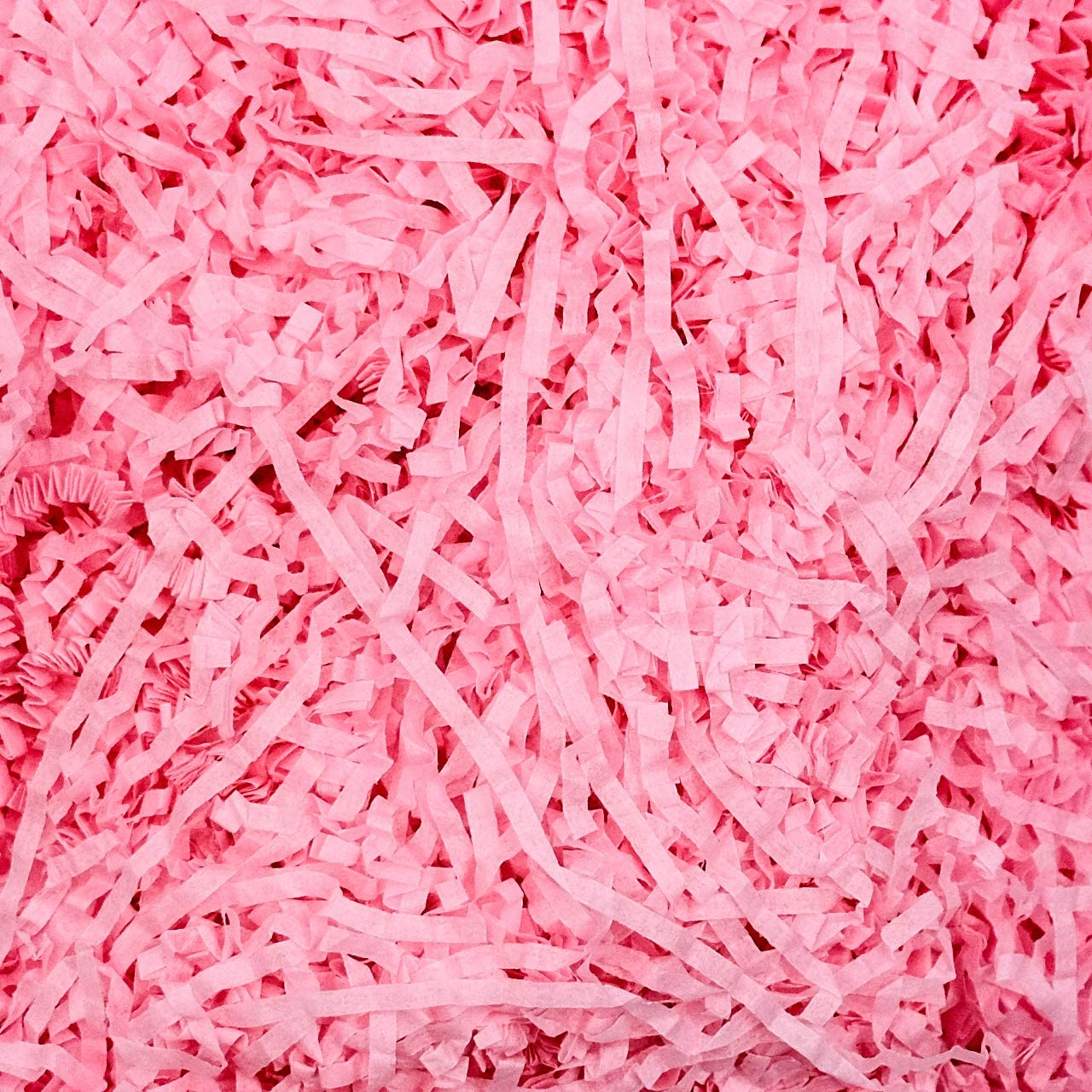 | SHREDDED PAPER SHREDDED PAPER PINK 1KG ₹450 Packbox.in Shred Paper Material: Made of high quality raffia Paper,lightweight,color your gift and your life Size.,the weight of each small pack:... |
Frequently asked questions
Why does pink shredded paper mark a gift or its packaging?
Loose pigment and fine particles can rub from the shred surfaces and cut edges onto nearby gifts or packaging.
What increases pink shredded paper colour bleed?
Moisture, repeated rubbing, pressure and warm or damp storage increase the risk of colour transfer.
How do you test pink shredded paper for colour transfer?
Rub the filler firmly on a white dry cloth, then press it with a lightly damp white cloth and inspect both for pink marks.
How should you match pink paper filler to different gifts?
Use a tested low-transfer filler with a barrier for food, cosmetics, clothing and porous gifts, which mark more easily.
How can corporate gift orders in Bangalore reduce pink filler transfer?
Test each filler batch, keep it dry, separate filler from finished gifts and prevent direct rubbing during packing and delivery.
Keywords