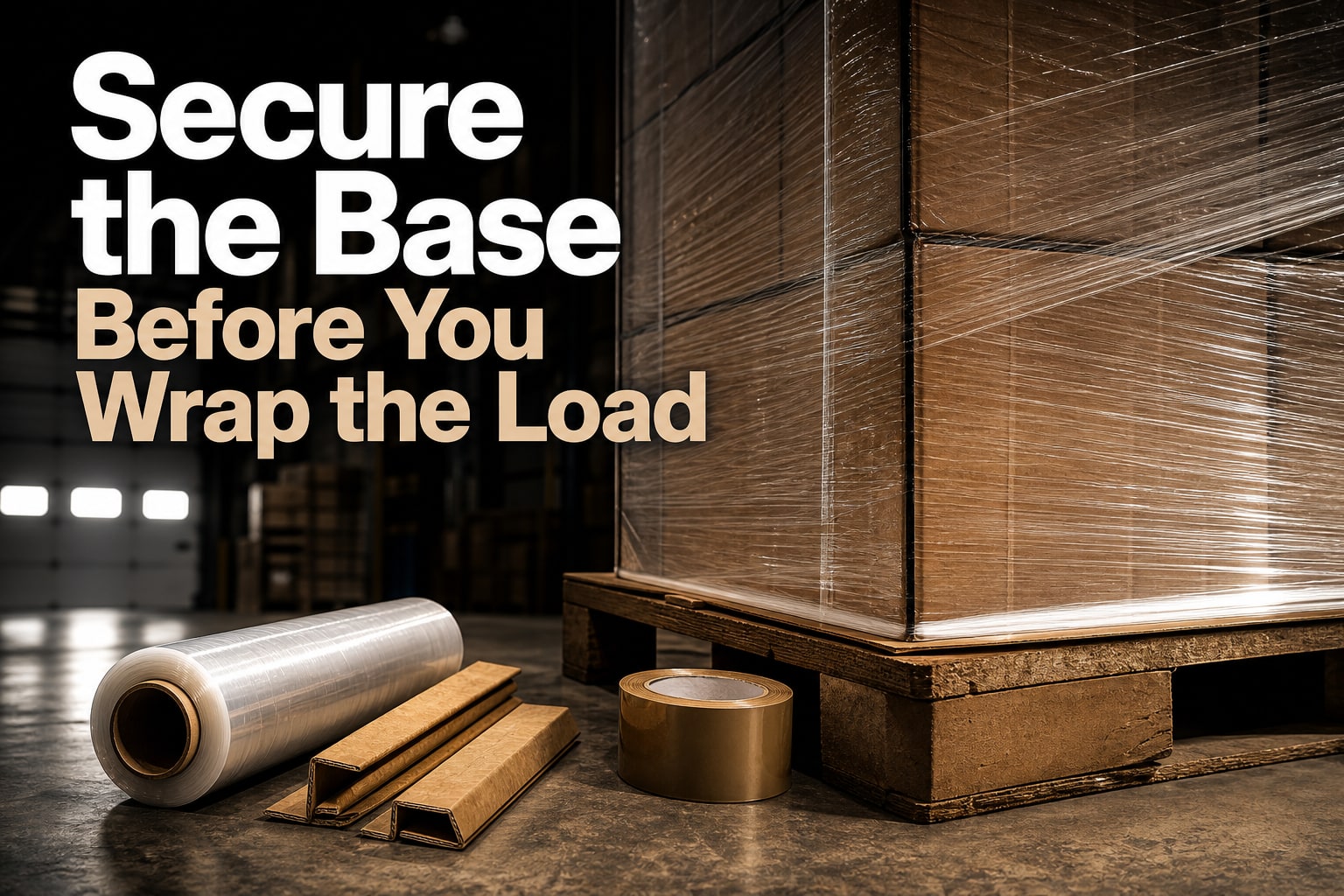
A pallet stays intact when the film creates enough inward containment force to stop cartons sliding, separating, or expanding during handling. By the end, you will know how to wrap the load, calculate film use, choose hand or machine application, and combine stretch film with the supports and carton seals it cannot replace.
Key takeaways
- Anchor film below the pallet deck before wrapping the cartons.
- Overlap each film pass and reinforce the base, corners, and top.
- Choose film by load weight, stability, stretch, and puncture resistance.
- Add boards, straps, sheets, or carton tape when film cannot control movement.
How containment force holds cartons on the pallet
Containment force holds cartons on the pallet by pulling the film inward after it is stretched around the load. That retained tension presses cartons against one another and the pallet, reducing sliding, shifting, and outward expansion during handling, braking, and vibration.
Stretch wrap for pallet packaging works through tension, not cling alone. Cling helps adjacent film layers adhere, but weak tension will not restrain a heavy load, even when the outside feels sticky.
The force is not equal across the pallet. It is usually strongest near the film anchor and where the wrapper makes repeated passes; the upper cartons can remain loose without enough top wraps. Judge performance by force at the load, not by the film roll’s tensile-strength figure.
A tightly wrapped pallet can still move internally when cartons have mixed heights, large voids, crushed corners, or little contact with the pallet. Film cannot repair a poor stacking pattern or a damaged box.
Packing tape for shipping boxes seals carton flaps and seams. Stretch film unitizes those cartons to the pallet, so wrapping cannot replace a properly closed box.
For repeatable procurement, specify:
- Film width and thickness
- Film type and target pre-stretch
- Wrap pattern and rotations per load
- Required containment-force range
- Acceptance results after handling or distribution testing
Pre-stretch is the elongation applied before the film reaches the load. Excessive pre-stretch can reduce elastic recovery and increase punctures or tears, so match machine settings to the film’s designed range.
A wrapping pattern that secures the base, load, and top
Use a repeatable path rather than wrapping until the load looks covered. Set the pallet on a stable, level surface and inspect for protruding boards, unstable cartons, and sharp edges before starting with stretch wrap for pallet packaging.
- Position the load squarely on the pallet, keeping cartons inside the pallet edges. Remove gaps and align each layer so the wrap does not have to bridge unsupported spaces.
- Anchor the film at the pallet base, not only around the bottom carton. Make several tight rotations around the pallet and film the lower section before moving upward.
- Keep the stretch film roll for pallets under controlled tension as you walk or use the turntable. Maintain a consistent overlap on every revolution.
- Travel upward in overlapping helical passes. Slow at corners and at changes in load width; these areas create weak zones when the film lifts away from the cartons.
- Add reinforcing rotations around the upper load, especially when the top cartons are lighter, narrow, or offset from the lower layers.
- Cover the top zone without pulling so tightly that carton edges collapse. Finish with additional upper passes, then return to the lower zone for final reinforcement.
- Secure the film tail against the wrapped surface and check for loose bands, exposed carton corners, or film cuts before moving the pallet.
Set the number of rotations and overlap through handling tests for the actual load. Extra film can crush cartons without fixing poor stacking, sharp projections, or a damaged pallet.
How to choose the film and calculate how much you need
Choose a stretch film roll for pallets by the holding force the load needs, not by gauge alone. Film width must cover the load height efficiently, while thickness, puncture resistance, tear propagation, elongation, and delivered containment force must match carton weight, shape, and sharp edges. Two films with the same thickness can perform very differently.
| Film choice | What to check | When it applies |
|---|---|---|
| Hand film | Core size, roll weight, ergonomic handling, and consistent tension | Low-volume wrapping or loads without a machine |
| Machine film | Designed pre-stretch range, film length, and wrapper compatibility | Repeated pallets and controlled application |
| High-performance film | Containment force, puncture resistance, and tear resistance | Heavy, unstable, irregular, or sharp-edged loads |
Calculate quantity from the pallet perimeter rather than choosing stretch film rolls for pallet wrapping by width alone:
- Measure the pallet perimeter in metres.
- Set the wrap height and film width. With 20% overlap, each revolution covers 80% of the film width.
- Calculate rotations per pass as wrap height divided by effective coverage, then multiply by the number of passes and add base, top, and reinforcement rotations.
- Multiply total rotations by the perimeter to get film length. Select a stretch film roll for pallets whose stated length exceeds that result, including application waste.
Ask for a target containment-force range, pre-stretch setting, wrap pattern, rotations per load, and acceptance result after handling or distribution testing. Cling alone does not prove the load will stay secure.
When film needs help from boards, straps, sheets, or carton tape
For unstable or irregular loads, use stretch film only as the outer restraint and add support that fixes the underlying weakness. Level mixed-height cartons, remove voids with dunnage, and keep every carton in contact with the pallet; a tight-looking wrap cannot stop internal movement when the stack leans or the pallet has too little contact.
- Add corner boards or edge protectors where carton corners could crush or puncture the film.
- Use straps when the load needs direct compression, such as stacked pipes, drums, timber, or tall cartons.
- Place corrugated sheets between uneven layers or over the top to spread pressure and prevent single cartons from shifting.
- Use Packing tape for shipping boxes to close open flaps and seams. Tape does not replace stretch wrap for pallet packaging, because it seals one carton instead of restraining the whole load to the pallet.
Stretch wrap for pallet packaging holds cartons together through containment force; it does not cushion impact or make a damaged carton load-bearing. Sharp edges, exposed nails, protruding products, and broken pallets can puncture the film, while tight turns can crush unprotected corners.
Ordinary stretch film is not a moisture-proof barrier. It limits dust and light splash, but seams, holes, the open pallet underside, and condensation can still admit water. Use a barrier film or hood with a desiccant plan when moisture-sensitive goods need more than incidental protection.
Hand wrapping, machine wrapping, and verifying the finished load
Repeatable pallet security comes from matching the application method to the film, then checking the finished load instead of judging it by appearance. Hand wrapping suits low-volume work when one operator can keep the roll under steady tension. Machine wrapping suits regular shipments because carriage speed, tension, pre-stretch, overlap, and rotations stay consistent.
| Method | Control | Best fit |
|---|---|---|
| Hand wrapping | Controlled pull, even overlap, and consistent rotations | Variable loads and lower volumes |
| Machine wrapping | Programmed tension, carriage speed, pre-stretch, and wrap count | Repeated loads and higher volumes |
| Pre-stretched hand dispenser | Reduced operator effort with limited elongation control | Light or moderate loads needing faster hand application |
Do not run machine film outside its designed pre-stretch range. Commercial machine films are often specified around 150%–300% pre-stretch; excessive stretch can reduce recovery and increase puncture or tear risk. When buying stretch film rolls for pallet wrapping, state the wrapper type, target pre-stretch, rotations, film consumption, containment-force range, and acceptance test.
Packbox.In can use those details to distinguish a suitable roll from a generic “standard pallet wrap” specification.
Check every finished load against the same criteria:
- Film remains anchored at the pallet base, with no loose tail or lifted bottom edge.
- Overlap and upper and lower reinforcement passes are visible and consistent.
- Cartons do not slide, lean, expand, or move when the load is pushed by hand.
- No film punctures, tears, exposed sharp corners, or unstable voids appear after handling.
- Carton flaps and seams remain closed with packing tape for shipping boxes; stretch film does not replace that seal.
Related products
 | STRETCH FILM ROLL SRETCH FILM ₹550 Our Stretch Film Rolls are a reliable and cost-effective packaging solution designed to secure and protect goods during storage and transit. |
 | STRETCH FILM ROLL STRETCH FILM 500 MM ₹1200 Stretch Wrap Roll/Packing for Furniture and Luggage Packing/Wrapping Film,Packing Film for Home/Industry/Kitchen Packing |
Frequently asked questions
How does stretch wrap keep cartons on a pallet?
Stretched film creates containment force that presses cartons inward against one another and the pallet, limiting sliding, shifting, and outward expansion.
What wrapping pattern secures a pallet load?
Anchor the film at the pallet base, overlap passes around the load, reinforce the bottom and corners, then finish across the upper load without covering labels or forklift openings.
How do you choose stretch film and estimate the amount needed?
Match film strength and puncture resistance to the load, select hand or machine film for the wrapping method, and estimate usage from pallet perimeter, load height, wrap count, overlap, and film length per roll.
When does a pallet need boards, straps, sheets, or carton tape?
Use boards for edge protection, straps for rigid restraint, sheets to separate or stabilize layers, and carton tape to close boxes when film alone cannot prevent movement or opening.
Related products
 | STRETCH FILM ROLL STRETCH FILM 300 M BABY CORN ₹550 Stretch Wrap Roll/Packing for Furniture and Luggage Packing/Wrapping Film,Packing Film for Home/Industry/Kitchen Packing |
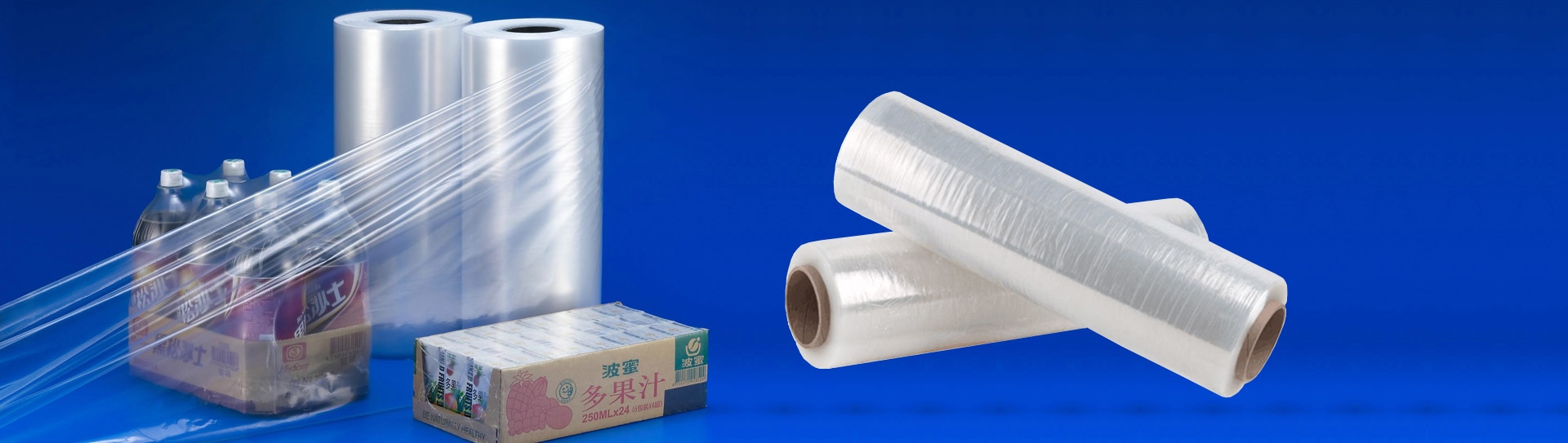 | STRETCH FILM ROLL STRETCH FILM 100M ₹250 Streach Wrap film has microwaveable properties. Forms sure seal for vessels. No spillage & foul smell in microwave ovens & refrigerators. |
Keywords