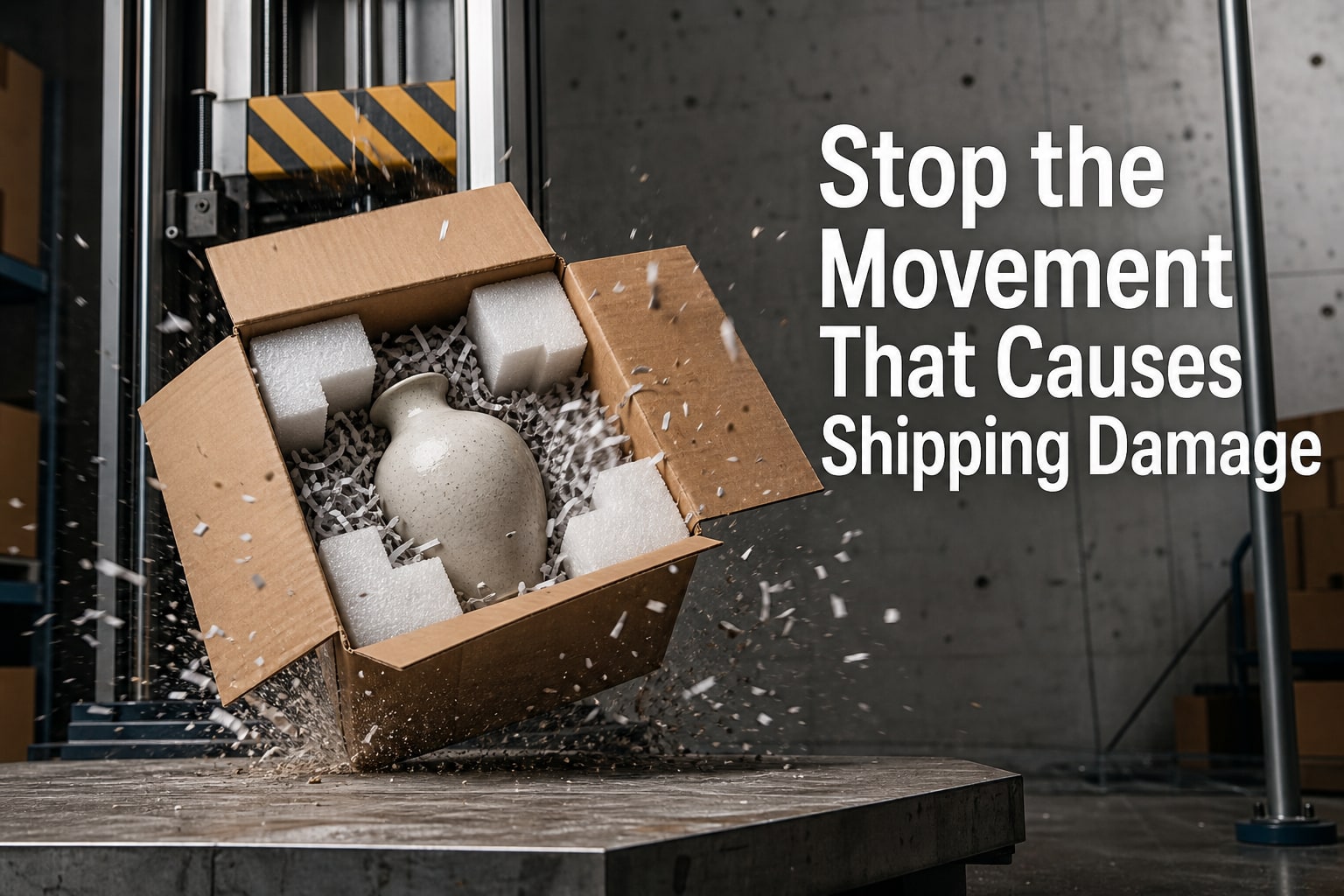
A shipment is damaged when impact, vibration, or stacking forces reach the product without enough control. By matching cushioning, blocking, bracing, containment, and package shape to the item and its route, you can reduce movement, absorb shock, resist compression, and verify the pack before dispatch.
Key takeaways
- Match cushioning to drops, bracing to movement, and containment to closure failure.
- Secure the product so it cannot move inside the carton.
- Choose paper, shredded fill, foam, or pads based on product risk.
- Test the sealed package for drops, vibration, and stacking pressure.
Match each shipping hazard to the right protective function
Drop impact, vehicle vibration, and stacking compression require different protective functions. Cushioning slows the product during a drop, blocking and bracing stop it gaining damaging velocity inside the carton, and containment keeps the package closed.
| Hazard | What goes wrong | Protective function |
|---|---|---|
| Drop impact | The product accelerates, then stops suddenly against the carton or another item. | Cushioning absorbs energy and lengthens the stopping distance. |
| Vehicle vibration | The product shifts, rubs, and repeatedly strikes the carton or inserts. | Blocking, bracing, and fitted inserts immobilise it. |
| Stacking compression | Cartons buckle under the vertical load, crushing contents or seals. | A correctly rated corrugated box carries and distributes the load. |
| Handling and end impacts | Corners, ends, or exposed surfaces receive concentrated blows. | Corner protection, pads, and suitable end closures spread the force. |
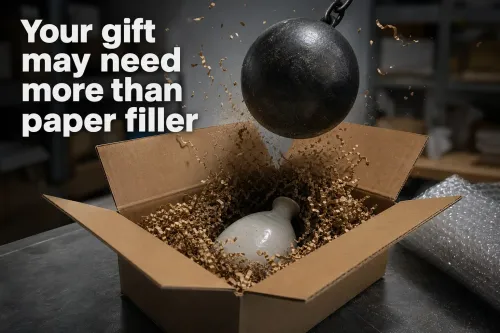
Void fill alone cannot immobilise a heavy item. Loose material settles and migrates during vibration, leaving room for the product to build speed; formed paper pads, molded pulp, die-cut inserts, or blocking provide structural restraint.
Box compression strength proves resistance to a vertical stacking load, not survival through drops, vibration, and handling events. Use ASTM D4169 or an ISTA distribution-test sequence that includes the actual product, carton, impacts, vibration, and conditioning.
Moisture weakens corrugated board. High humidity reduces edge-crush strength and box-compression performance, so a carton designed from dry-lab data can fail after humid storage, rain exposure, or refrigerated transport.
Protective packaging materials for shipping work as a coordinated system: a fit-to-size carton, restraint, cushioning, and a secure closure. No single material replaces all four functions.
Build a package that holds the product still
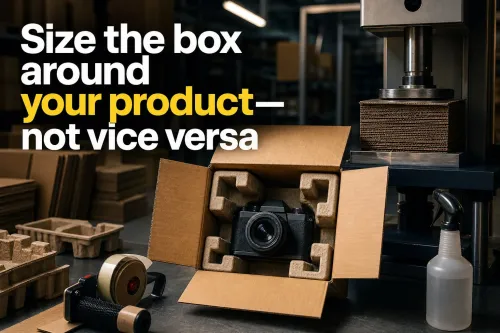
Build the package from the outside in. Choose a carton that fits the product without forcing it against the flaps, then keep the vertical score lines and corners straight and aligned. An overfilled box transfers impact to the product and flaps; an underfilled box lets its panels buckle.
| Packaging function | What it does | What to use |
|---|---|---|
| Wrapping | Protects the surface and adds the first cushioning layer | Foam sheet, tissue, bubble wrap, or paper wrap |
| Void filling | Fills empty space so loose contents cannot migrate | Crumpled paper, air pillows, or fitted paper fill |
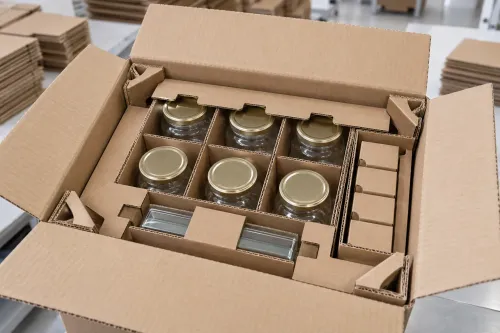
| Restraint | Stops the product gaining speed inside the carton | Blocking, bracing, inserts, shaped pads, or molded pulp |
These functions are not interchangeable. Loose shredded paper can fill a gap, but vibration may settle it and leave the product free to move. Use formed pads or an insert when the item must stay fixed, and support it on every side.
- Cushion the carton base before placing the product inside.
- Wrap the product, place it centrally, and restrain it with an insert, blocking, bracing, or shaped pads.
- Fill the side gaps without pushing the product against the walls.
- Add top protection so the product cannot rise into the flaps.
- Close the flaps without bending or bowing the carton.
- Apply packing tape in an H pattern across the centre seam and both edge seams.
- Shake the sealed box. Reopen and restrain the product if you hear or feel movement.
Choose paper, shredded fill, foam, or pads by the product’s risk
Choose cushioning by product weight, fragility, shape, surface finish, available void space, drop height, shipping duration, stacking exposure, and carrier handling. Use enough thickness and resilience to absorb the expected shock without letting the product touch the carton.
More material is not automatically safer: excessive compression can bottom out, while too little cushioning allows damaging movement.
| Option | Best protection | When it applies | Main limitation |
|---|---|---|---|
| Protective paper roll | Abrasion protection, wrapping, routine void fill | Clean handling, recyclable paper systems, irregular products, moderate drops | Loses recovery after repeated compression and offers limited moisture resistance |
| Shredded paper fill | Low-cost void filling and presentation | Lightweight, moderately durable products with small voids | Settles, migrates, and cushions less consistently |
| Foam | High, repeatable shock absorption | Heavy or fragile products, long routes, large drop risk | Less recyclable in many systems and can retain compression set |
| Paper pads or molded inserts | Blocking, bracing, and shaped restraint | Products that must stay immobilised or face stacking loads | Requires correct sizing and design |
Convert a protective paper roll for shipping into wraps, sheets, pads, or crumpled cushioning. Judge it by basis weight, crumple geometry, and retained air, not roll thickness alone.
Paper is preferable to bubble wrap, foam, corrugated pads, or loose fill when you need abrasion protection and clean, easy-to-recycle handling; it does not replace moisture barriers or structural bracing.
Place shredded paper protective packaging below, around, and above the product, compressing it enough to limit movement while allowing for settling. Loose shreds can migrate, create voids, and transfer ink or dust. Heavy or highly fragile items need blocking, bracing, or engineered inserts in addition to shredded paper.
Close and shape the package for its weakest failure point
1. Close the carton at its weakest seam, not merely over its strongest panel. Choose packing tape for shipping boxes by carton weight, board surface, temperature, humidity, dust, recycled-fibre content, and storage duration.
A pressure-sensitive adhesive must grip rough, dusty, heavily recycled board in the actual warehouse conditions; cold, damp surfaces and long storage demand stronger adhesion. Match tape width to the flap seam, then apply it with consistent tension.
2. Use the H-taping pattern: one strip over the centre seam and one over each edge seam. Reinforced tape is preferable to ordinary carton-sealing tape for heavy cartons, high-tension closures, rough board, or extended storage because its backing resists splitting. Do not stretch ordinary tape excessively; edge lift and a split closure can follow.
Tape cannot repair a wet, crushed, overfilled, or underfilled carton.
3. Choose cardboard tubes for packaging when the product is long and narrow. Set the tube diameter for the product plus enough clearance for surface protection, and select wall thickness and winding construction for bending, abrasion, axial compression, and radial-crushing loads.
Secure end caps against pull-out and impact, and use internal blocking to stop bending and end movement. Weak end caps or plastic plugs can fail before a strong tube wall. Restrain round tubes from rolling and shifting; they use space less efficiently than rectangular cartons and are not impact cushions by themselves.
Test the complete pack under real shipping conditions
Confirm the complete pack before wider dispatch by testing it in the condition in which it will travel. Use the actual product orientation, closure materials, pallet pattern, humidity exposure, and handling sequence. An empty or idealised carton can hide product migration, tape lift, seam rupture, and compression-creep failures.
ASTM D4169 and ISTA procedures provide recognised sequences combining conditioning, drops, vibration, and compression; they are laboratory frameworks, not guarantees for every carrier route.
| Check | What to observe | Failure that needs correction |
|---|---|---|
| Product movement | The item stays located after drops and vibration | Migration creates impact space |
| Seam rupture | Seams remain closed at corners and edges | The carton opens under impact |
| Tape lift | Tape stays bonded to the board | Flaps release during handling |
| Flap separation | Flaps remain aligned and closed | The opening exposes the product |
| Cushion bottoming | Cushion retains thickness after compression | The product contacts the carton |
| Tube end-cap pull-out | Caps stay seated after end impacts | The contents escape through the end |
| Carton panel buckling | Panels remain square under stacking load | The carton loses compression strength |
Give a supplier a brief that requests material specifications, roll or pad format, tape compatibility, tube wall and closure details, and samples for fit testing. Packbox.In can help compare protective packaging formats and source materials suited to the product, carton, and shipping conditions instead of simply adding filler.
Related products
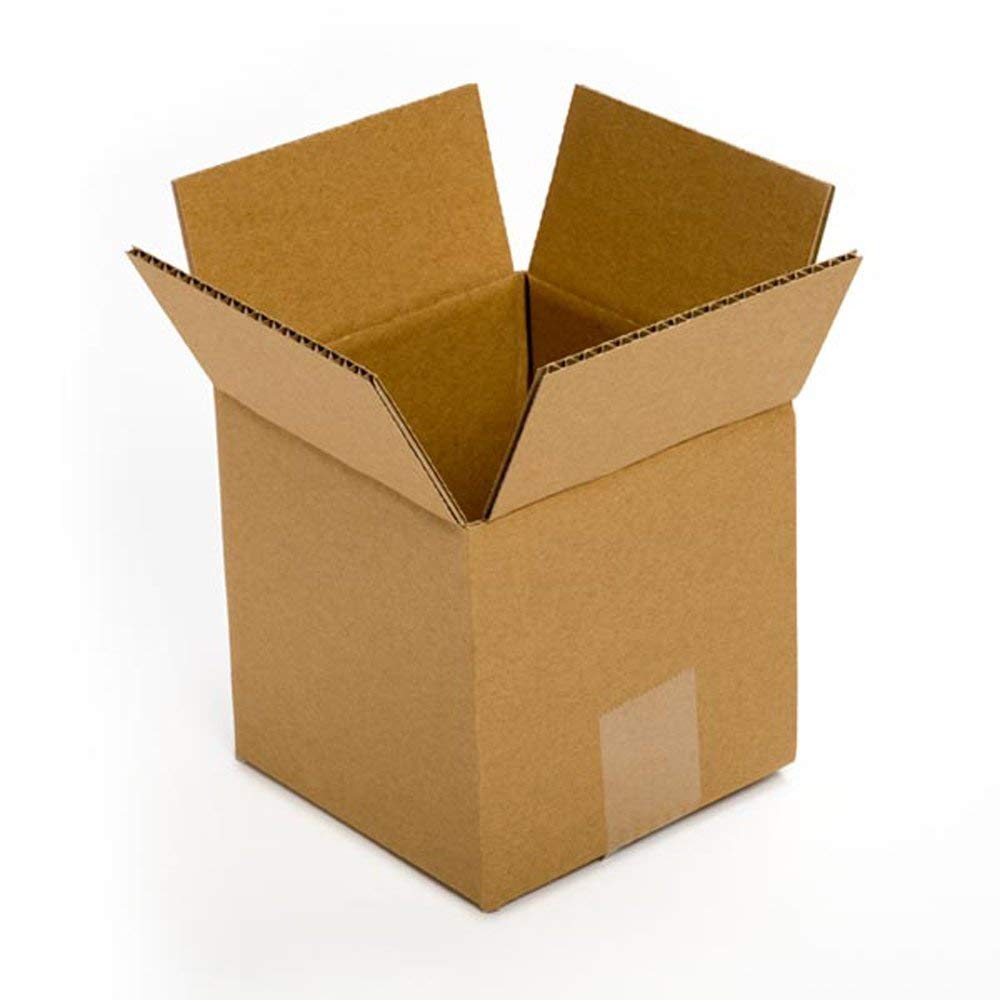 | SHIPPING BOXES 3 PLY CARDBOARD BOX 4X4X4 ₹13 “3 Ply cardboard boxes – built tough for heavy-duty packing and shipping. |
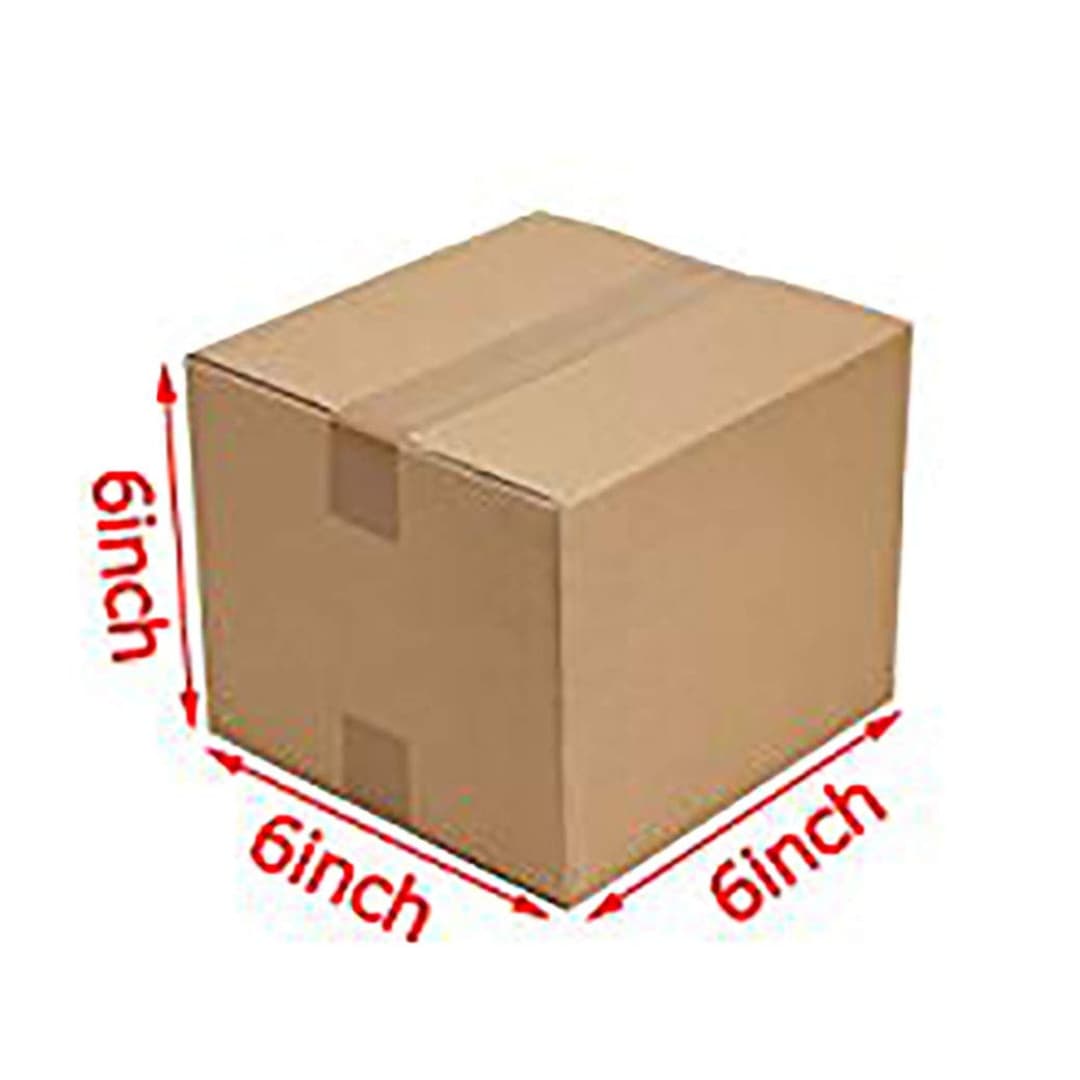 | Corrugated Boxes 3PLY CARDBOARD BOX 6X6X6 ₹30 “3 Ply cardboard boxes – built tough for heavy-duty packing and shipping. |
Frequently asked questions
Which protective function addresses each shipping hazard?
Cushioning slows the product during drops, blocking and bracing prevent damaging movement inside the carton, and containment keeps the package closed.
How do you keep a product still inside its shipping box?
Use blocking, bracing, void fill, or fitted cushioning so the product cannot shift, strike the carton, or gain damaging velocity.
How do you choose between paper, shredded fill, foam, and pads?
Match the material to the product’s weight, fragility, shape, surface sensitivity, and exposure to drops, vibration, or compression.
What should you test before shipping a protective package?
Test the complete sealed pack under realistic drops, vehicle vibration, and stacking compression, then inspect both the product and the package.
Related products
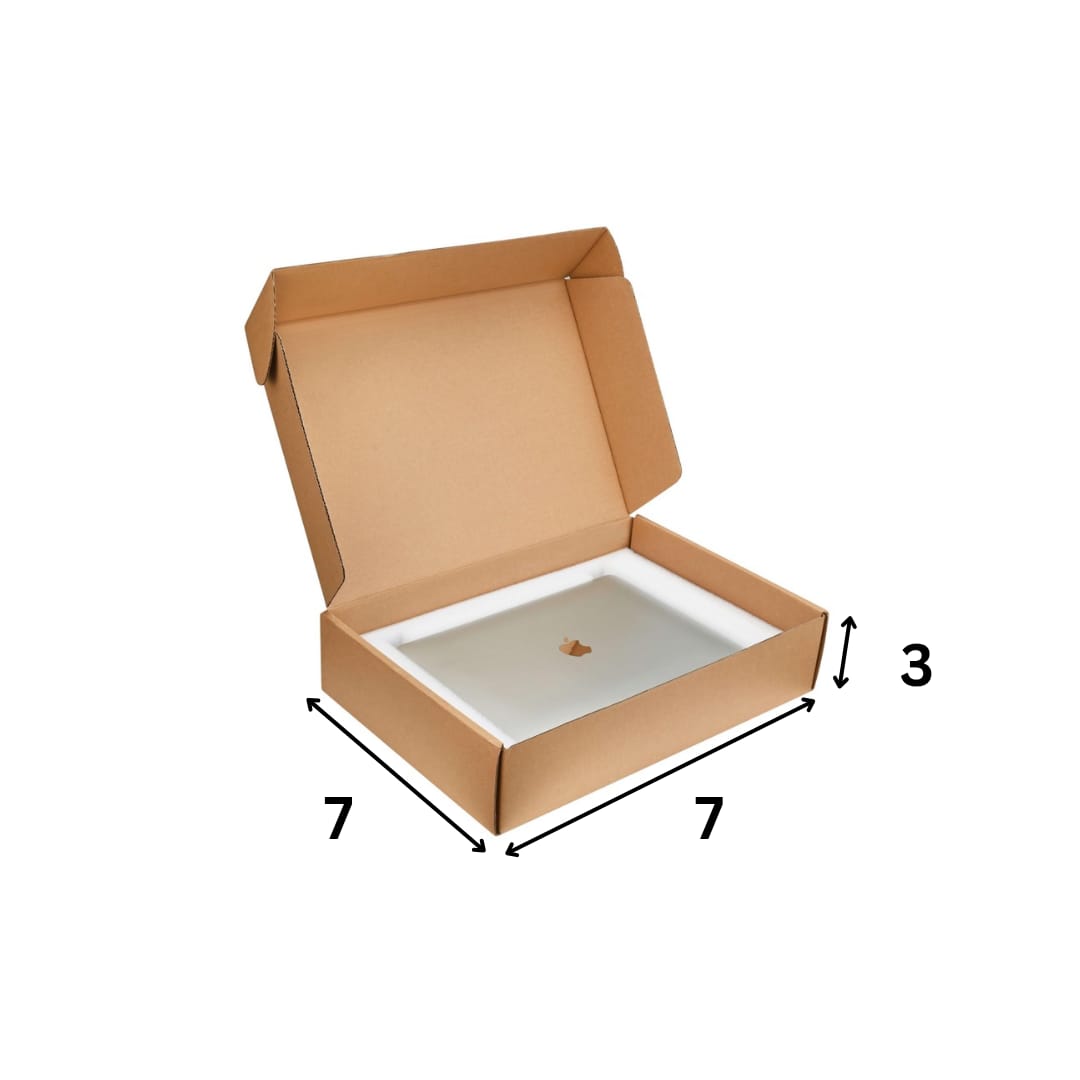 | E COMMERCE BOX CARDBOARD BOX ₹32 Our E-Commerce Boxes are specially designed for safe, secure, and professional packaging of online orders. |
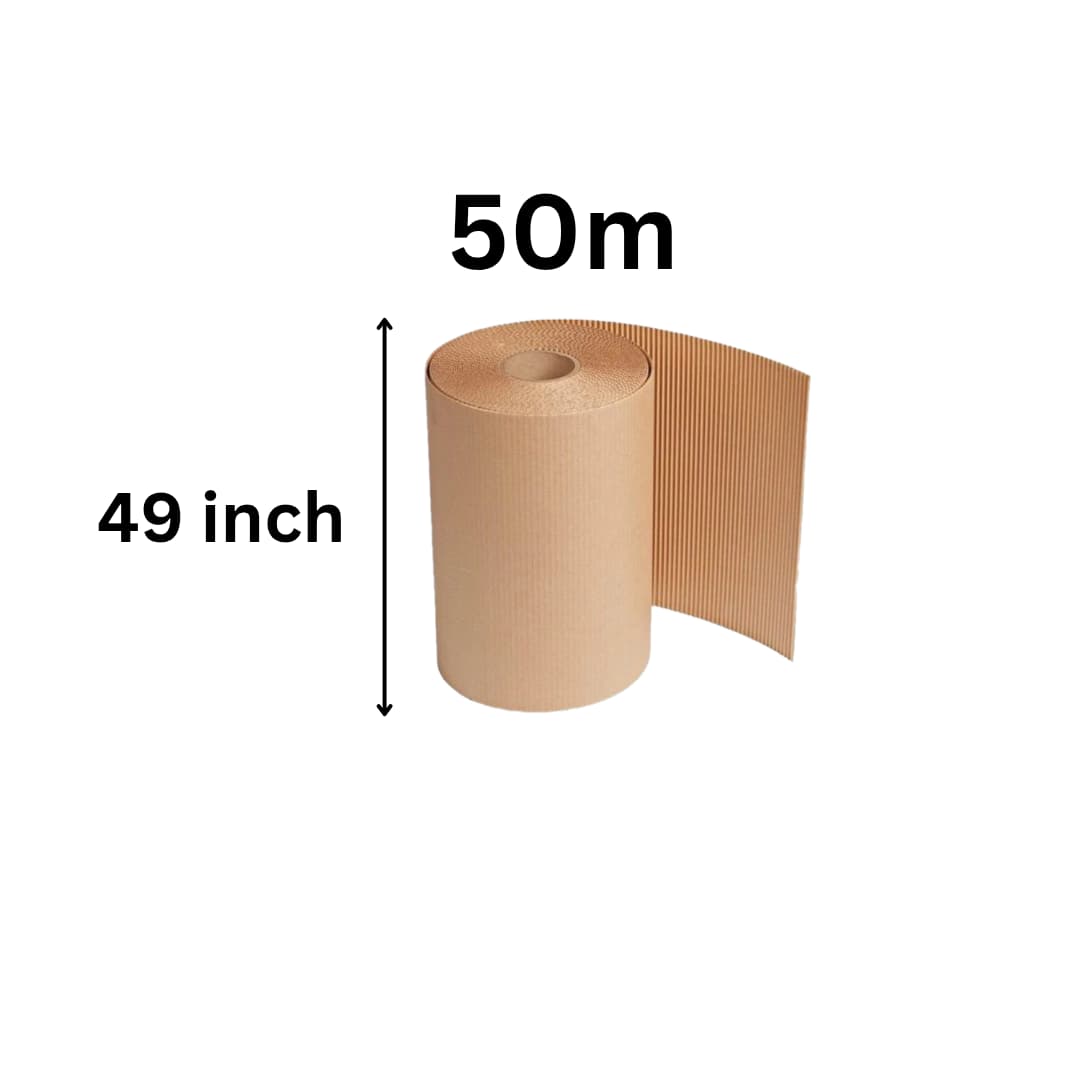 | CORRUGATED PAPER ROLL 2PLY ₹4130 Our 2 Ply Corrugated Paper Rolls are a cost-effective and eco-friendly packaging solution, ideal for wrapping, cushioning, and protecting products... |
POSTAL SELF LOCKING BOX 3 PLY PUNCHING BOX 5X4X2 ₹8 “3 Ply PUNCHING boxes – Single wall boxes are an effective for shipping delicate automotive parts, and glassware, jewelry, engineering household... |
Keywords