A package competes for attention in seconds, but shelf impact is wasted if the carton is hard to open, hides the product, or arrives crushed. By the end, you will be able to select a format, size, material, and print specification that improves presentation without ignoring shipping performance, returns, or total cost.
Key takeaways
- Use one dominant colour and high-contrast type for instant shelf recognition.
- Choose pack dimensions around the product, shelf, shipping method, and opening sequence.
- Compare board strength, print finish, inserts, and damage protection as one system.
- Request material, tooling, setup, freight, and replacement costs in your quote.
Design the pack to win attention at the shelf
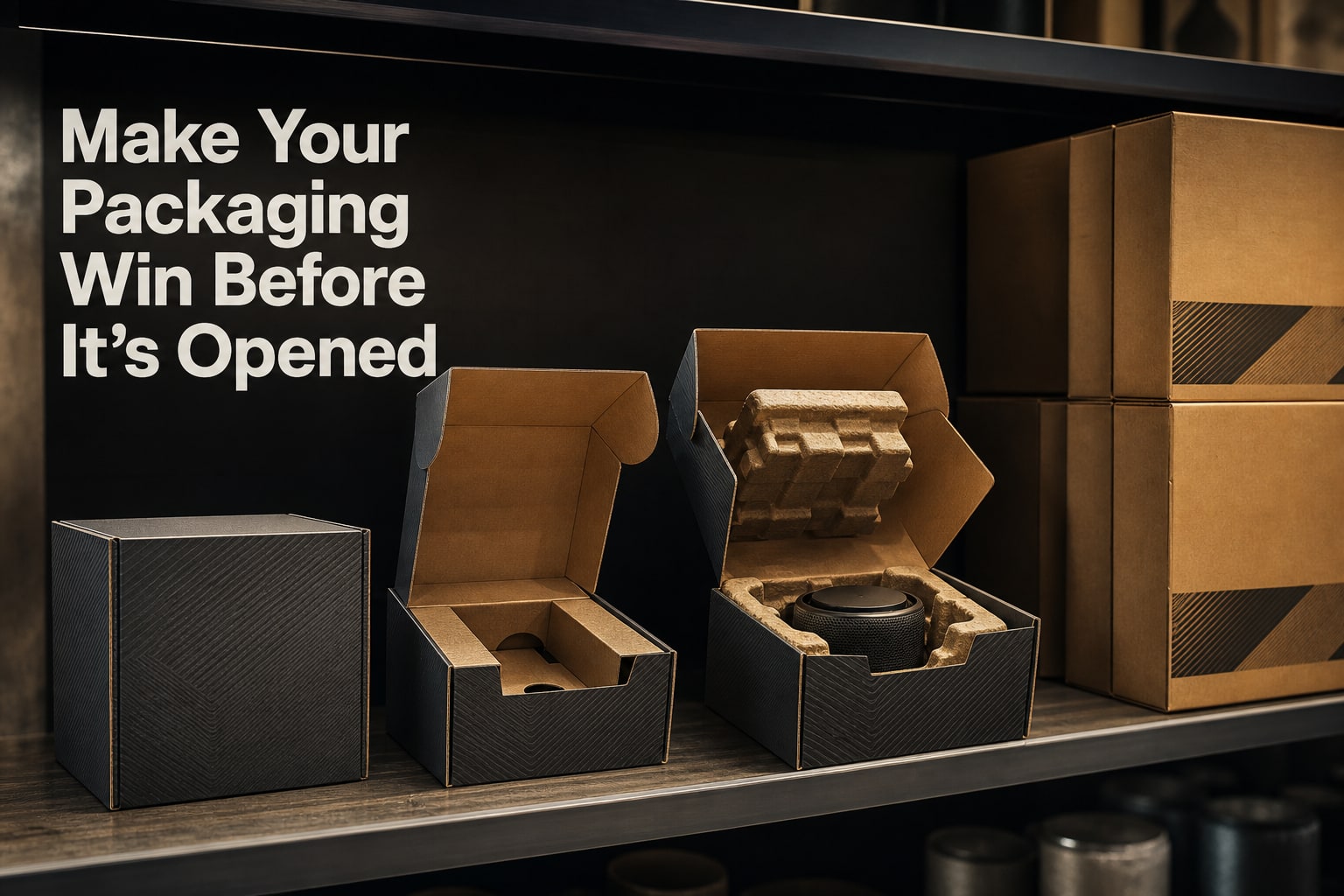
Make the pack instantly legible from a few metres away: use one dominant colour, a high-contrast product name, and a logo placed consistently across the range. Typography should show what the product is before the shopper has to decode a slogan.
Custom packaging for retail products must also make the contents easy to understand. A window, cut-out, transparent panel, accurate product image, or concise benefit panel can build confidence; crowded claims, tiny type, and inconsistent colour coding create hesitation.
| Format | Shelf advantage | Main trade-off |
|---|---|---|
| Folding carton | Strong printed branding and clear product hierarchy | Needs suitable board strength for stacking |
| Rigid box | Premium feel and durable opening experience | Uses more material and shelf space |
| Display box | Shows multiple units and reduces replenishment effort | Requires stable product retention |
| Sleeve | Refreshes a plain box with low visual complexity | Adds little protection on its own |
| Hanging or self-locking pack | Uses peg space and displays the front face | Poor die cuts can weaken corners |
| Corrugated mailer | Protects ecommerce orders and supports branded opening | Looks less shelf-focused unless printed or sleeved |
Design the opening as part of the presentation. A clean tear strip, reusable insert, and visible product arrangement feel deliberate; a crushed corner or difficult closure signals low quality. Retail-ready packaging can convert a shipper into a shelf tray, but its perforation must survive transport before removal.
Do not optimise appearance alone. Check board grade, compression strength, closure, and pack-out against distribution and replenishment loads, then compare damage, labour, cube, and retail scan performance against the old pack.
Match the format and dimensions to the buying experience
Choose the format by the buying experience: shelf impact, gifting, parcel delivery, or quick product access. Use a format that supports the moment without adding empty space, excess handling, or protection the product does not need.
| Format | Best use | Main trade-off |
|---|---|---|
| Folding carton | Lightweight retail products and consistent ranges | Lower rigidity |
| Rigid box | Premium, giftable, or fragile products | Higher material cost and storage volume |
| Mailer box | Custom packaging for ecommerce products | Must withstand parcel drops and compression |
| Display box | Countertop or open-shelf merchandising | Needs strong structure and clean replenishment |
| Sleeve | Upgrading a plain box or grouping a product set | Offers limited protection alone |
| Insert | Holding, separating, or presenting components | Adds pack-out time and material |
| Hanging pack | Small products sold from hooks or pegboards | Requires a reliable hang tab and balanced weight |
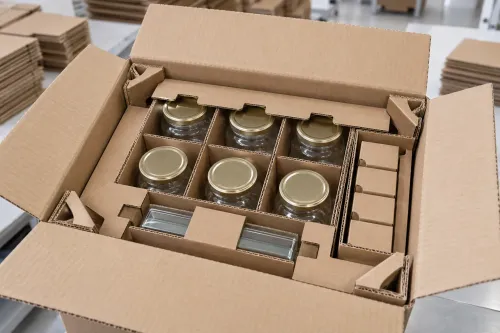
Size the pack from the product’s actual internal length, width, and height, not its external appearance. Add only enough clearance for loading, protective wrap, and the insert; excess space lets the product move, increasing damage and making the pack look underfilled.
Check compression when cartons will be stacked, especially for retail replenishment. For ecommerce, measure the packed outer dimensions and weight because a larger box can increase dimensional-weight charges even when the product is light.
Build a sample and test the complete pack-out: product, insert, closure, label, and shipping route. If the box fails a drop, vibration, or compression test, change the structure before adding decorative finishes.
Balance board strength, print quality, and finishing
Choose the lightest board and simplest construction that can survive stacking, handling, and replenishment. A premium finish cannot rescue crushed corners, a loose insert, or a carton that opens before reaching the shelf.
| Option | Presentation benefit | Strength or complexity trade-off | Best use |
|---|---|---|---|
| Folding carton | Sharp graphics and efficient colour coverage | Needs accurate creases, closure, and board selection | Lightweight retail products |
| E-flute corrugated carton | Adds crush resistance while keeping a smooth print face | Bulkier than paperboard and can expose flute edges | Heavier products or ecommerce packs |
| Rigid box | Strong, substantial unboxing impression | Higher material, storage, and assembly demands | Premium products with low-volume presentation |
| Sleeve with insert | Uses less printed material and frames the product | Insert must prevent movement without increasing pack size | Products needing visibility or positioning |
Specify the performance requirement, not just “three-ply” or “thick board.” For corrugated packs, request edge-crush test value and the box-compression result for the finished dimensions, stacking pattern, humidity, and handling route.
Use CMYK or spot-colour printing according to the brand system, then limit coverage and special inks to areas that earn attention. Place the barcode on a flat, high-contrast panel with clear quiet zones; folds, seams, gloss, and perforations can make a correct design fail at checkout.
Choose matte, gloss, aqueous, or varnish finishes for a defined purpose. Keep windows, laminations, wet-strength treatments, and attached inserts out of the construction when they add complexity without improving protection or presentation; they can also reduce recycling acceptance. Test the assembled pack before approving production.
Make the presentation survive shipping, opening, and returns
Protect shelf appearance by making the retail pack survive parcel shocks, store handling, and a planned second opening. For ecommerce, test the packed unit against the parcel-network hazards covered by ISTA 3A, not only pallet stacking.
A retail-ready tray must retain products in transit, reveal the selling face after the shipper is removed, and avoid perforations that tear during handling.
- Keep the product face fixed with an insert, divider, or locking feature so replenishment does not leave units tilted or hidden.
- Place the barcode on a flat, unobstructed panel with a clear quiet zone; a crushed corner or glossy fold can slow scanning.
- Use tear-away panels only where store staff can remove them without exposing rough edges or weakening the tray.
- Print the opening sequence inside the pack so subscription kitting teams can pack every unit in the same order and place promotional material without covering the product.
The best packaging for product returns allows one controlled second opening: add a tear strip, second adhesive strip, durable end panels, and an insert that remains useful after opening. Mark the return closure separately from the original tamper-evident seal, or an unauthorised reseal can look legitimate.
When sourcing subscription box packaging wholesale, specify a repeatable footprint, fixed insert geometry, and a fast pack-out sequence, then forecast peak demand before committing to volume.
Compare old and new packs on the same route and pack-out. Track damage rate, pack-out labour, scan performance, and return condition; a prettier shelf unit alone does not prove better packaging.
Request a quote that reveals the real packaging cost
A custom packaging quote for business reveals the real cost only when it covers the complete delivered pack, not just the carton price.
Give the supplier the product’s internal length, width, and height, expected quantity, selling channel, pallet pattern, shipping method, and whether stores need a shelf-ready tray or the customer needs a resealable return pack.
Ask the supplier to state:
- Board grade or material, print process and coverage, closure style, and insert design
- Tooling, die, plate, artwork, setup, and sampling charges
- Minimum order quantity, unit-price breaks, and production lead time
- Testing included, such as compression, drop, vibration, or transit testing
- Freight, delivery terms, packaging for shipment, and the pack-out assumption
Compare quotes on the same basis:
| Cost area | Lower upfront option | Trade-off to check |
|---|---|---|
| Unit price | Larger MOQ or simpler construction | More inventory, storage, or weaker presentation |
| Right-sizing | Smaller carton and lower dimensional weight | Tighter die-cutting, assembly, insertion, and damage tolerances |
| Shelf-ready design | Tear-away tray with fewer store steps | Perforations can open early or weaken corners |
| Return handling | Tear strip, second adhesive strip, or reseal | Added material cost and weaker tamper evidence |
Compare total packed volume, labour, carrier charges, damage, and returns rather than carton price alone. A standard corrugated box from Packbox.In can give you a practical baseline for material and freight before approving a custom structure.
Finally, request the actual material construction. A paper pack with a plastic window, coating, laminate, label, or attached insert is not automatically accepted in every recycling system.
Related product
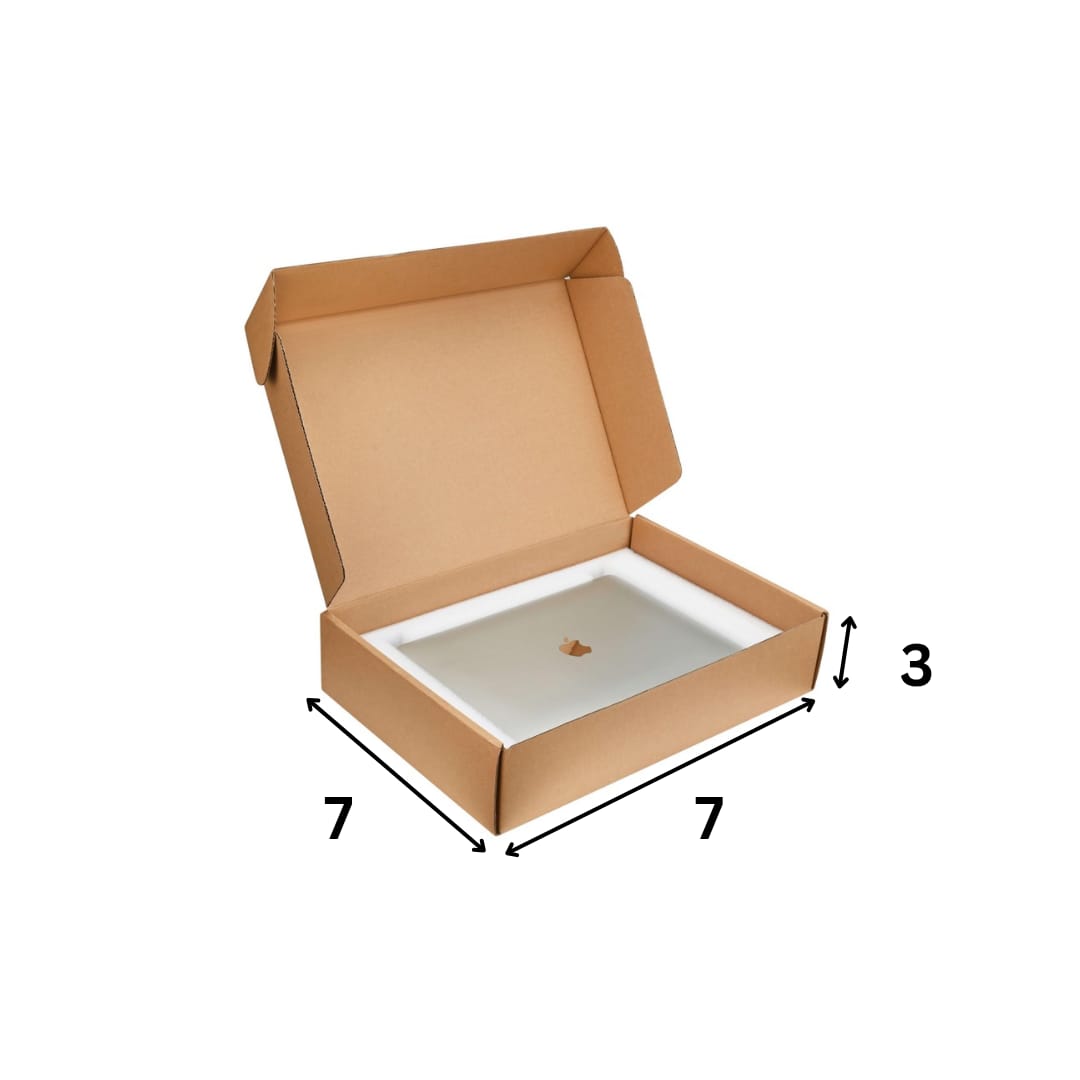 | E COMMERCE BOX CARDBOARD BOX ₹32 Our E-Commerce Boxes are specially designed for safe, secure, and professional packaging of online orders. |
Frequently asked questions
How should you design custom packaging for retail products to win attention?
Use one dominant colour, high-contrast product naming, and consistent logo placement across the range. Make the product category clear before the shopper reads the slogan.
How do you choose the right format and dimensions for a retail package?
Match the box to the product, shelf footprint, shipping route, opening sequence, and return process. Remove excess empty space without compromising protection or presentation.
How do you balance board strength, print quality, and finishing?
Select board strength for stacking and handling conditions, then compare print coverage and finishes against scuff resistance, colour consistency, and budget.
What makes the best packaging for product returns?
Use a pack that protects the product through outbound shipping and return trips, opens without destruction, and includes a practical resealing method.
What should a custom packaging quote for business include?
Ask for board grade, dimensions, print method, finishing, inserts, tooling, minimum order quantity, setup fees, freight, lead time, and replacement costs.
Keywords