A zip-lock bag keeps dust, spills, loose components, and incidental moisture away from products, but it does not cushion impact or carry a heavy shipment by itself. By the end, you will know how to size the inner bag, specify its film and closure, pack it inside a carton, and test the complete shipment before ordering at wholesale scale.
Key takeaways
- Match bag dimensions to the product, not just its folded length and width.
- Choose film thickness and closure strength for the product’s weight and handling.
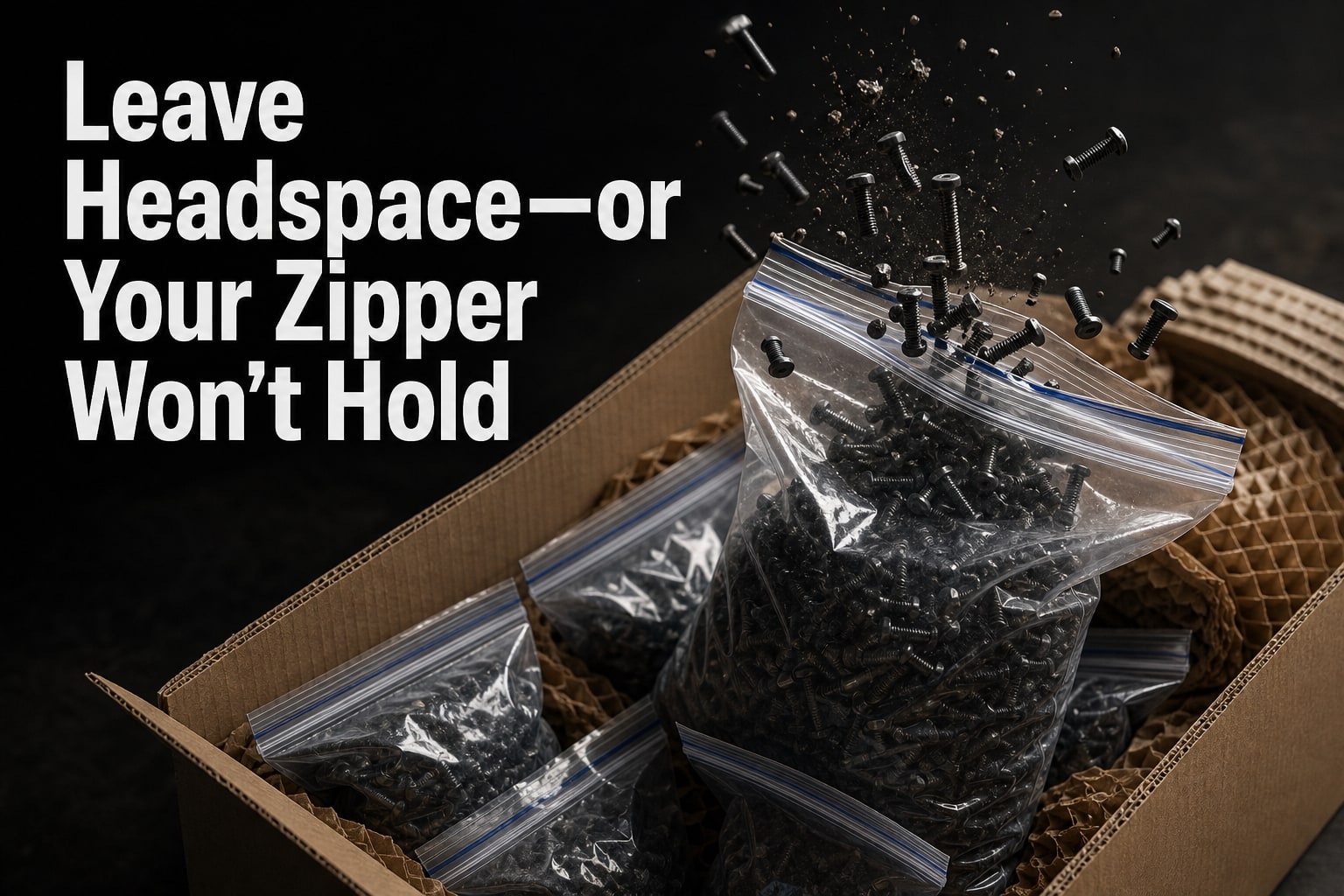
- Leave headspace so the zipper closes without trapping product in the seal.
- Test filled bags for leaks, zipper engagement, punctures, and carton movement.
What protection does a zip-lock bag provide inside a bulk shipment?
Zip-lock bags for packaging provide containment inside a bulk shipment. An engaged zipper forms a reusable barrier against surface dirt, product-to-product mixing, minor spills, and incidental moisture. It also keeps screws, fittings, samples, accessories, and other small components together during picking and handling.
A clean, regularly shaped item gains useful separation from neighbouring products, reducing surface abrasion. A pointed edge can puncture the film, while abrasive, oily, very heavy, or contamination-sensitive contents can exceed the bag’s limits.
Treat the bag as containment packaging, not cushioning. A corrugated carton supplies structure, while these materials address shock, vibration, or compression:
- Bubble wrap: cushions individual items.
- Foam: absorbs impact around shaped products.
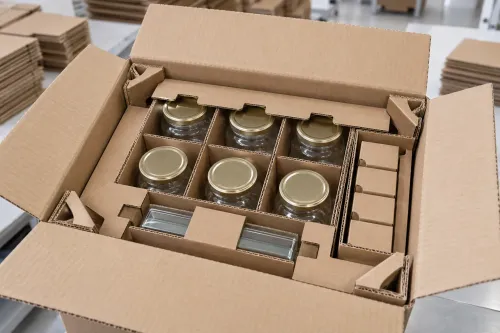
- Dividers: prevent items from striking one another.
- Void fill: limits movement inside the carton.
Ordinary polyethylene resists liquid water but does not provide high-barrier protection against oxygen, aroma, or water vapour. Use a specified multilayer or foil-laminate bag when those exposures threaten the product.
A standard zipper is resealable, not tamper-evident. It can normally be reopened without visible damage. When opening evidence matters, choose one of these closures:
- Permanent adhesive flap
- Tear strip
- Serialized seal
- Tested tamper-evident bag
How do you choose the right bag size, film, and closure?
Choose the right bag by converting the wrapped product’s dimensions into usable internal dimensions, not by matching the bag’s outside size. Measure length, width, and height after adding protective wrap, then leave clear space below the zipper so the track closes without pressing against the contents.
Add gusset width when the product needs depth, and set a fill limit that lets the bag flex. Never force the zipper over an edge, trapped fibre, dust, or liquid.
For zip lock packaging bags wholesale, put these details in the purchase specification:
- Internal length and width, gusset width, transparent or opaque film, and minimum usable fill dimensions.
- Polymer type and nominal film gauge in microns; gauge alone does not predict shipping durability.
- Tensile strength and elongation under ASTM D882, falling-dart impact under ASTM D1709, and propagation tear resistance under ASTM D1922.
- Puncture resistance, tear resistance, temperature range, zipper type, and opening or closure force.
- Packaging quantity and acceptable defect limits, including incomplete tracks, holes, wrinkles across the zipper, and contamination.
| Decision | Compare | Choose when |
|---|---|---|
| Film | Polymer, gauge, puncture, impact, and tear performance | The shipment faces abrasion, sharp edges, or cold storage |
| Closure | Reclosable zipper type and closure force | Contents need repeated access without forcing the track |
| Food contact | Declaration naming polymer, additives, food types, temperature limits, and regulation or migration-test basis | Food will touch the film directly |
How should filled bags be packed into an outer carton?
Pack filled bags into counted bundles, bands, or inner cartons so they cannot scatter when the outer carton opens.
| Packing arrangement | Best use | Control needed |
|---|---|---|
| Counted bundles | Repeated quantities of similar bags | Record the unit count and keep each bundle tight |
| Bands | Short-term grouping during handling | Use bands that will not cut or crease the bags |
| Inner cartons | Mixed parts or small components | Keep each inner carton closed and labelled |
Choose an outer carton that holds the bundles without crushing zipper tracks. Eliminate large voids with paper, corrugated pads, or suitable void fill; loose space lets bundles gain momentum during drops.
Place sharp products away from carton walls and corners. Use corrugated dividers for metal parts or pointed components, and separate heavy layers from bags that could be punctured.
Set the carton’s weight limit from the product mass, bag construction, carton grade, and handling method—not from the volume available. Put heavier bundles at the bottom, keep the load square, and stop before the contents bow the carton panels.
Close the carton with pressure-sensitive carton-sealing tape rated for its actual corrugated grade. The tape bonds to board, not reliably to polyethylene film. Ask a bulk packaging tape supplier to specify:
- Tape width
- Backing material
- Adhesive type
- Application-temperature range
- Performance on your carton grade
For parcel distribution, qualify the complete packed system under an ISTA 3A profile matching its weight, dimensions, and delivery route. This procedure tests conditioning, drops, vibration, and compression.
Which checks reveal zipper, film, and shipment failures before dispatch?
Receiving inspection reveals whether a bag is ready for production before you commit to a full order. Sample each lot for bag dimensions, film gauge, pack count, zipper engagement, top-corner condition, visible contamination, and heat-seal integrity where heat seals are used.
Use ANSI/ASQ Z1.4 to make sampling repeatable, then define critical, major, and minor defects before inspection begins.
- Fill representative bags to the stated usable limit, clear product from the zipper track, close the track fully, and check for an opening path or leakage during the intended handling conditions. Misalignment, dust, fibres, or liquid in the track can leak even when the film has no hole.
- Inspect heavy or sharp contents for punctures and edge cuts. Rounded corners, internal dividers, tougher coextruded film, or separation from carton edges can outperform simply increasing gauge.
- Check filled bags for stable stacking and automated insertion. ASTM D1894 measures static and kinetic coefficients of friction; slippery film increases shifting, while high-friction film can obstruct insertion.
- Test the complete packed carton after conditioning for drops, vibration, and compression. Use ISTA 3A when its parcel profile matches the shipment’s weight, dimensions, and distribution route.
| Defect class | Examples | Dispatch decision |
|---|---|---|
| Critical | Open zipper, contamination, leakage, or missing containment | Reject lot |
| Major | Wrong dimensions, low gauge, damaged corner, or incorrect count | Hold and investigate |
| Minor | Cosmetic print defect without functional effect | Accept only within the agreed limit |
When are zip-lock bags the right wholesale inner package?
Zip-lock bags are the right wholesale inner package when your goods are clean, regularly shaped, and need containment, repeated access, or straightforward returns. Choose another inner package, or validate the complete system, for oily, abrasive, pointed, very heavy, or contamination-sensitive contents; the bag alone will not prevent punctures, residue, or hygiene failures.
Match the bag to the delivery model before ordering. For zip lock courier bags wholesale, distinguish a reclosable inner bag from an opaque, tear-resistant courier mailer with a permanent pressure-sensitive closure. The mailer gives stronger tamper evidence; the zipper gives easier repeated access.
For subscription box packaging wholesale, check insertion speed, product presentation, return opening, snagging, misclosure, and empty space inside the outer box.
Write the purchase specification in this order:
- State internal length and width, usable fill dimensions, material, nominal gauge, transparent or opaque construction, and zipper type.
- State the minimum usable fill, required opening or closure force, quantity per pack, and acceptable limits for holes, wrinkles, weak zippers, and misclosures.
- Require sample approval and shipment testing with the actual carton, cushioning, and sealing method. Test overfilled and returned bags, not only perfect samples.
Packbox.In can help coordinate inner bags with cartons, cushioning, mailers, and tape, but approve a lot-specific sample against this specification rather than ordering by a generic bag name.
Related products
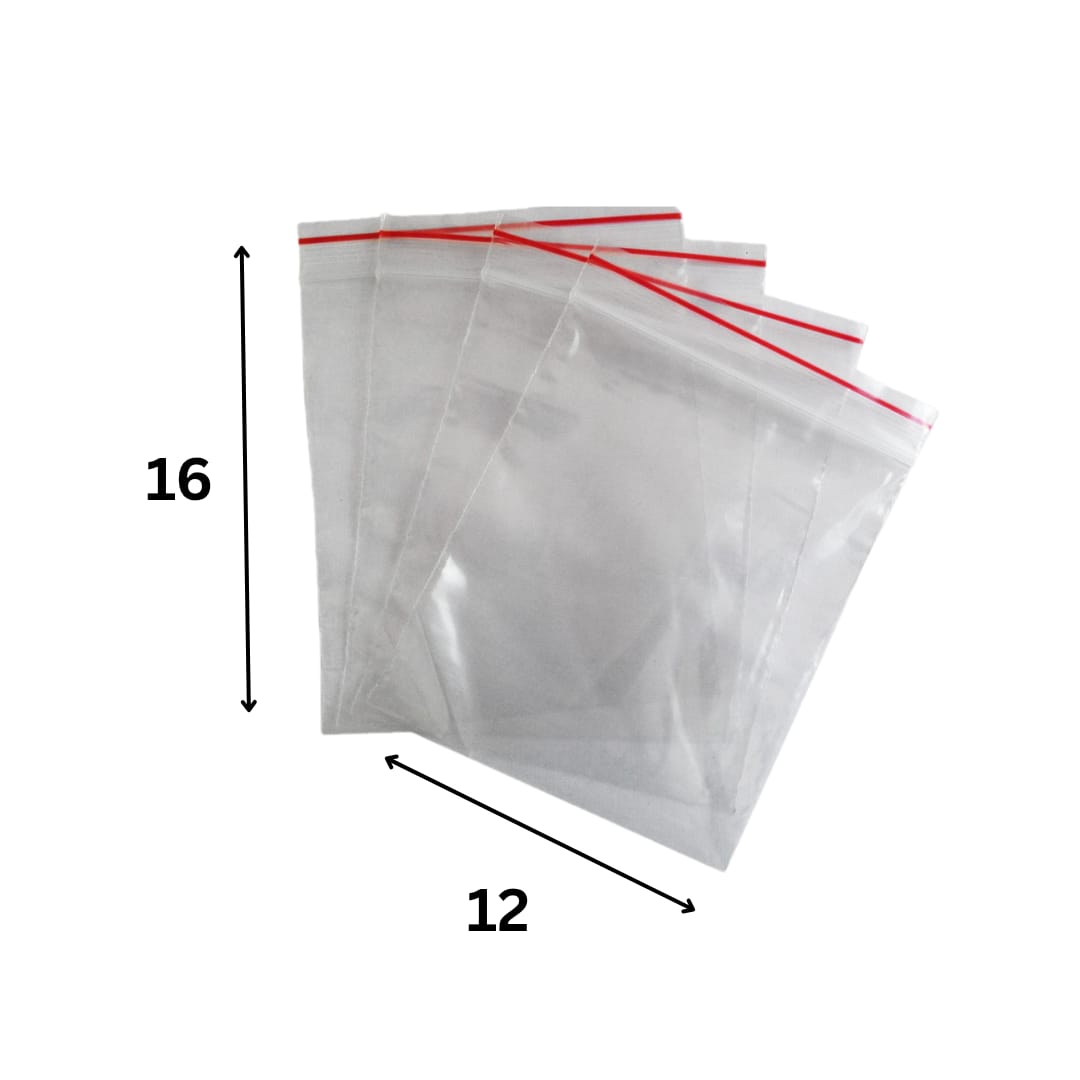 | ZIP LOCK ZIP LOCK 16X12 ₹9.50 Packbox.in Self lock Covers 100 percent quality guaranteed || Transparent Plastic Zip Lock Pouch Bags.2.Ziplock bags for storage Can be used to store... |
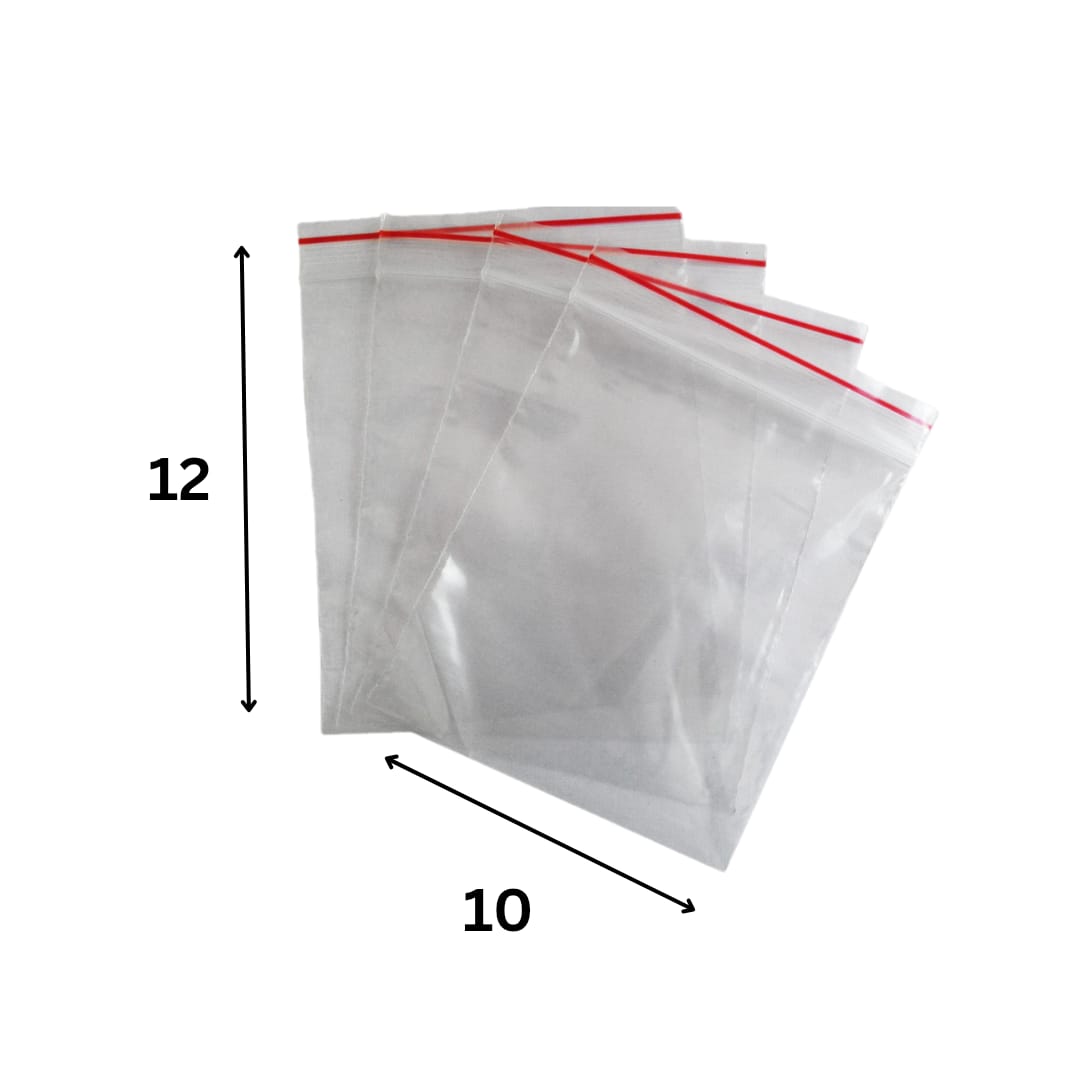 | ZIP LOCK ZIP LOCK 10X12 ₹6 Packbox.in Self lock Covers 100 percent quality guaranteed || Transparent Plastic Zip Lock Pouch Bags.2.Ziplock bags for storage Can be used to store... |
Frequently asked questions
What protection does a zip-lock bag provide inside a bulk shipment?
An engaged zipper contains small components, limits product-to-product mixing, blocks surface dirt, and controls minor spills or incidental moisture. It is not a substitute for a waterproof outer pack or cushioning against impact.
How do you choose the right bag size, film, and closure?
Measure the product and add room for insertion, headspace, and zipper closure. Select film thickness for the product’s weight and edges, then check that the zipper closes fully without distortion or trapped contents.
How should filled bags be packed into an outer carton?
Arrange filled bags so sharp edges do not puncture neighbouring bags, prevent excessive empty space with suitable cushioning or dividers, and use carton sealing tape that holds through handling. Keep the zipper area clear of compression and abrasion.
Which checks reveal zipper, film, and shipment failures before dispatch?
Inspect for incomplete zipper engagement, split seams, pinholes, weak corners, and punctures. Shake a sample carton, check for movement and leakage, and confirm the outer carton remains closed and undamaged.
When are zip-lock bags the right wholesale inner package?
Use them for small parts, kits, samples, accessories, and products needing frequent access or separation inside a larger shipment. Choose another inner package when the contents need high-impact protection, a tamper-evident seal, or a certified barrier.
Related products
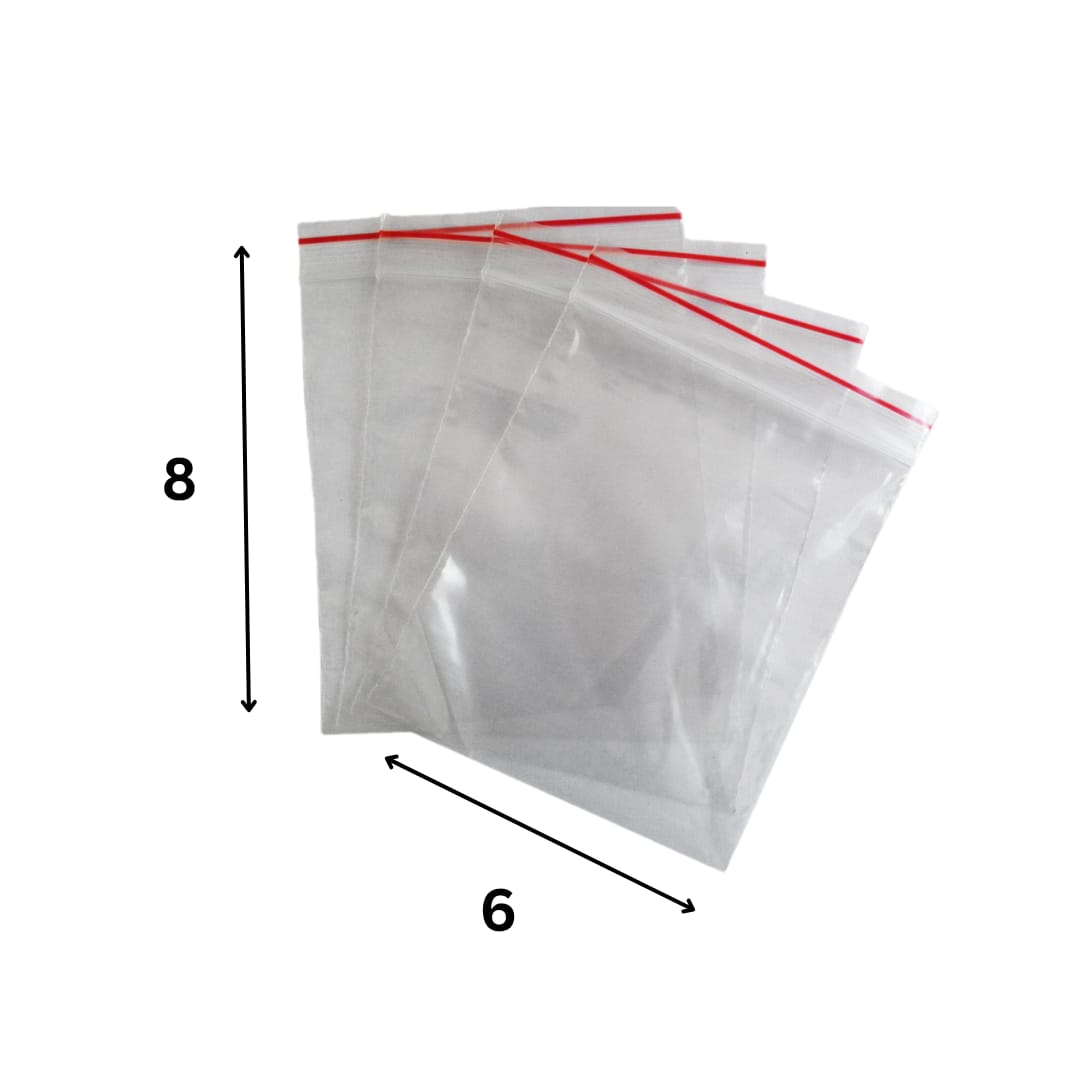 | ZIP LOCK ZIP LOCK 8X6 ₹3.54 Packbox.in Self lock Covers 100 percent quality guaranteed || Transparent Plastic Zip Lock Pouch Bags.2.Ziplock bags for storage Can be used to store... |
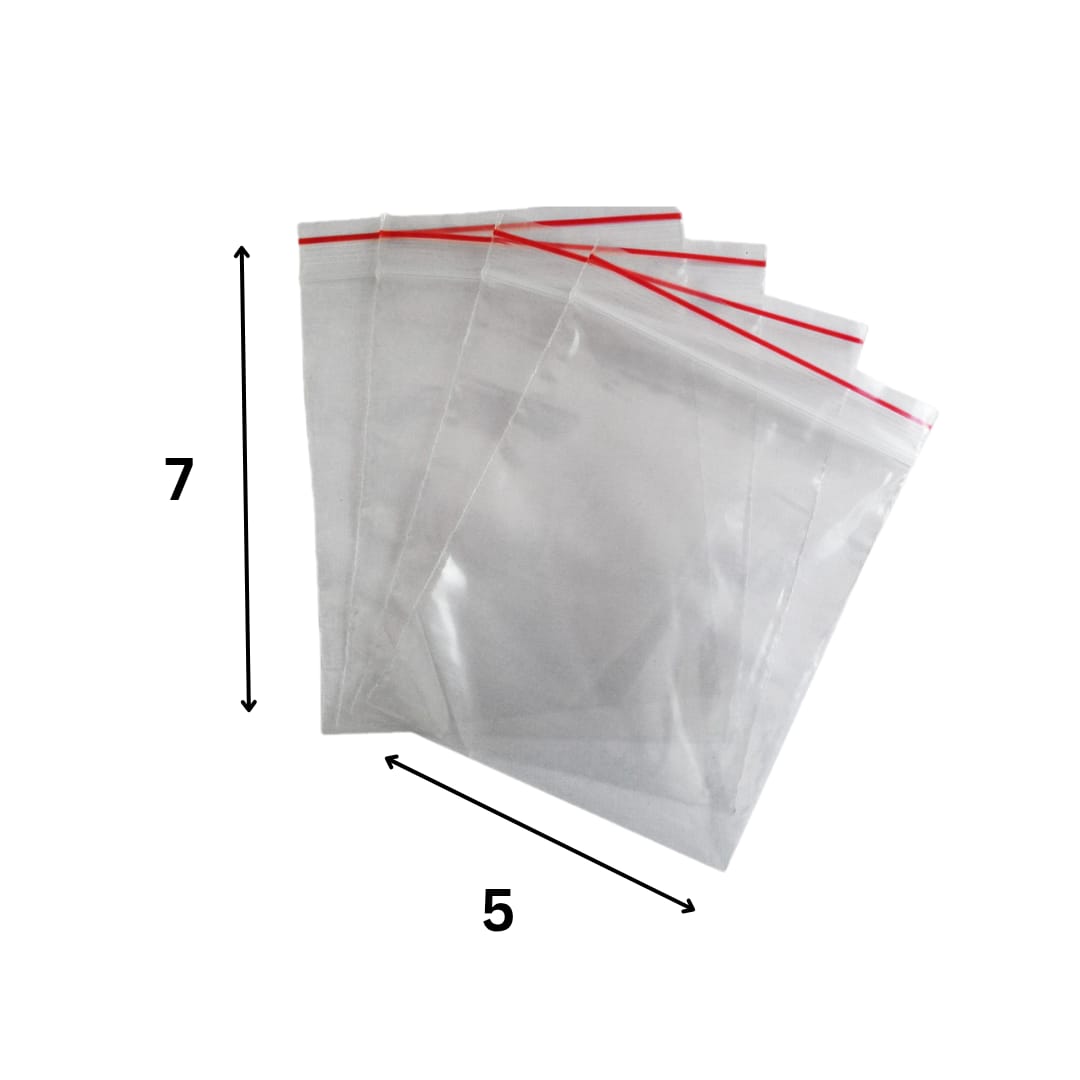 | ZIP LOCK ZIP LOCK 7X5 ₹3.54 Packbox.in Self lock Covers 100 percent quality guaranteed || Transparent Plastic Zip Lock Pouch Bags.2.Ziplock bags for storage Can be used to store... |
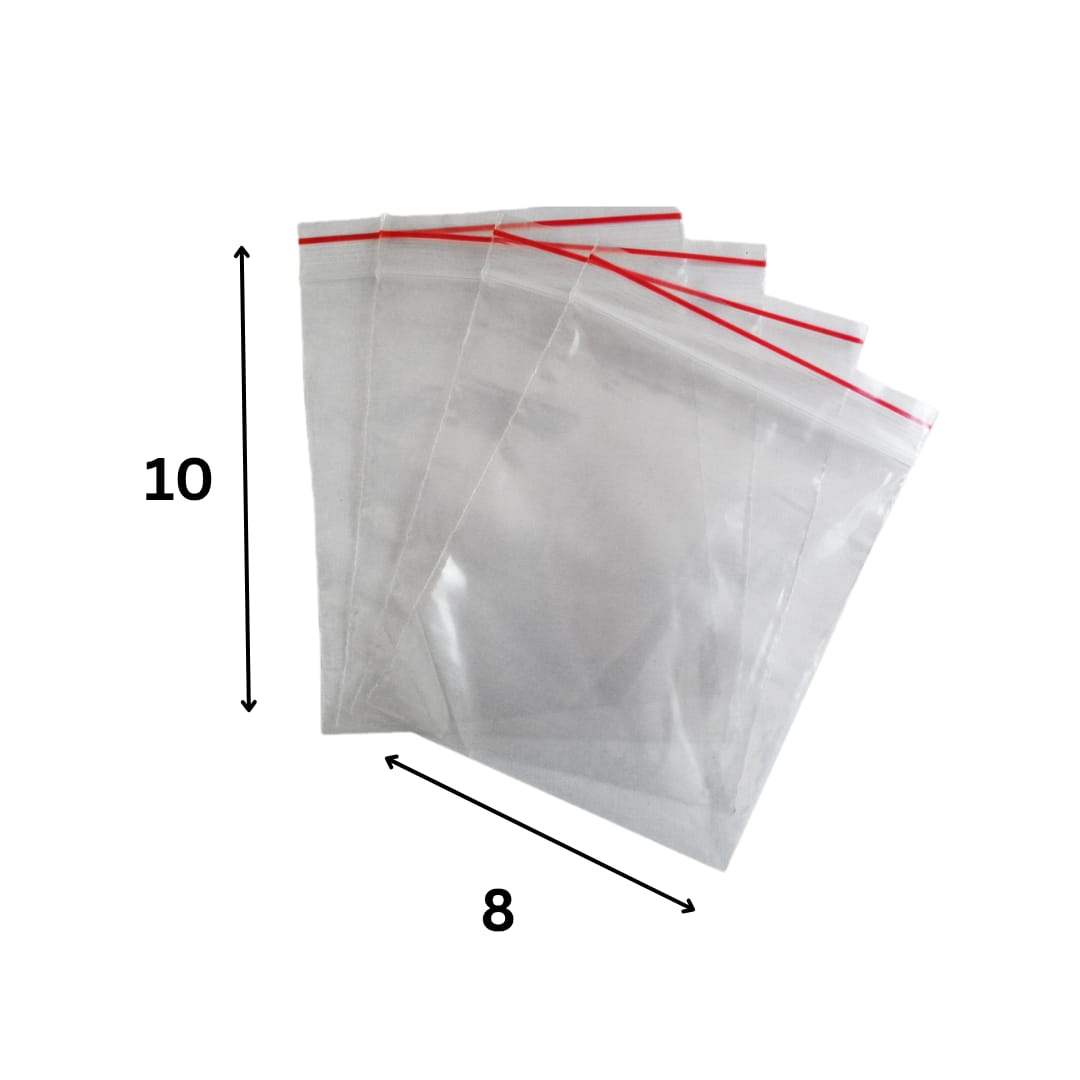 | ZIP LOCK ZIP LOCK 10X8 ₹4.72 Packbox.in Self lock Covers 100 percent quality guaranteed || Transparent Plastic Zip Lock Pouch Bags.2.Ziplock bags for storage Can be used to store... |
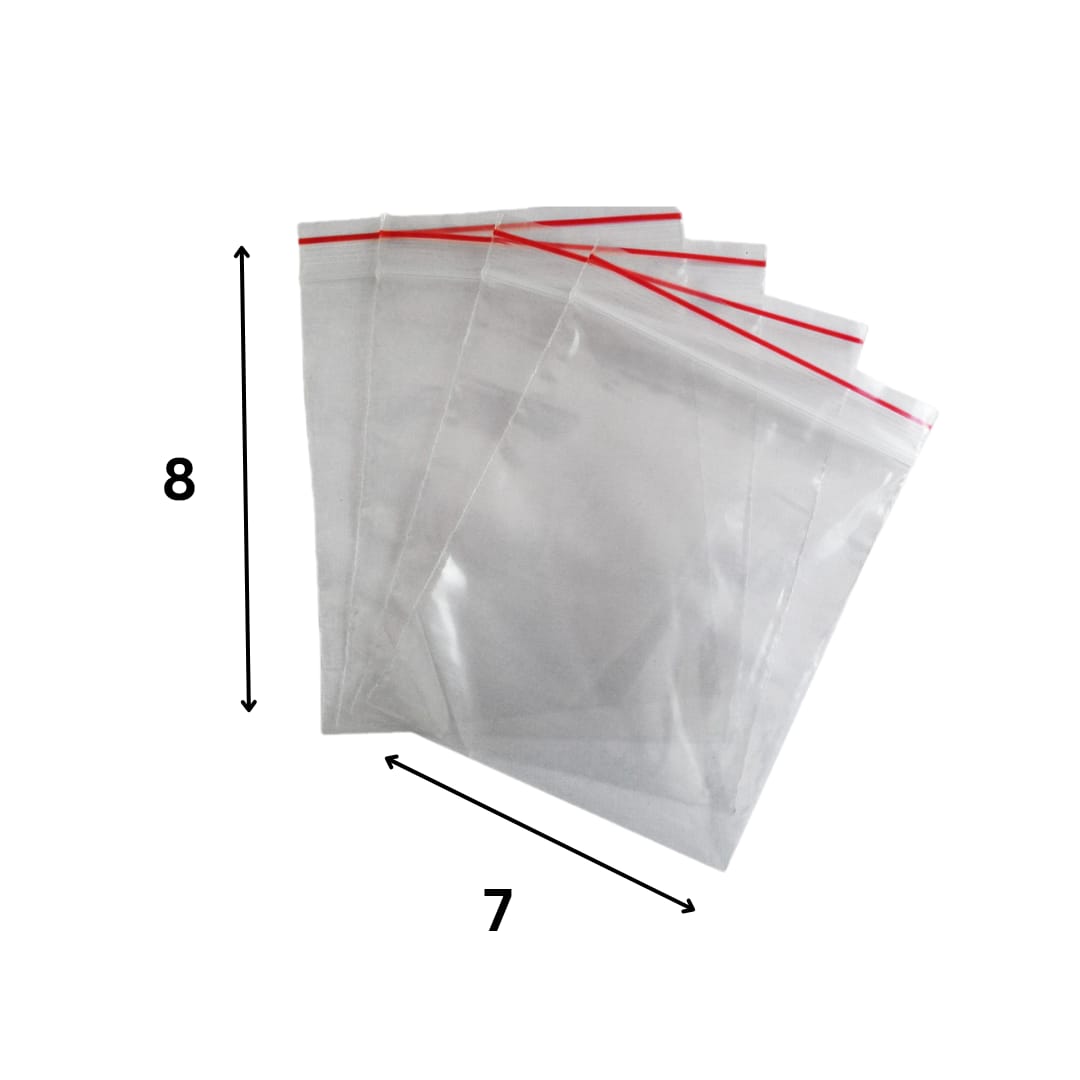 | ZIP LOCK ZIP LOCK 8X7 ₹4.72 Packbox.in Self lock Covers 100 percent quality guaranteed || Transparent Plastic Zip Lock Pouch Bags.2.Ziplock bags for storage Can be used to store... |
Keywords